
 1300 285 885
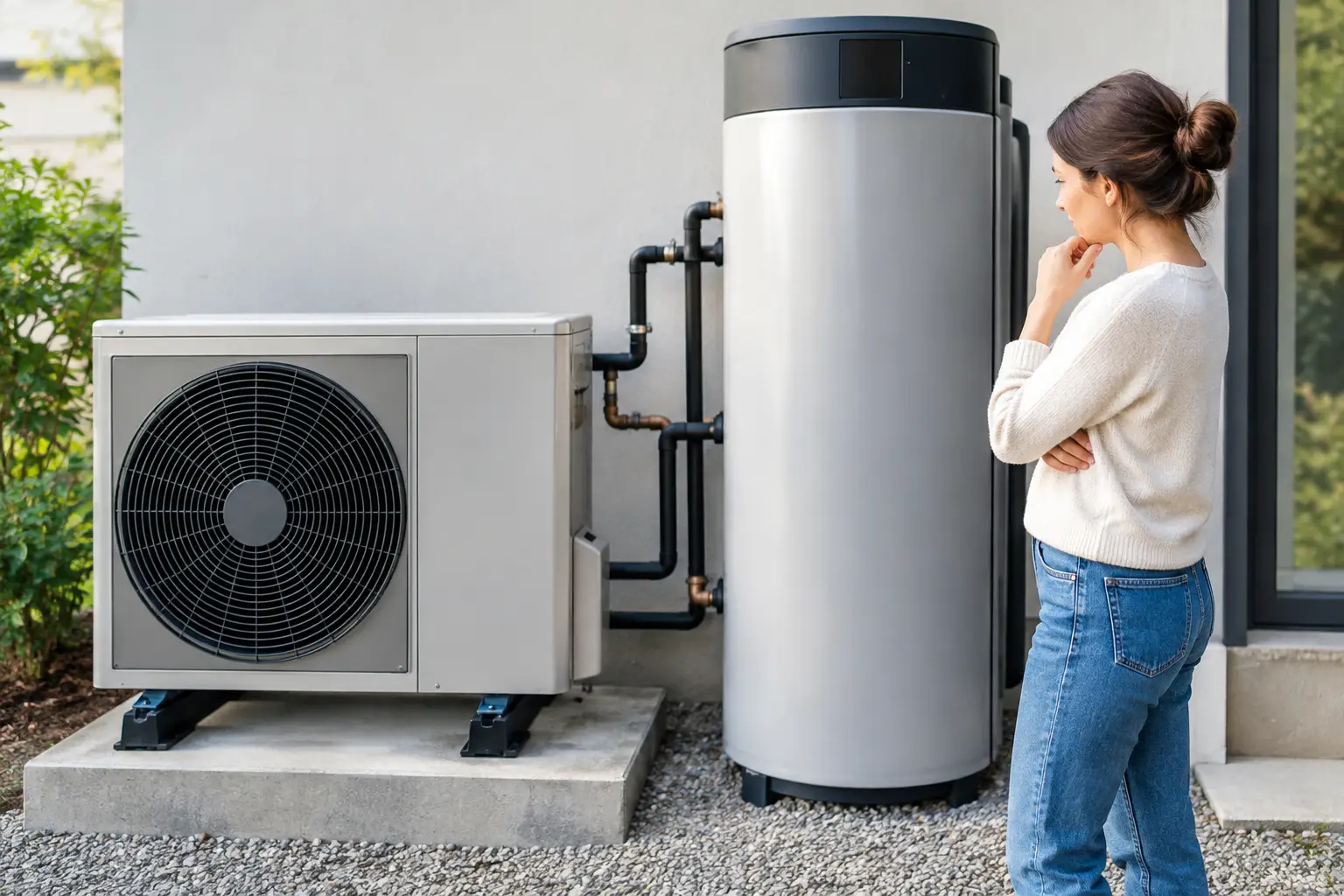
Hot water quietly works harder than most households realise. Showers, washing, dishes and cleaning can make it one of the biggest energy loads on the bill – particularly when an older electric storage system runs overnight on costly grid power. A heat pump offers a smarter way to heat water by using ambient air rather than creating every unit of heat from scratch.
For Australian homes and businesses looking to cut electricity use, it can be a practical next step after solar. The best result, however, is not simply choosing any unit. It comes from matching the system to your hot water demand, climate, available space and the way your solar system generates energy through the day.
How a heat pump heats your water
A heat pump hot water system works much like a reverse-cycle air conditioner, only its job is to move heat into a water tank. It draws warmth from the surrounding air, compresses a refrigerant to increase that heat, then transfers it to the water stored in the tank.
That process uses electricity, but far less than a conventional electric element that must generate heat directly. In favourable conditions, a heat pump can produce several units of heat for each unit of electricity it consumes. That is why it is increasingly popular with households replacing ageing electric storage units or moving away from gas hot water.
The system does not need tropical weather to work. Modern units are designed to operate across a range of Australian conditions, including cooler mornings. Still, performance changes with the temperature. A unit in a mild, well-ventilated location will generally work more efficiently than one exposed to very cold air, poor airflow or constant shade.
Is a heat pump suitable for your property?
A heat pump is often a strong option when a property has reliable access to outdoor air, room for a tank and a household or business that uses a meaningful amount of hot water. Families with regular shower demand, for example, can benefit from a correctly sized tank that stores enough hot water for peak use without unnecessarily drawing power at other times.
The right capacity depends on more than the number of people on site. Consider shower habits, whether multiple bathrooms are used at once, dishwasher and laundry use, and the times hot water is needed. A home where everyone showers in the morning has a different demand profile from one where hot water use is spread across the day.
For businesses, the questions are more specific. A café, salon, accommodation provider, sports facility or workplace amenities block may have sharp peaks in demand. A system that looks adequate on paper can disappoint if it is not designed around those peaks. In larger settings, multiple units or a commercial-grade arrangement may be more suitable than one oversized residential system.
Location matters too. Heat pumps need clearance for airflow and may produce a low operating sound, similar to an outdoor air conditioning unit. Positioning should account for nearby bedrooms, neighbours, access for servicing and drainage. A qualified installer can assess these practical details before installation, rather than treating the tank location as an afterthought.
Pairing a heat pump with solar
Solar and hot water make a natural team. Solar panels generate their strongest output during daylight hours, while a heat pump can be scheduled to heat and store water during that same period. Instead of exporting as much surplus solar energy to the grid, the property can use more of its own generation to meet a daily essential load.
This approach is especially useful for households with a solar system that regularly produces excess power from late morning through to mid-afternoon. A timer, smart controller or compatible energy management setting can shift the heat pump’s main heating cycle into that solar window. The tank then acts as a form of thermal storage, keeping hot water ready for use later in the day.
It is not a one-size-fits-all setting. If your household uses most hot water early in the morning, the system needs enough stored capacity to carry through from the previous day. If cloudy weather is common or daytime use is limited, grid electricity may still be needed at times. A battery can help increase solar self-consumption, but it is not essential for a solar-powered hot water strategy. In many cases, heating water directly from daytime solar is a straightforward way to reduce demand before considering battery storage.
What to look for when choosing a heat pump
The headline efficiency figure matters, but it should not be the only deciding factor. A good system needs to perform reliably in your local conditions and suit your actual water demand for years to come.
When comparing options, look closely at these practical factors:
- Tank size and recovery time, so the system can meet busy household or business periods.
- Climate suitability, including how performance holds up in cooler conditions.
- Noise levels and placement requirements for your block, building layout or neighbouring properties.
- Warranty terms, service support and the availability of qualified installers.
- Smart controls or timer compatibility that can help use more daytime solar generation.
Also ask how the system handles very high demand or periods of low ambient temperature. Many models include a backup electric element. This can protect hot water availability when needed, but frequent reliance on it can reduce the energy-saving benefit. Correct sizing and sensible scheduling help minimise that outcome.
Installation and incentives need a clear plan
Replacing a hot water system can involve electrical work, plumbing changes, removal of the existing unit and careful placement of the new tank. If you are replacing gas, the project may also require safe disconnection and decisions about whether other gas appliances will remain on site. These details should be scoped before work begins, not discovered on installation day.
Depending on the system, location and current government programs, incentives may be available to support eligible energy-efficient hot water upgrades. Eligibility rules, product requirements and available schemes can change, so it is worth confirming current requirements before making a decision. The key is to choose a system that fits the property first, rather than choosing solely around an incentive.
For solar owners, installation is also a chance to review the wider energy setup. An older inverter, limited daytime consumption or an undersized solar system can affect how much solar generation is available for a heat pump. Looking at the whole picture helps ensure the hot water system supports your energy goals instead of operating separately from them.
A practical upgrade with long-term value
A heat pump is not just another appliance. It is a way to turn a daily energy expense into a load that can work more effectively with solar generation. The strongest outcomes come from a properly sized system, installed in the right location and scheduled around how the property actually uses hot water.
Before replacing your existing system, take a week to notice when hot water is used, how quickly it runs out and how much daytime solar is being exported. Those simple observations can make the next decision far clearer – and help your renewable energy system work harder where it counts.