 1300 285 885
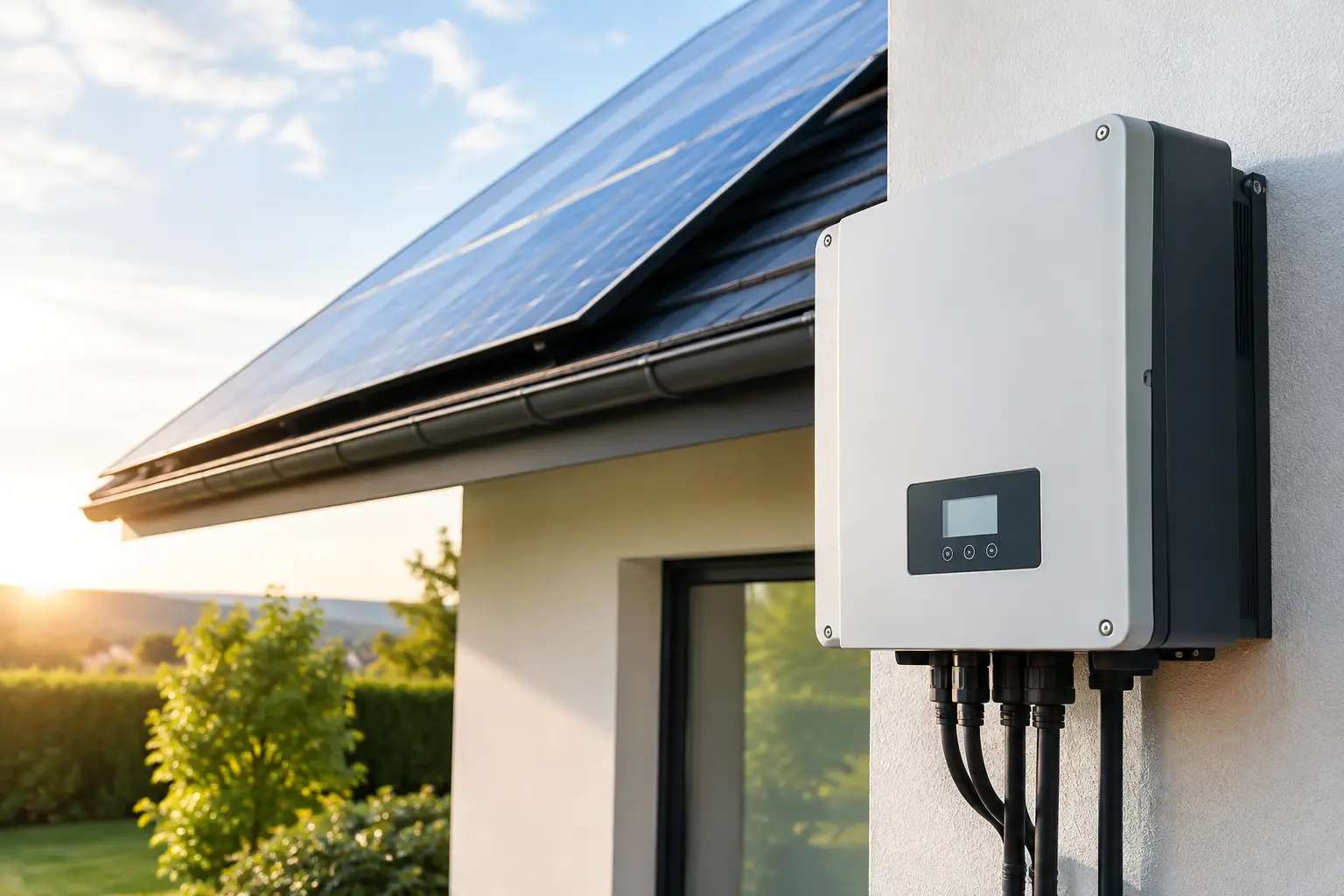
Your panels may get the attention, but solar inverters do the hard work behind the scenes. They turn the direct current electricity produced on your roof into the alternating current that powers your lights, appliances, air conditioning and business equipment. Choose the wrong inverter and even high-quality panels cannot perform at their best.
For Australian homes and businesses dealing with rising power bills, the inverter is not a minor component. It influences how much solar energy you use, how easily you can add a battery later, how your system responds to shade and how reliably it operates over the long term. That is why the right system starts with the right conversation about your energy use, roof layout and future plans.
What Solar Inverters Actually Do
Solar panels generate DC electricity. Australian homes and businesses run on AC electricity, so your inverter converts that energy into power your property can use in real time. Any surplus can be sent to the grid, subject to your retailer connection arrangements and local network requirements.
A modern inverter does far more than conversion. It tracks panel performance, manages voltage and frequency, protects the system when grid conditions fall outside acceptable limits, and provides monitoring data through a mobile app or online portal. This visibility helps you see when your system is generating well and when your property is using the most power.
The practical goal is simple: use more of your own solar generation when it is produced. Running appliances such as a pool pump, dishwasher, washing machine or commercial equipment during daylight hours can reduce the amount of electricity you need to buy from the grid.
Types of Solar Inverters for Australian Properties
There is no single best inverter for every roof. The right option depends on the size of the system, shading, roof orientation, electricity consumption and whether battery storage is part of the plan.
String inverters
A string inverter is the most common choice for homes and many small-to-medium businesses. Panels are connected in groups, known as strings, and feed into one central inverter. It is a proven, efficient option for straightforward roofs where panels receive similar sunlight throughout the day.
For a medium household, a well-designed 6.6kW system with a quality string inverter can be an excellent foundation for lower daytime electricity costs. Larger string inverter configurations also suit commercial properties with open, consistent roof space.
The trade-off is that output from panels in the same string can be affected by significant shade or by panels facing very different directions. Good design can often manage this, but it needs to be assessed before installation rather than discovered after it.
Microinverters
Microinverters are fitted to individual panels rather than mounted as one central unit. Each panel converts its own power, allowing panels to operate more independently. This can be useful on complex roofs with multiple orientations, chimneys, nearby trees or intermittent shade.
They also provide panel-level monitoring, which can make performance checks more detailed. The key consideration is suitability. Microinverters are not automatically necessary for every property, but they can be a smart solution where roof conditions make a conventional string design less effective.
Hybrid inverters
A hybrid inverter is designed to work with both solar panels and battery storage. If you want to add a battery now or keep the option open for later, choosing a compatible hybrid inverter can make the pathway simpler.
That does not mean every solar customer needs a hybrid setup. A battery makes more sense for some households than others, depending on evening consumption, export patterns, blackout backup priorities and energy goals. What matters is selecting equipment that supports the way you intend to use energy over the years ahead.
Inverter Size Matters More Than Most People Think
Inverter sizing is not simply a matter of matching one number to another. Your installer considers the panel capacity, expected generation profile, roof orientation, local network rules and the inverter’s AC output rating.
It is common for the total panel capacity to be greater than the inverter’s rated capacity. This is called DC oversizing. In the right design, it can help the inverter start producing useful power earlier in the morning and continue later in the afternoon, while making better use of its capacity through much of the day.
There can be a small amount of clipping when panel output exceeds the inverter’s maximum output in ideal conditions. That is not necessarily a problem. A well-considered design weighs this occasional peak reduction against stronger generation across more hours of the day. Oversizing must still remain within the inverter manufacturer’s limits and applicable network requirements.
For commercial and industrial systems, correct sizing becomes even more important. Load profiles may include refrigeration, machinery, office operations, pumps or daytime production equipment. A system should be designed around when the site consumes power, not just the available roof area.
What to Look For in a Quality Solar Inverter
An inverter is expected to work outdoors in Australian conditions for years, so selecting trusted, approved equipment is essential. Brand quality matters, but so do the details of the full installation.
Look for an inverter with appropriate Australian compliance, a clear manufacturer warranty, reliable local support and monitoring that is easy to understand. A strong monitoring platform lets you check production, identify unusual changes and make better decisions about how you use power.
Also consider the operating environment. An inverter installed in direct western sun can run hotter than one placed in a shaded, well-ventilated location. Heat affects electronics, so placement should be practical, accessible and in line with manufacturer requirements. Your installer should also account for weather exposure, switchboard capacity, cable runs and network connection rules.
For businesses, monitoring can be particularly valuable. It gives facility managers a clearer view of solar generation against site demand and can help flag issues before they become prolonged periods of reduced output.
Battery-Ready Does Not Always Mean Backup Power
One point regularly causes confusion: a battery-ready inverter and blackout backup are not the same thing. Some systems can connect to a battery but will still shut down during a grid outage. This is a safety requirement for many grid-connected solar systems.
If keeping selected circuits running during a blackout matters to you, raise it at the design stage. Backup capability may require compatible battery equipment, a dedicated backup circuit or switchgear, and careful planning around what you want to power. Essential loads might include lighting, selected power points, internet equipment, refrigeration or a security system. Running an entire large home or business during an outage requires a different level of design.
Get More Value From Your Inverter Every Day
Once your system is installed, the inverter’s monitoring app can help turn solar generation into real bill savings. Check when generation peaks, then shift flexible electricity use into those daylight hours where practical.
For households, that could mean setting appliances on timers, charging an EV during the day or scheduling pool filtration for solar hours. For a business, it may mean aligning non-critical processes with the strongest generation period. Small operational changes can improve solar self-consumption without changing the system itself.
Do not ignore alerts or a sustained drop in output. Cloudy weather and seasonal changes are normal, but a sudden unexplained change deserves a check. Keep the inverter area clear, avoid covering vents, and use a qualified solar professional for any inspection or electrical work.
Choose a System Designed for Your Next Step
The best solar inverter is the one that fits the full picture: your roof, your daytime load, your future battery plans and the way you want to manage energy. A basic system on an unobstructed roof may need a different approach from a shaded family home, a growing small business or an industrial site with heavy daytime demand.
Solar Miner helps customers match trusted solar technology to the needs of their property, from household systems through to larger commercial and industrial installations. The focus should always be on a properly designed system, quality components and clear support from initial assessment through to installation.
Before committing, ask how the inverter has been sized, what monitoring you will receive, whether battery integration is possible and what happens if you need support later. A confident answer to those questions is a good sign you are investing in a solar system built to keep working hard long after installation day.