
 1300 285 885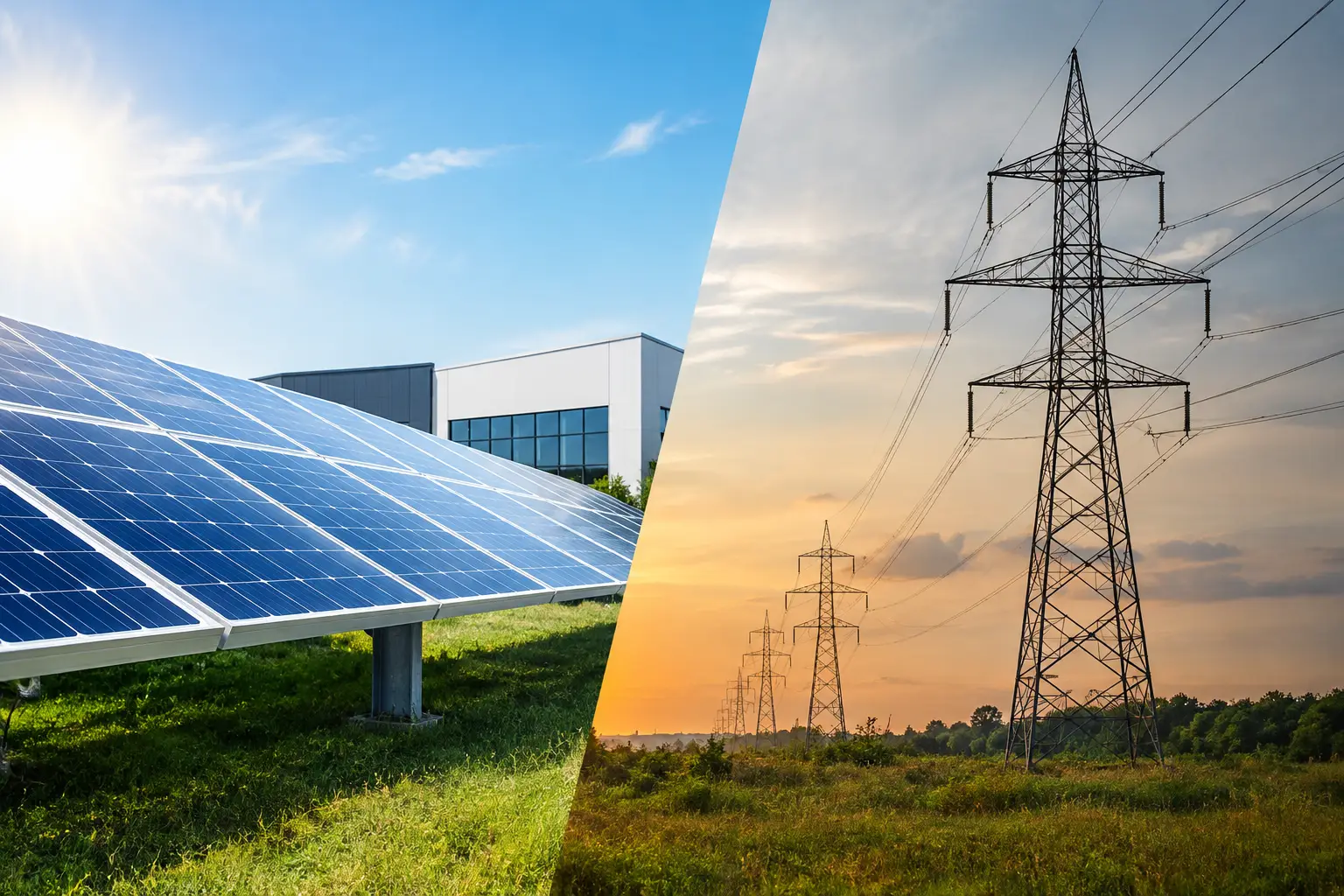
A business that runs hard through daylight hours is often paying for energy at exactly the time its roof could be producing it. That is the central question in commercial solar versus grid power: should your operation continue buying all of its electricity from the grid, or generate a meaningful share on site?
For most Australian businesses, it is not an all-or-nothing choice. The strongest outcome is usually a properly sized solar system that reduces daytime grid purchases, while the grid remains available when production is low, demand spikes or the sun goes down. The right balance depends on how your site uses power, not on a one-size-fits-all package.
Commercial solar versus grid power: the real difference
Grid power is simple. Electricity is supplied when you need it, and your business pays according to the tariff structure, peak demand and overall energy use at the site. It requires no roof space or operational changes, but it also leaves your energy spend exposed to future tariff movement.
Commercial solar shifts part of that energy supply onto your own premises. Panels generate electricity during the day, an inverter converts it for use, and your building uses solar energy before drawing further power from the grid. When generation closely matches consumption, every kilowatt-hour used on site can reduce the amount of electricity you need to purchase.
That distinction matters. Exporting unused solar can still deliver a benefit, but using solar directly in the business is typically where the biggest value sits. A workshop operating machinery from mid-morning to late afternoon, a retailer running refrigeration and air conditioning, or an office with steady daytime loads can be well suited to on-site generation.
Solar does not remove every electricity bill or make the grid irrelevant. It gives businesses more control over the daytime portion of their consumption. For many operators, that is a practical way to reduce reliance on a cost they cannot fully control.
When commercial solar makes the strongest case
The best commercial solar opportunities tend to have three things in common: a usable roof or ground area, a reliable daytime electricity load and a site likely to remain occupied for years.
Daytime demand is particularly important. A business that consumes energy while its system is generating can put more solar production to work immediately. Think warehouses, medical practices, schools, factories, hospitality venues, farms, cold storage facilities and multi-site operators. Each has a different load profile, but all may have equipment drawing power during solar production hours.
Roof suitability also matters. A large, lightly shaded roof is helpful, but it is not the only consideration. Orientation, structural condition, switchboard capacity, access requirements and future site plans should all be assessed before system size is recommended. Installing more panels than the business can sensibly use may not deliver the outcome you expect.
Long-term occupancy supports the case as well. Solar is infrastructure, not a quick fix. Owners and tenants with a secure lease, predictable operations or multiple premises often have more confidence to invest in a system that supports ongoing energy savings.
Where grid power still has an important role
Grid power remains essential for most commercial sites. Solar generation changes with weather, season and time of day. A business operating overnight, running high-load machinery after sunset or experiencing short but intense demand peaks will still need grid electricity unless it also has suitable battery storage or another energy solution.
The grid is also valuable as backup. In a standard grid-connected solar setup, your business can draw electricity whenever solar production does not meet demand. That means you can reduce grid reliance without needing to redesign the way your business operates.
Some sites are less suited to a large solar system. For example, a business with very low daytime use, significant roof shading, a short remaining lease or limited electrical capacity may need a more cautious approach. Solar can still be worthwhile, but the system design must reflect the site’s constraints rather than chase a headline system size.
Your load profile decides more than your roof size
A commercial solar assessment should begin with electricity usage, not panel count. Bills provide useful information, but interval data is even more valuable because it shows when power is being consumed across the day.
A business that uses most of its electricity between 9 am and 5 pm may be able to self-consume a substantial portion of solar generation. A business with low daytime demand and heavy evening use has a different challenge. It may benefit from a smaller solar system, battery storage, operational changes or a combination of these options.
This is why two businesses with similar annual electricity use can need very different solar designs. One may need a system focused on offsetting a steady daytime load. Another may need to manage demand peaks, support evening operations or improve resilience for critical equipment.
Good system design asks practical questions. When do compressors run? When is air conditioning highest? Are EVs charged during the day? Could certain processes be scheduled around solar production? These details can materially improve the value of commercial solar.
Solar, batteries and business resilience
Solar panels generate during daylight. Batteries store surplus energy for later use, helping businesses shift some solar value into the evening or cover short periods when generation drops. For operations with late trading, night loads or a strong need to reduce grid draw after sunset, batteries deserve serious consideration.
Battery storage is not automatically the right fit for every site. It should be assessed against the business’s load profile, operational priorities and desired level of backup capability. A battery designed for self-consumption may be different from one intended to support essential loads during an outage.
It is also important to understand that not every solar-and-battery system provides backup power as standard. Backup capability depends on the inverter, battery configuration, switchboard setup and the circuits selected as essential. If refrigeration, security systems, communications, medical equipment or production processes need continuity, raise that requirement at the design stage.
For some businesses, the best first move is solar alone. For others, adding batteries and EV charging infrastructure creates a more flexible energy setup. The answer should follow the way your premises works, not the latest trend.
What to check before choosing commercial solar
A quality installation begins well before panels arrive on site. Your provider should assess the building, review energy consumption, consider network requirements and explain how the recommended system is expected to work with your current electricity supply.
Pay attention to equipment quality and support. Commercial systems work hard, so panel performance, inverter reliability, monitoring access, product warranties and installation workmanship all matter. A system that looks attractive on paper but is poorly matched or poorly installed can create avoidable headaches later.
It is also worth asking how growth will be handled. If you expect to add machinery, extend trading hours, install EV chargers or occupy more of the building, tell your solar provider early. A scalable design can help avoid unnecessary rework as the business changes.
In Australia, eligible commercial projects may also be able to access Small-scale Technology Certificates for qualifying systems within the relevant capacity limits. Requirements can change, and eligibility depends on the system and installation, so clear guidance is essential before proceeding.
A smarter way to compare your options
Do not compare commercial solar and grid power as though only one can exist. Compare the outcome of continuing to buy every unit of electricity against a tailored system that supplies part of your daytime needs from your own roof.
Start with your bills and operating hours. Then look at your daytime consumption, roof condition, electrical infrastructure and future plans. From there, a tailored proposal can show whether a system in the right size range – from a modest commercial installation through to a larger industrial-scale solution – suits the site.
The goal is not to install the biggest possible system. It is to build an energy solution that helps your business use more of its own power, reduce exposure to grid dependence and operate with greater confidence. Solar Miner can help assess your site, recommend trusted technology and manage the process from system design through to installation.
The most useful next step is simple: put your energy data beside your operating reality. Once you know when your business uses power, the right path between solar, batteries and grid supply becomes far clearer.