
 1300 285 885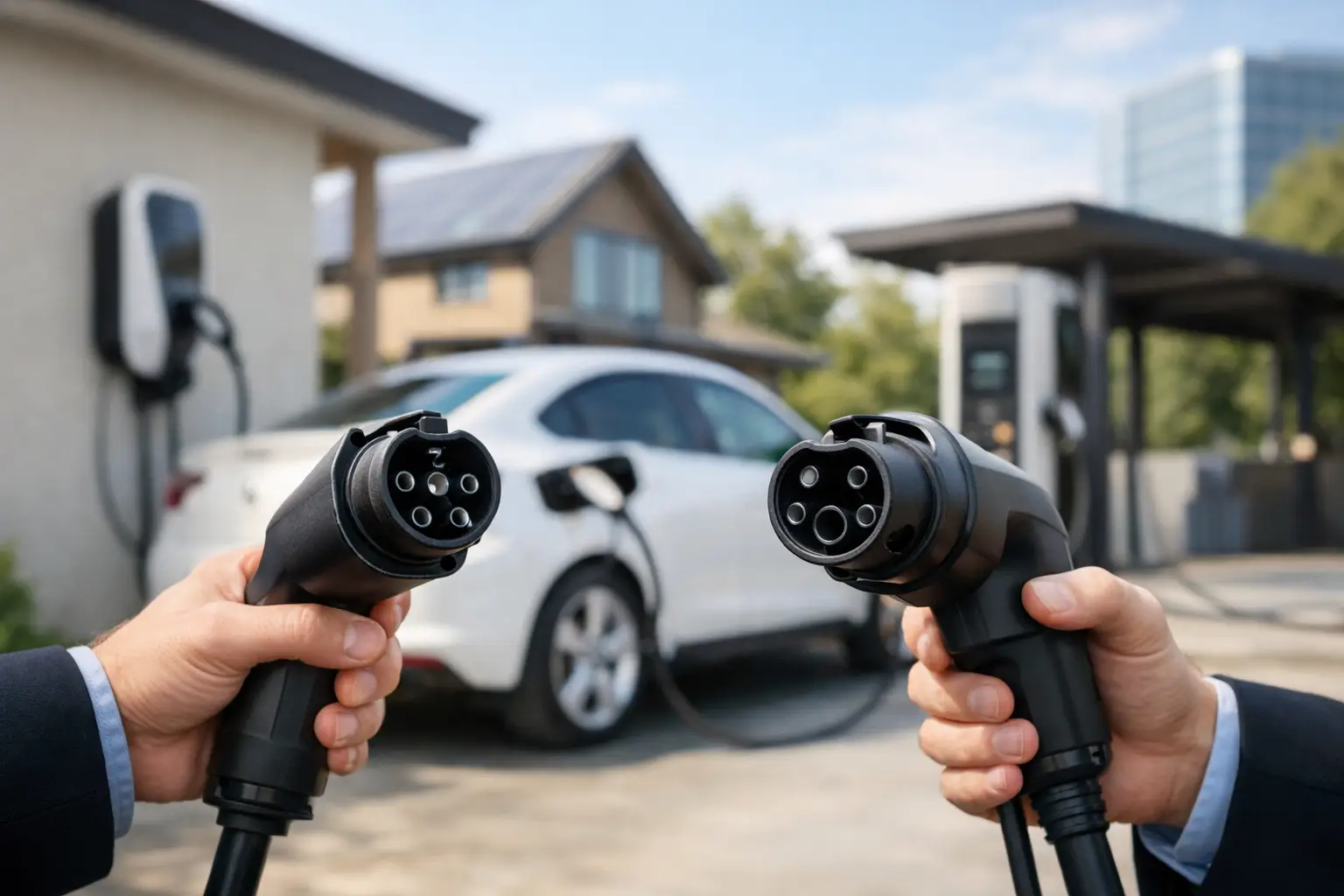
An EV is at its most convenient when it starts each morning charged and ready to go. The right EV charger turns that convenience into a practical energy-saving opportunity, especially for Australian homes and businesses already using solar. But charger choice is not simply about selecting the fastest unit. Your vehicle, electrical supply, driving habits, solar system and future plans all matter.
A professionally selected and installed charger gives you safe, dependable charging where you need it most. It can also help you make better use of the solar energy your panels produce during the day, rather than sending more of it back to the grid.
Why install an EV charger at your property?
A dedicated wall-mounted charger is built for regular EV charging. Compared with relying on a standard power point, it gives you a more reliable setup, better control over charging times and access to smart features that can support solar charging.
For households, this means less time spent planning trips around public charging stations. Plug in after work or schedule charging around your daily routine. For businesses, an EV charger can support staff vehicles, company fleets, customers or site operations while demonstrating a clear commitment to lower-emission transport.
The biggest opportunity is often solar self-consumption. A typical solar system produces the most energy in the middle of the day, when many homeowners are out and businesses may have varying loads. A compatible smart charger can direct available solar energy into your vehicle, helping you use more of the power generated on site.
That does not mean every charge must happen in full sunshine. Overnight charging may suit your lifestyle better, and a charger can be scheduled to run during your preferred electricity periods. The best approach depends on when your car is home, how far you drive and how much solar generation is available.
Choosing an EV charger that fits your needs
Start with your vehicle and your normal weekly travel. A driver covering short local trips has very different needs from a household with two EVs, a sales team travelling across the state or a business running electric fleet vehicles. The aim is to replace the energy you use without making your electrical system work harder than it needs to.
Charging speed and electrical supply
Many Australian homes use single-phase electricity, where a 7kW charger is often a practical choice. It can comfortably replenish a substantial amount of driving range during an overnight charge. Some properties have three-phase supply, which may support higher-capacity charging, including 22kW units where the vehicle and site are compatible.
Faster is not automatically better. Your vehicle has its own maximum AC charging capability, so a higher-rated charger will not necessarily charge every EV more quickly. Your switchboard capacity, existing electrical loads and cable run to the garage or car park also affect what is suitable.
A qualified installer should assess the site before recommending a charger. This protects your electrical infrastructure and ensures the charging setup is designed for the way the property actually operates.
Smart controls make solar work harder
Smart EV charging is worth considering for most solar households. These chargers can be controlled through an app, scheduled for specific times and, in some cases, adjusted in response to available solar generation or household demand.
Solar-aware charging is particularly useful when your car is parked at home during the day. Rather than charging at a fixed rate regardless of what the property is using, the charger can prioritise surplus solar where the setup supports it. If clouds roll in or major appliances switch on, charging can reduce temporarily to avoid placing unnecessary demand on the grid.
For a business, smart controls can also help manage several chargers at once. This is known as load management. It allows available power to be shared intelligently across chargers and other essential site loads, rather than requiring every charger to run at maximum output at the same time.
Cable type, connector and everyday usability
Your charger should suit your vehicle connection and the way you park. A tethered charger has a permanently attached cable, which is quick and simple for daily use. A socketed unit allows drivers to use their own cable and can be more flexible where multiple vehicle types share a charger.
Think about cable length, parking position and whether the charger will be installed inside a garage, on an external wall or in a shared car park. The location should be accessible without creating a trip hazard across footpaths. For commercial sites, clear bay markings and sensible cable management can make a major difference to how well the system is used.
Pairing your EV charger with solar and battery storage
Solar and EV charging are a strong match because your car can act as another major energy load that you control. Instead of viewing solar generation as power for lights and appliances only, you can use it to support transport as well.
If your vehicle is generally away during daylight hours, a battery may help shift some solar energy into the evening. However, battery capacity, household evening usage and charging behaviour must all be considered. In some cases, it makes more sense to schedule a portion of vehicle charging overnight and reserve stored energy for household use. There is no single setup that suits every property.
For homes planning to add an EV later, it is smart to consider charger readiness when installing or upgrading solar. Allowing for switchboard space, cable pathways and future electrical demand can make the next stage easier. The same principle applies to commercial sites, where fleet electrification may happen progressively rather than all at once.
Solar Miner can help assess solar generation, battery options and charging requirements as one connected energy plan, rather than treating the charger as a stand-alone purchase.
What a professional installation should cover
An EV charger is a high-use electrical appliance, so installation quality matters. A proper site assessment considers your switchboard, electrical supply, cable route, charger location, earthing and the loads already running at the property. Your installer should also make sure the work meets applicable Australian electrical requirements.
At home, the practical questions are straightforward: Where do you park? How far is that space from the switchboard? Is the charger exposed to weather? Will you want to charge a second EV in the future? Clear answers lead to a cleaner installation and a system that works from day one.
Commercial and industrial sites need a broader view. Charging demand may sit alongside machinery, refrigeration, office loads, solar generation and future expansion. A staged design can be the right option, with electrical infrastructure prepared for more chargers as demand grows. This avoids treating today’s needs as the final limit of the site.
Common mistakes to avoid
The first mistake is choosing purely on maximum charging speed. A charger must match the vehicle and electrical supply, not just look impressive on a specification sheet. The second is overlooking where and when the car is parked. Solar charging has less value if the vehicle is rarely connected during solar production hours, although smart scheduling can still deliver useful control.
Another common issue is failing to plan for future loads. A household may add a second EV, battery or larger solar system. A business may transition part of its fleet over several years. Discuss those plans upfront so your installation can be designed with sensible room to grow.
Finally, avoid treating installation as an afterthought. The charger, electrical work, solar system and energy habits should work together. This is where experienced advice pays off.
Make every kilometre work harder
The best EV charging setup is one that fits naturally into your day: plug in, charge safely and use more of the energy your property already produces. Whether you are preparing a family home for its first electric vehicle or planning charging for a growing business fleet, start with an assessment of your energy use, electrical capacity and solar potential. A well-designed EV charger can keep delivering value long after the car is parked.