
 1300 285 885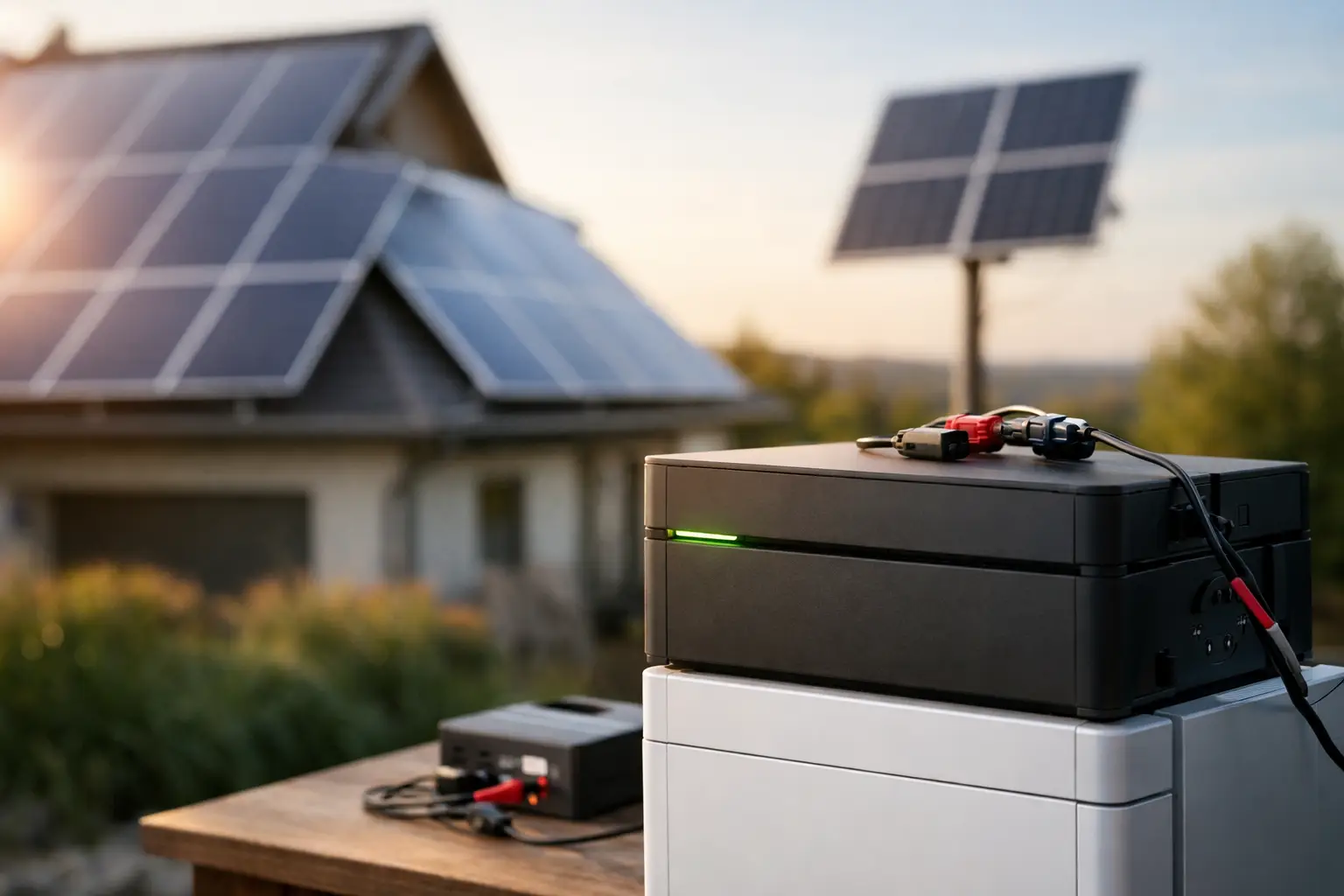
The real test for solar isn’t what your panels produce at midday. It’s what happens at 7 pm, when the lights are on, the air con is working hard, and your solar generation has dropped away. That’s where solar batteries change the equation. Instead of sending unused daytime power back to the grid and buying it back later, you keep more of your own energy on site and use it when it suits you.
For Australian homes and businesses, that can mean lower reliance on the grid, better use of the solar system you already have, and more control over rising electricity costs. But a battery is not an automatic yes for every property. The right answer depends on how much power you use, when you use it, and what you want from your energy setup.
What solar batteries actually do
Solar batteries store excess electricity generated by your solar panels during the day. Rather than exporting all of that unused energy, the battery holds it for later. When solar production drops in the evening, or when demand spikes, that stored energy can power your home or business first.
That sounds simple because it is. The practical benefit is that you use more of your own solar instead of leaning on the grid. For many customers, that is the main reason to add battery storage. It is less about chasing a trend and more about getting stronger value from the system on your roof.
Some systems also provide backup capability during outages, although that depends on the battery model, inverter setup, and how the system is designed. Not every battery delivers the same level of backup, so this is one area where a tailored recommendation matters.
Why solar batteries appeal to Australian properties
Australia has strong solar conditions, but that does not always line up neatly with when energy is needed most. Households often use more electricity in the morning and evening. Businesses may have daytime demand, but they can also face expensive usage patterns, refrigeration loads, equipment cycles, or extended operating hours.
Solar batteries help bridge that gap. They let you capture more of what your system produces and shift it into the periods where grid power would otherwise take over. In practical terms, that can support lower power bills, better energy independence, and a more efficient overall system.
There is also a growing mindset shift among property owners. People are no longer just asking, “Should I get solar?” They are asking, “How much of my own energy can I keep and use?” Battery storage is a direct answer to that question.
Are solar batteries worth it?
They can be, but it depends on the property.
If you are out of the house all day and your daytime solar is regularly being exported, a battery may help you capture more value from that generation and use it in the evening. If your household already consumes most of its solar during the day, the battery benefit may be less dramatic. For businesses, the answer comes down to operating hours, demand profile, and how much on-site solar is being underused.
The strongest battery candidates usually have one or more of the following: high evening consumption, regular grid reliance after sunset, a desire for backup power, or a goal to reduce dependence on retailers and future bill increases. In those cases, battery storage can become a practical long-term asset rather than an optional extra.
The trade-off is that sizing matters. A battery that is too small may not carry enough load into the evening. A battery that is too large for your usage can leave stored capacity underused. That is why package-based recommendations work best when they are matched to actual consumption, not guesswork.
Choosing the right solar batteries for your needs
The best battery is not simply the biggest one or the newest brand on the market. It is the one that fits your solar system, your usage habits, and your property type.
For households
A medium home with a standard rooftop solar system usually needs a battery solution that can cover evening essentials without being oversized. Think lighting, appliances, refrigeration, internet, and possibly air conditioning depending on the season. A good design starts with your typical night-time usage, not your total daily usage.
Families with higher evening demand often benefit most because that is when stored solar can displace grid power most effectively. Homes adding EV charging may also need a more considered setup, especially if the vehicle is charged after work rather than during the day.
For small business
Small businesses can benefit from solar batteries if they have refrigeration, late trading hours, or a pattern of energy use that runs beyond solar production hours. Cafes, retail sites, workshops, and offices all use energy differently, so battery suitability needs to be assessed case by case.
If your business has a daytime-heavy load and already uses most of its solar directly, a battery may be less urgent than increasing panel capacity or improving system design. If your site keeps drawing heavily from the grid outside peak solar hours, storage becomes more compelling.
For commercial and industrial sites
Larger commercial and industrial systems need a more strategic approach. Battery storage can support load shifting, improve energy management, and create a stronger return from a larger solar asset. But these systems should be planned carefully around operational loads, infrastructure, and future expansion.
For larger sites, battery decisions are rarely about a single product. They are about system architecture, performance reliability, and long-term site needs.
What to look for in solar batteries
There are a few core factors worth paying attention to when comparing options.
Capacity tells you how much energy the battery can store. Usable capacity matters more than headline figures because that reflects what you can actually draw from it. Power output matters too, because it affects how many appliances or business loads the battery can support at once.
Warranty is another major trust marker. A quality battery should come backed by a strong product warranty and proven manufacturer support. This is not the place to cut corners. Battery storage is a long-term energy asset, so reliability matters just as much as performance.
Compatibility is just as important. Not every battery works neatly with every inverter or existing solar setup. Some systems are designed for new installs, while others are better suited to retrofits. The cleaner the integration, the smoother the installation and performance.
Monitoring also deserves attention. A good battery setup should give you a clear view of generation, storage, and usage so you can understand how your system is performing day to day.
The case for adding a battery to an existing solar system
Many property owners start with panels and consider storage later. That can make good sense. It allows you to reduce daytime electricity costs first, then add battery storage once you understand your usage patterns more clearly.
Retrofitting a battery is often a smart move for customers who already have a solid solar foundation and want to improve self-consumption. It is especially relevant when export value feels limited compared with the cost of buying power back at night.
Still, not every existing system is battery-ready. Your inverter setup, switchboard condition, panel capacity, and site configuration all play a role. This is why a proper assessment matters before moving ahead.
Why installation quality matters as much as the battery itself
A premium battery on a poorly planned system will not deliver what it should. The quality of design, installation, and after-sales support has a direct impact on performance, reliability, and long-term confidence.
That is why many customers prefer an end-to-end provider rather than piecing the project together themselves. When your installer understands solar panels, inverters, storage, system sizing, finance pathways, and applicable rebates, the process becomes clearer and the result is usually stronger.
Trust matters in a category like this. You want approved products, experienced installers, clear communication, and support that continues after the system is switched on. Solar Miner has built its reputation around exactly that approach – quality systems, tailored recommendations, and a straightforward process that makes a high-consideration purchase easier to act on.
When it makes sense to act
Battery technology is no longer just for early adopters. It has become a practical next step for people who want more control over their energy and better use of the solar they already generate. The strongest results come when the battery is matched to your property properly, not sold as a one-size-fits-all add-on.
If your power use climbs after sunset, if you want more independence from the grid, or if you are planning a new solar system and want to future-proof it from the start, solar batteries are worth a serious look. The smart move is to start with your usage, your goals, and a system design that is built around both.