
 1300 285 885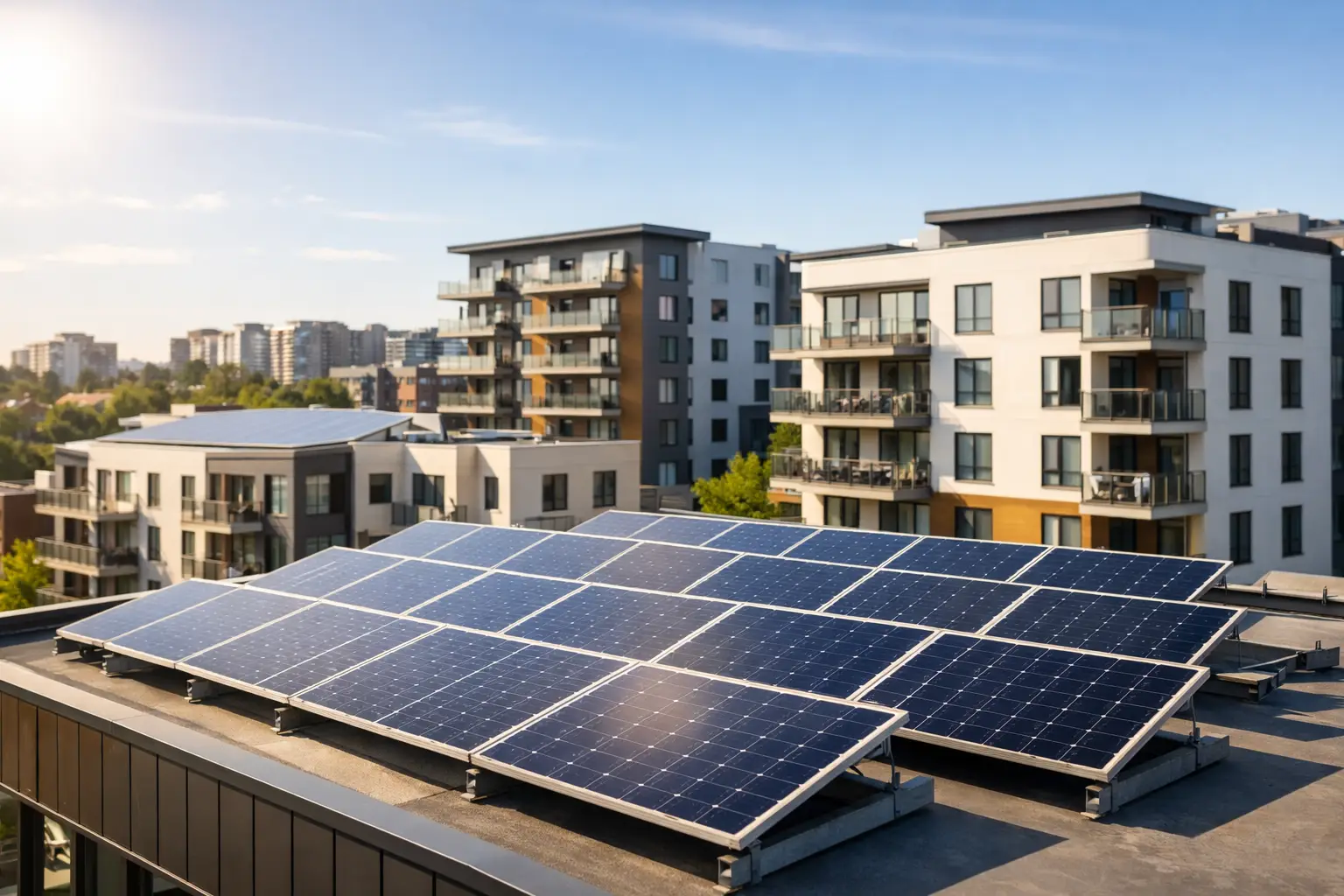
Apartment rooftops are often some of the most underused real estate in a building. While common-area electricity bills keep rising for lifts, lighting, pumps, garages and air conditioning, that roof can be generating clean power every day. Solar for apartment buildings is not a one-size-fits-all project, but with the right design and approvals, it can deliver meaningful, long-term savings.
The key is to start with the building’s energy setup, not just the available roof space. A quality solar solution must match how electricity is metered, who uses it, when it is used and what the owners corporation wants to achieve.
Why solar makes sense for apartment buildings
Most apartment buildings have a steady base load from shared services. Hallway lights, security systems, electric gates, ventilation, pool equipment, lifts and hot-water systems all consume electricity, often during daylight hours when solar production is strongest.
That makes common-property solar one of the simplest starting points. The system sends solar energy directly to the common-area meter, reducing the amount of electricity the building needs to buy from the grid. Residents may not see a direct reduction on their individual bills at first, but they can benefit through lower strata operating costs and a more efficient building.
For developers and property owners, solar can also improve the appeal of an apartment complex. Buyers and tenants increasingly look for homes with lower running costs, cleaner energy and EV-ready infrastructure. A well-planned system gives the building a practical advantage without asking residents to change their daily routine.
Solar for apartment buildings starts with metering
The biggest question is not, “How many panels fit on the roof?” It is, “Where can the solar energy go?” Apartment buildings commonly use one of several electricity arrangements, and each one changes the best solar pathway.
Common-area solar
This is often the most straightforward option. The solar system is connected to the meter supplying shared building loads. Energy generated during the day can offset consumption from lifts, lighting, pumps, parking areas and other common services.
It is a strong fit where common-area power use is substantial and consistent. It also keeps the project easier to explain because the owners corporation is usually the direct beneficiary of the bill savings.
Individual apartment systems
Installing a separate solar allocation for every apartment is possible in some buildings, but it is more complex. Roof space may be limited, apartments have different energy habits, and individual meters can make electricity sharing difficult.
This approach can work well in low-rise developments with generous roof space and a simple electrical layout. In larger complexes, it may require more advanced metering, additional electrical design and a clear agreement about how generation is allocated.
Embedded networks and shared-energy models
Some buildings use an embedded network, where electricity is purchased and managed through a central arrangement before being supplied to residents. These setups can create more options for sharing onsite solar, but they require specialist planning and transparent resident communication.
The benefit is greater flexibility. The trade-off is that billing, governance and consumer protections need to be handled properly. A solar installer should work alongside the relevant electrical, metering and strata professionals so the system is compliant and easy to manage after installation.
Start with the building, not a standard package
A 6.6kW home system is not a useful benchmark for a multi-storey apartment building. The right system size depends on the roof area, orientation, shading, switchboard capacity, daytime usage and future plans for the property.
A building with a pool, centralised hot water and mechanical ventilation may have enough daytime demand to support a larger system. A small complex with minimal common loads may need a more measured design, particularly if most solar generation would otherwise be exported.
Before recommending a system, a proper assessment should review electricity bills, interval data where available, the main switchboard and the condition of the roof. It should also consider practical constraints such as fire access paths, rooftop plant, heritage requirements, wind loading and shade from neighbouring buildings.
A quality design is about maximising useful solar energy, not simply installing the most panels possible. Panels that generate power when the building can use it are generally more valuable than a system designed around roof capacity alone.
Approvals: get the decision-making right early
Apartment solar projects need support from the people who own and manage the building. In most cases, that means approval through the owners corporation or body corporate process, following the relevant state legislation and the building’s by-laws.
The proposal should be clear enough for owners to make an informed decision. It should explain the expected purpose of the system, where equipment will sit, how installation access will be managed, what warranties apply and how ongoing maintenance will be handled.
The best projects do not treat approval as a formality. They answer the questions owners will naturally ask: Will the roof still be accessible? Who benefits? What happens if the building needs roof repairs? Is the system insured? Does it create extra administration for strata managers?
Addressing these points early can prevent delays and build confidence. For complex sites, an experienced solar provider can help present the technical scope in plain language so committees can focus on the decision rather than get lost in jargon.
Batteries and EV charging can strengthen the case
Solar panels are often the first step, but apartment buildings should also consider what comes next. Battery storage may help capture excess daytime generation for use later, particularly where common loads continue into the evening. Whether it makes sense depends on the building’s load profile, export arrangements and the role the battery is expected to play.
A battery is not automatically the right answer for every site. If most solar generation is already used during the day, the first priority may be appropriately sized panels. If the building has significant evening demand, or wants added backup capability for selected essential services, battery storage deserves a closer look.
EV charging is another major consideration. More residents are buying electric vehicles, and retrofitting charging infrastructure after demand has arrived can be harder than allowing for it from the start. Solar can support daytime vehicle charging, while smart charging equipment can help manage demand across shared electrical infrastructure.
Planning solar, batteries and EV charging together does not mean installing every component immediately. It means designing the electrical backbone so the building is ready to expand without unnecessary rework.
Quality equipment matters on shared property
Apartment solar is a long-term asset on a shared roof. That makes product quality, engineering and installation standards especially important. Panels, inverters, mounting systems and electrical protection should be selected for the site conditions and backed by reliable warranties.
The installation team also needs to understand occupied buildings. Work should be planned around resident access, safety, noise, lift use and roof-entry requirements. Clear communication matters just as much as the hardware when dozens or hundreds of people share the property.
Solar Miner helps property owners and managers assess solar solutions around actual building usage, available roof space and future energy goals. The aim is straightforward: quality technology, professionally installed, with a system size that makes commercial sense for the property.
Make incentives part of the project plan
Australian solar incentives can improve the value of an eligible installation, but eligibility and available support can vary by system type, location and project structure. Apartment buildings should confirm their position before finalising the design, especially where common-property metering or larger commercial-scale equipment is involved.
A knowledgeable provider can help identify the information needed for an eligible installation and make sure the documentation is handled correctly. This is another reason to avoid rushing into a generic quote. The best pathway depends on the building’s specific setup.
A smarter first move for your building
The most successful apartment solar projects begin with a practical energy assessment and a clear plan for owner approval. Start by gathering common-area electricity data, checking the roof and understanding the building’s meters. From there, the right system becomes much easier to define.
For an apartment building, solar is not just about putting panels on a roof. It is an opportunity to make shared property work harder, reduce ongoing energy exposure and prepare the building for the way Australians will use electricity in the years ahead.