
 1300 285 885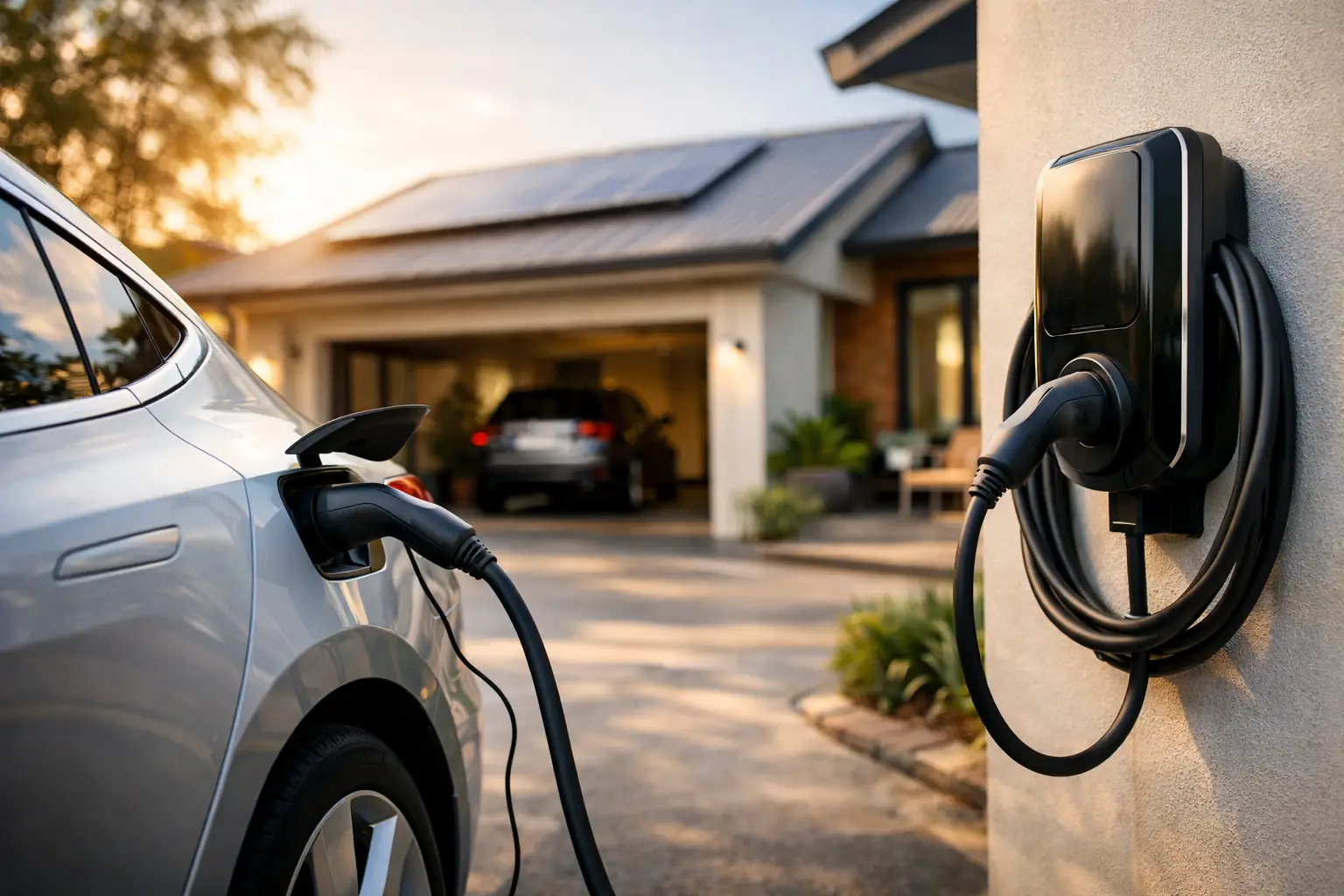
Your EV is only as convenient as the charger waiting for it at home. A standard power point may work for occasional top-ups, but it is not the practical long-term answer for most drivers. The best EV chargers Australia homeowners can choose deliver faster, safer charging, fit the home’s electrical capacity and make better use of rooftop solar.
For a household already producing clean energy during the day, an EV charger can turn spare solar generation into kilometres in the battery rather than electricity exported to the grid. For everyone else, smart scheduling can shift charging to times that suit your energy plan and daily routine. The right unit is not simply the one with the biggest number on the box. It is the one that suits your vehicle, switchboard, solar system and how you actually drive.
Best EV chargers in Australia: what matters
A quality home charger is generally a wall-mounted AC unit installed on a dedicated circuit by a licensed electrician. It communicates with the vehicle and safely manages the flow of electricity, giving you a more dependable setup than a portable charging cable plugged into a general outlet.
When comparing chargers, start with the vehicle connector. Most new EVs sold locally use a Type 2 charging connection, but it is worth confirming your vehicle’s specification before selecting a tethered charger with a fixed cable. A socketed unit gives greater flexibility if you change cars, while a tethered cable is quick and tidy for households charging the same vehicle every day.
Charging power is the next decision. A 7kW charger is a popular fit for many Australian homes with single-phase electricity and is more than capable of replenishing everyday driving overnight. A 22kW charger can be a strong option for properties with three-phase power, but only when the vehicle can accept that level of AC charging. Many EVs cannot, so installing a higher-rated charger does not automatically mean faster charging.
That is why a proper site assessment matters. A trusted installer should consider your switchboard, available supply capacity, cable route, parking position, solar setup and household demand before recommending a charger. This protects performance and helps avoid nuisance tripping when appliances, air conditioning and EV charging are all running at once.
Choose charging speed around your driving habits
The best charger for a commuter who drives 40 kilometres a day may be very different from the best charger for a family with two EVs, a home office and frequent regional trips.
For many households, overnight charging is the simple answer. Plug in after dinner, schedule the charge and wake up with the car ready for the morning. In this case, a correctly installed 7kW smart charger usually provides plenty of capacity without placing unnecessary pressure on the home’s electrical supply.
A higher-output unit can make sense if you have three-phase power, drive long distances most days or need to recharge between trips. It can also suit a business with staff vehicles, a fleet or customer parking. However, the charger must be matched to the vehicle’s onboard AC charging limit. Your EV, not just the wall unit, determines the final charging speed.
If you are planning for a second EV, choose a setup that can grow with the household. Some smart chargers can share available capacity between two charging points, while a professional electrical design may allow for an additional unit later. Planning this early is far easier than reworking the installation after another car arrives in the driveway.
Smart charging is where the savings are made
The most useful EV chargers do more than deliver power. They give you control over when, how fast and from which energy source your vehicle charges.
Look for smart functions such as app monitoring, scheduled charging, adjustable current settings and automatic software updates. These features help you run charging around household demand rather than treating the EV as another fixed appliance.
Dynamic load balancing is particularly valuable. It monitors electricity use in the home and can reduce or pause EV charging when demand rises. When major loads switch off, it can increase charging again. This helps protect the electrical supply while allowing you to charge with confidence.
For solar households, solar-aware charging should be high on the list. Depending on the charger, inverter compatibility and system design, the charger may be able to prioritise surplus solar generation. On a sunny day, that means more of the energy from your roof can go into your car battery. It is a practical way to increase solar self-consumption and reduce reliance on grid electricity.
There is a trade-off. Solar-only charging can vary with cloud cover and household consumption, so it may not be the right setting when you need a guaranteed full battery by a particular time. The strongest setups combine solar modes with scheduled charging, giving you flexibility when the forecast or your travel plans change.
Leading charger types for Australian homes
Rather than choosing on brand name alone, compare the features that matter to your property. Well-known options in the Australian market include the Tesla Wall Connector, Wallbox Pulsar range, myenergi Zappi, Fronius Wattpilot and Ocular charging solutions. Each can be a good choice in the right installation.
The Tesla Wall Connector is a logical consideration for Tesla owners, with a clean design and smart controls. It can also charge other compatible Type 2 vehicles, making it more versatile than many people assume. It is best assessed alongside your cable requirements, electrical supply and future vehicle plans.
Wallbox models are often chosen for compact design and intelligent load management. They suit homeowners looking for app-based control and a neat installation, particularly where switchboard capacity needs careful management.
The myenergi Zappi has become a familiar option for solar-focused households because of its energy monitoring and surplus-solar charging modes. It can be a strong match when maximising self-generated energy is the priority.
Fronius Wattpilot is worth considering for homes using compatible Fronius solar equipment. An integrated energy ecosystem can make it easier to monitor solar production, home consumption and EV charging in one place. Compatibility still needs to be checked, particularly if your solar system uses equipment from different manufacturers.
Ocular offers a range of charging options commonly selected for residential and commercial applications. The right model depends on whether you need a straightforward home charger, more advanced access controls or a solution that can scale for multiple users.
A reputable installer will not force every customer into one charger brand. They will explain what works with your vehicle and energy system, then recommend equipment supported by solid warranties, compliant installation and local technical backup.
Do not overlook installation and safety
An EV charger is a high-load electrical appliance. It needs a dedicated circuit, suitable protection devices and installation that meets applicable Australian electrical requirements. This is not a DIY job and it is not a task for an unqualified installer.
The location matters too. A charger should be easy to reach from the vehicle without creating a trip hazard across the garage or driveway. Consider whether the cable will be exposed to weather, whether the charger needs access control and how the unit will be used when guests or staff visit.
For outdoor installations, choose equipment designed for local conditions and position it where it is protected from unnecessary heat, water and physical damage. A quality installation also considers cable management, switchboard labelling and a clean finish that complements the property.
If your home has solar, battery storage, electric hot water or ducted air conditioning, the electrical design deserves even more attention. These systems can work brilliantly together, but they need to be coordinated so your EV charging supports your energy goals rather than competing with them.
A better way to select your EV charger
Before requesting an installation, have four answers ready: the EV make and model, your usual daily kilometres, whether you have single-phase or three-phase power, and whether solar or a battery is already installed. These details give an installer the foundation for an accurate recommendation.
From there, focus on the outcome you want. If reliable overnight charging is the goal, a smart 7kW charger may be ideal. If you want to use excess solar, prioritise compatible solar-charging controls. If your property is a business or you expect multiple vehicles, look at load sharing, user access and expansion capability.
Solar Miner can help match your EV charger with the wider energy setup at your property, from rooftop solar through to battery storage and professional installation. The aim is simple: make your vehicle easier to run while putting more of your energy to work.
The right charger should fade into the background after installation. You arrive home, plug in, and your car is ready when you need it – powered in the smartest way your home can support.