
 1300 285 885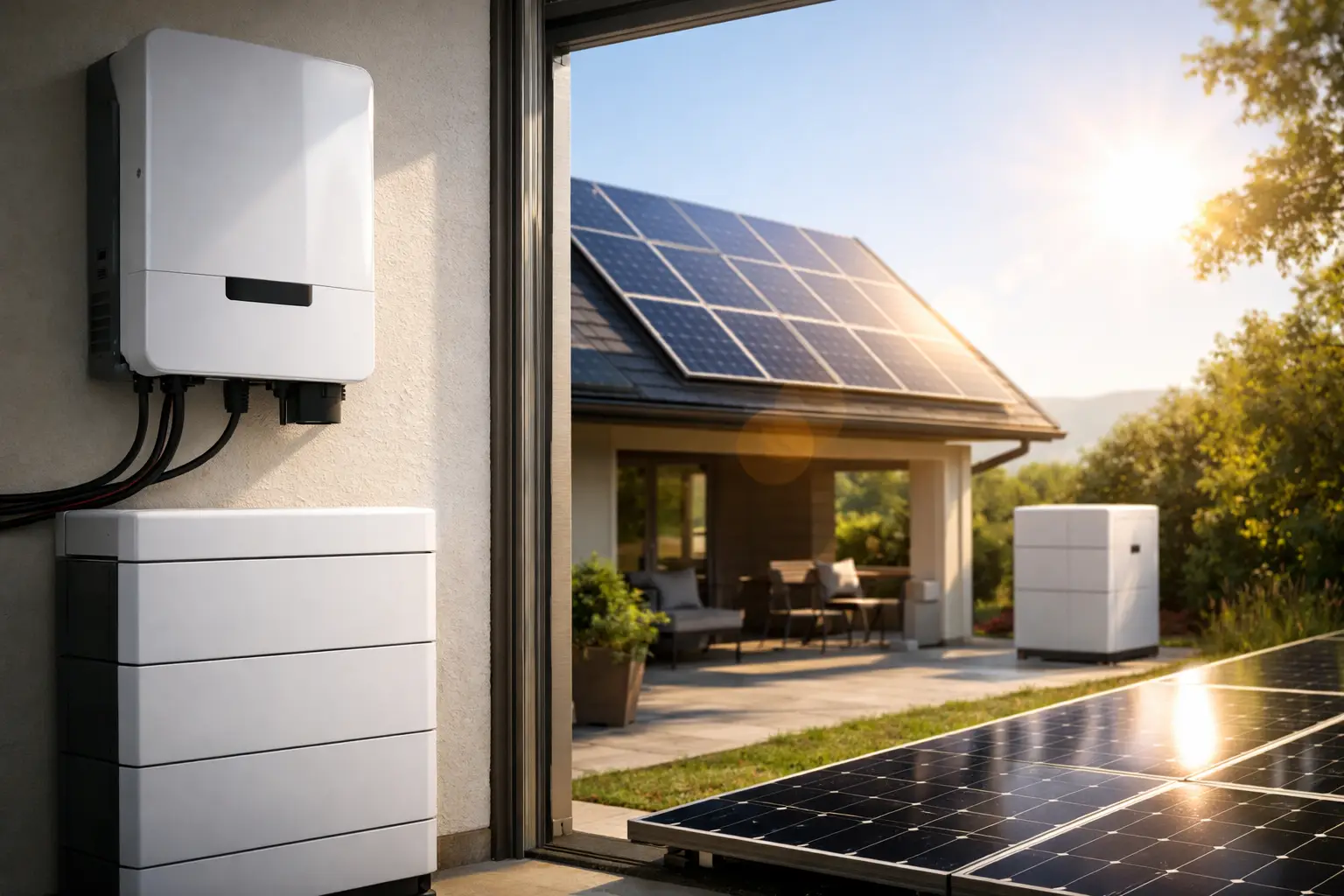
A solar system can be producing plenty of power at midday yet still send most of it to the grid while your household buys electricity after sunset. That is why the best battery ready solar inverters are worth considering from day one. They give you a clear path to add battery storage later, without forcing a major rethink of your solar system.
For Australian households and businesses, the right inverter is not simply the one with the biggest output figure. It needs to suit your panel capacity, daytime usage, network requirements and future energy goals. Choose well now and you can build towards higher solar self-consumption, better backup options and more control over rising electricity bills.
What makes an inverter battery ready?
A battery-ready inverter is designed to work with a compatible battery, either immediately or through a planned upgrade. In many cases, this means a hybrid inverter. A hybrid inverter manages power from solar panels, the grid, household loads and a battery through one central unit.
That does not mean every battery-ready inverter works with every battery. Compatibility matters. Some systems are designed around a specific battery range, while others support approved batteries from several manufacturers. Before selecting equipment, confirm the exact battery models, capacity options and backup features supported by the inverter.
A standard solar inverter can still be paired with a battery later using an AC-coupled battery system. This can be a sensible solution where a quality solar system is already installed. For a new installation, however, choosing a compatible hybrid inverter often creates a cleaner future upgrade path with fewer components to manage.
Best battery ready solar inverters: what to compare
The best choice depends on the property, not just the inverter label. A medium home with a 6.6kW solar system has different needs from a business operating refrigeration, machinery or multiple EV chargers. These are the factors that make the biggest difference.
Solar system size and inverter capacity
Your inverter must be correctly matched to the solar array and your expected energy use. Oversizing or undersizing equipment without a proper design can limit output, reduce the value of your investment or restrict future expansion.
Australian installations commonly use a panel array that is larger than the inverter’s AC rating. This is known as DC oversizing, and it can help generate useful power for longer across the morning and afternoon. The appropriate ratio depends on the equipment, roof orientation, shading and local connection rules. A tailored system design is far more valuable than selecting an inverter based on one headline number.
Battery compatibility and usable capacity
Think beyond whether a battery can connect. Ask how much battery capacity the inverter can support, whether additional battery modules can be added later, and whether the system can manage more than one battery unit.
For many homes, starting with solar and adding storage when evening consumption or electricity tariffs make it worthwhile is a practical approach. For businesses, the future requirement may be less about overnight use and more about managing demand, protecting critical loads or making better use of daytime generation.
Battery capacity should be matched to your consumption pattern. A large battery is not automatically better if most of the stored energy is rarely used. Smart monitoring data can reveal how much solar surplus you regularly export and how much electricity you consume after the sun goes down.
Backup power capability
Battery storage does not automatically mean your home or business will have power during a blackout. Many systems shut down for safety when the grid goes down, even if solar panels and a battery are installed.
If backup power matters, choose an inverter and battery combination with backup functionality and have the backup circuit designed properly. Some systems can support selected essential loads, such as lights, refrigeration, internet and a few power points. Others can provide broader whole-home backup, subject to system design, battery output and the loads connected.
Three-phase properties need particular attention. Backup arrangements can differ significantly between single-phase and three-phase sites, and not every inverter can back up all phases. This should be discussed before installation, especially for businesses where downtime affects operations.
Output power, not just stored energy
Battery capacity is measured in kilowatt-hours, but output power is measured in kilowatts. Both figures matter. Capacity tells you how much energy can be stored. Output power tells you how much equipment the battery and inverter can run at once.
A system may have enough stored energy for an evening, yet struggle if several high-demand appliances run together. Air conditioning, induction cooking, electric hot water, pool pumps and EV charging can create substantial peaks. A quality inverter recommendation considers these real-world loads rather than assuming every household uses energy the same way.
Monitoring and smart energy control
The strongest battery-ready systems make it easy to see where your energy is going. A good monitoring platform should show solar production, household consumption, grid imports, exports and battery activity in clear terms.
This data helps you change habits that improve savings. You may decide to run the dishwasher, pool pump or commercial equipment during solar hours. As electricity plans and export conditions change, smart controls can also help prioritise solar charging, battery discharge and grid use according to the rules you set.
Warranty, support and approved equipment
An inverter is expected to work hard for years in Australian heat. Choose equipment with a solid manufacturer warranty, local support arrangements and a proven installation network. The warranty period is only one part of the picture. It is also worth considering how fault diagnosis, replacement processes and ongoing service will be handled.
Your system must meet Australian standards and the connection requirements of your local distribution network. A professional installer will confirm approved equipment, export limits, switchboard needs and any site-specific requirements before the work begins. This protects the performance of the system and helps avoid costly surprises later.
Hybrid inverter or battery added later?
A hybrid inverter is usually the most direct choice for a new solar customer who expects to add a battery. It keeps the solar and battery setup integrated and can simplify the path to backup power where the selected system supports it.
However, installing a standard solar inverter now and using an AC-coupled battery later can still be the right answer. It may suit a property with an existing solar system, a staged upgrade plan or a battery solution that offers the features you need. There is no universal winner. The best approach depends on your current system, future goals and how you use electricity across the day.
For example, a household that is away during daylight hours may want to store more excess solar for the evening. A home with daytime air conditioning, a pool pump or regular EV charging may get greater value from using solar directly. A business operating mainly from 9 am to 5 pm may prioritise a larger solar array and energy management before adding substantial storage.
Avoid these common inverter mistakes
The first mistake is buying for a future battery without checking actual compatibility. Product names can sound similar, but compatibility can vary by model, software version and battery generation. Get the proposed inverter and battery combination documented clearly.
The second is assuming backup power covers every appliance. Backup design needs to reflect what you genuinely need to keep running and the output limits of the equipment. A carefully planned essential-loads backup setup can be more useful than an oversized expectation.
The third is ignoring the switchboard and site conditions. Older switchboards, limited space, three-phase supply, roof shading and network export limits can all influence the final design. A proper site assessment is part of getting a reliable result.
Finally, do not select an inverter on efficiency figures alone. Efficiency matters, but it is only one part of performance. Battery compatibility, output capability, monitoring, warranty support and expert installation will shape your experience every day.
Build a solar system that can grow with you
A battery-ready solar inverter gives you options. You can start by reducing daytime grid use with solar, then add storage when it suits your household, business operations or energy strategy. The key is to choose equipment that supports the next step rather than limiting it.
Solar Miner can assess your energy usage, property requirements and battery plans to recommend a quality solar package built for today and ready for tomorrow. A well-designed system should make your energy decisions simpler, while giving you more ways to put your solar generation to work.