
 1300 285 885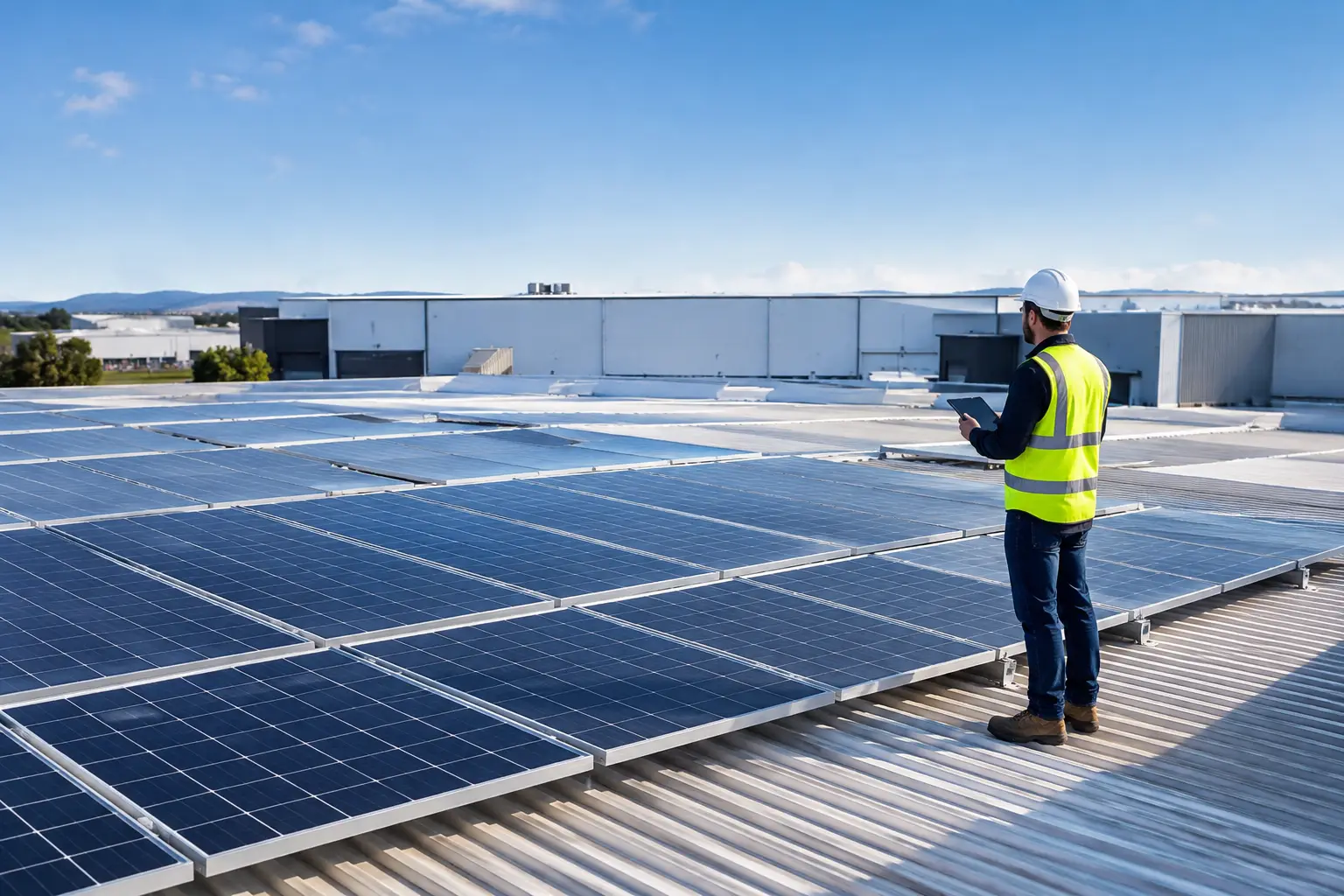
A warehouse roof can be one of your business’s most valuable energy assets. With broad, open roof space and significant daytime power demand from lighting, refrigeration, machinery, offices and charging equipment, the best solar systems for warehouses can turn unused space into a reliable source of lower-cost electricity.
The right result is not simply the largest possible array. It is a system matched to how your site uses power, when that demand occurs, the condition of the roof and the capacity of the local network. Get those fundamentals right and solar can reduce exposure to rising electricity costs while supporting a more efficient, lower-emissions operation.
What makes a warehouse solar system the right fit?
Warehouse energy use is rarely identical from one business to the next. A distribution centre operating mainly through daylight hours has a very different load profile from a cold-storage facility, a manufacturing site or a logistics operation with extended shifts.
That is why system sizing starts with interval electricity data, not a guess based on roof area. Your bills show overall consumption, but interval data reveals when your warehouse draws power across the day. This helps identify how much solar generation your business can use on site – the key driver of value for most commercial systems.
A well-designed warehouse system should aim to offset a meaningful share of daytime grid consumption without creating unnecessary excess exports. Exporting surplus solar can still provide a benefit, but using solar power directly for your operations will generally deliver the strongest outcome.
For many Australian warehouses, commercial systems in the 30kW to 100kW range are a practical starting point. Larger facilities may require multiple arrays or a more detailed electrical and network assessment. The best size depends on your consumption, available roof area, network limits and future plans for the premises.
The best solar systems for warehouses start with load data
A solar proposal should account for more than annual electricity use. Warehouses often have large power spikes caused by refrigeration compressors, conveyor systems, loading equipment, process machinery and HVAC. A quality assessment considers base load, peak demand and operating hours.
If your highest electricity use occurs from morning to late afternoon, rooftop solar is particularly well suited. Your business can consume power as it is generated, reducing the amount drawn from the grid during trading hours. This is common for distribution, wholesale, light industrial and logistics facilities.
Sites with substantial overnight consumption can still benefit, but the design may look different. A battery may help shift a portion of daytime generation into the evening, while energy-efficiency upgrades and smarter equipment scheduling can improve solar self-consumption. It depends on the load profile and the operational value of stored energy.
Future demand matters too. If you are adding refrigeration, expanding production lines or planning EV charging for fleet vehicles, mention it during the design stage. Allowing for future consumption can avoid a system that becomes undersized soon after installation.
Choose high-quality panels built for commercial roofs
Solar panels are expected to perform for decades, so quality should be treated as a business decision, not an optional extra. Commercial-grade panel selection should focus on proven performance, strong product warranties, manufacturer support and suitability for Australian conditions.
High-efficiency panels can produce more energy from a limited roof footprint, which is useful where skylights, vents, air-conditioning plant and access paths reduce usable space. However, the highest-output panel is not automatically the best choice. A larger roof with few obstructions may be better served by a well-designed array using dependable panels that suit the project’s energy target.
The roof itself needs equal attention. Before installation, assess its age, structure, waterproofing, orientation and shading. A roof nearing replacement may need remedial work first. Installing solar before resolving roofing issues can create unnecessary disruption later.
Warehouse roofs also need clear access for maintenance, fire safety requirements and equipment servicing. Good array layout leaves practical pathways and avoids blocking drainage points, roof hatches or plant access. These details protect the building and help keep the system serviceable over its lifespan.
Orientation, tilt and shading are commercial decisions
North-facing panels typically produce the highest total annual output in Australia, but an east-west layout can be the smarter choice for some warehouses. East-west arrays generate more evenly across the morning and afternoon, which may better match a site with consistent operating hours and a wide, low-pitch roof.
Shading from neighbouring buildings, trees, rooftop plant or even future developments can reduce output. A proper site assessment identifies these constraints early, rather than promising generation figures that the installed system cannot realistically achieve.
Inverters should match the site and network requirements
The inverter is the working heart of a commercial solar system. It converts panel output into usable electricity and coordinates how the system interacts with your warehouse and the grid. For a commercial installation, choose an approved inverter from a trusted manufacturer with suitable monitoring, warranty support and local service capability.
Many warehouse systems use string inverters because they are efficient, scalable and practical for large rooftop arrays. In some situations, multiple inverters provide useful flexibility. They can support separate roof sections, make staged expansion easier and limit the impact if one unit needs servicing.
Your installer should also address export limits and network approval. The local distribution network may limit how much solar your premises can export, especially in areas with high solar uptake. This does not necessarily stop a project from proceeding. It may mean designing for self-consumption, applying export control settings or considering battery storage.
Never treat network approval as an afterthought. A system designed around your approved connection conditions is far more likely to perform as expected once it is commissioned.
When battery storage makes sense for a warehouse
A solar battery is not essential for every warehouse, but it can be valuable where it solves a clear operational problem. The strongest cases often involve evening demand, high demand charges, export constraints, critical loads or a plan to charge electric vehicles outside peak solar hours.
For example, a warehouse with daytime solar generation but heavy after-hours refrigeration may use battery storage to reduce grid imports in the evening. A logistics business may use stored energy to support controlled EV charging. Some operations also value battery backup capability for selected essential loads, though backup design must be specified carefully and is not the same as powering an entire warehouse during an outage.
Battery capacity and power rating are both important. Capacity determines how much energy can be stored, while power determines how quickly that energy can be delivered. A battery that is too small in power may not support the loads you need, even if it holds adequate energy.
For many sites, the practical approach is to install solar-ready infrastructure and review battery storage after collecting real generation and consumption data. This can be a sensible path where battery needs are uncertain.
Monitoring turns solar performance into a business tool
A commercial solar system should include clear monitoring that lets you see generation, consumption and grid imports. This is more than a nice dashboard. Monitoring helps identify faults, confirm the system is performing and show how operational changes affect energy use.
For warehouse managers, visibility can support better decisions. You may find that moving a discretionary task into daylight hours increases solar use, or that a piece of equipment is drawing more energy than expected. Over time, these insights can complement the savings delivered by the solar array itself.
Ask how system alerts, performance checks and warranty support will be handled after installation. A quality commercial provider should explain the handover process in plain language, including what your team can monitor and when to request support.
A practical path to the right warehouse solar system
The most reliable projects begin with accurate information: recent electricity bills, interval data where available, roof plans, photos of rooftop equipment and a clear picture of operational hours. From there, an experienced commercial solar team can assess usable roof space, electrical infrastructure, shading, safety requirements and network conditions.
Be cautious of one-size-fits-all recommendations. A 100kW system may be ideal for one warehouse and poorly matched to another of similar size. The right design is based on the energy your business can use, not just the number of panels that fit on the roof.
Solar Miner helps businesses move from site assessment to tailored system design, approved technology, installation and ongoing support. The aim is straightforward: build a quality solar solution that fits your warehouse, your energy use and your plans for growth.
Your warehouse already has the space. The next step is to turn its roof into an asset that works through every sunny business day.