
 1300 285 885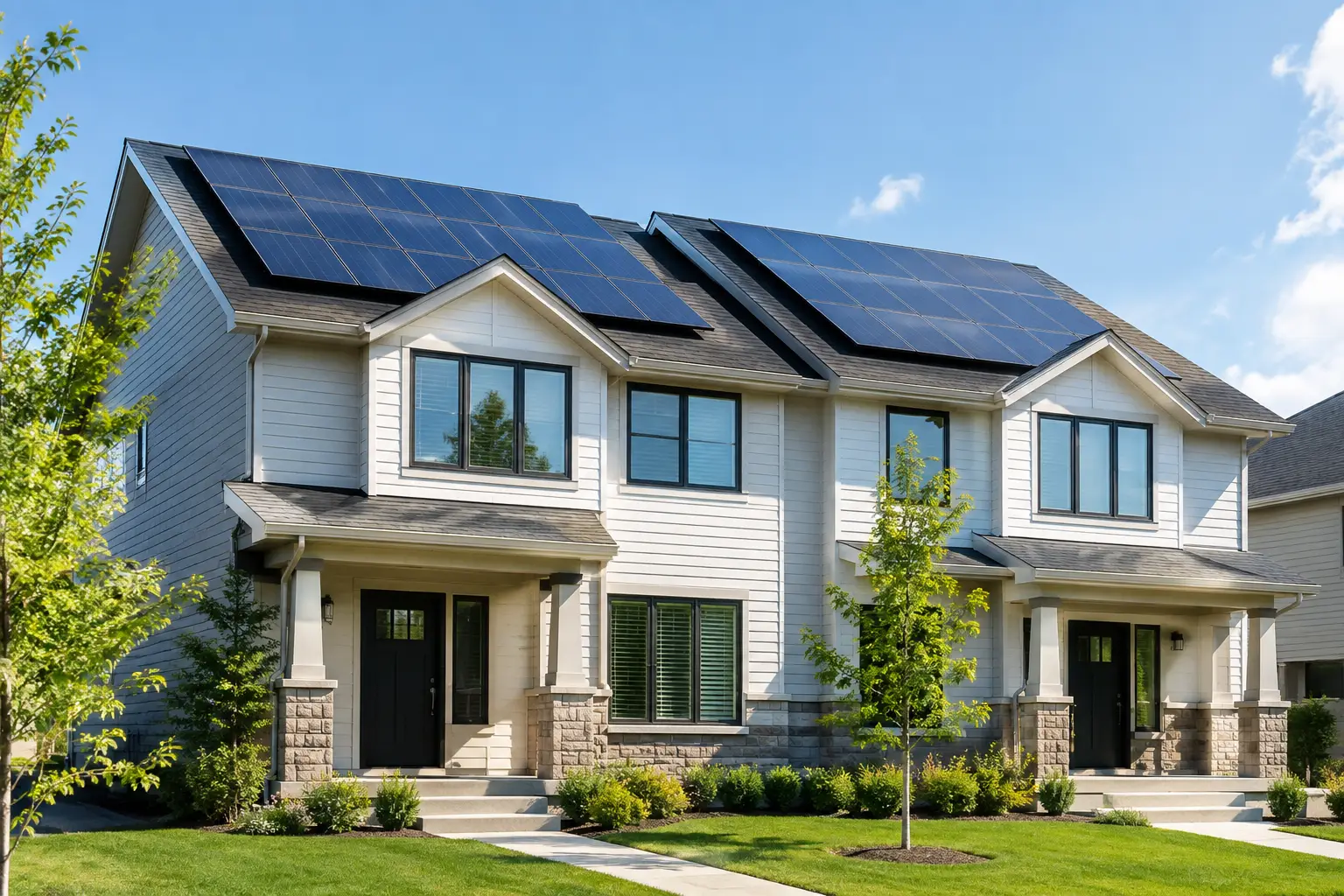
A duplex can look like one building from the street, but its electricity needs may be completely separate behind the meter box. That is why solar panels for duplex homes need more planning than a standard single dwelling system. Get the ownership, metering and roof layout right first, and solar can deliver lower daytime power bills for one household or both.
The best result is not simply filling every available section of roof with panels. It is choosing a system that matches who uses the power, when they use it and how the property is connected to the grid. For owner-occupiers, investors and dual-living households, that upfront clarity prevents costly surprises later.
Start with meters, ownership and electricity use
The first question is simple: does the duplex have one electricity meter or two? A shared meter generally means one solar system can offset the combined electricity use across the property. Separate meters usually mean each residence needs its own solar arrangement, inverter connection and retailer account.
This distinction matters because solar energy is used first where it is generated. If Unit 1 has the panels and inverter connected to its meter, Unit 2 does not automatically receive a share of the solar benefit, even if both dwellings sit under the same roof. Trying to split generation across separately metered homes can be more complex and may require specific technical approvals.
Ownership is equally important. If one person owns the entire duplex, planning is usually more straightforward. If each unit has a different owner, or the property is part of a strata arrangement, written agreement should come before system design. Roof access, future maintenance, inverter placement, insurance and the allocation of solar benefits all need to be clear.
A good solar assessment also looks at actual consumption. Two identical-looking units can have very different usage patterns. One may be occupied during the day with air conditioning, cooking and home-office loads, while the other is empty until evening. Solar should be sized around the available roof, expected daytime demand and future plans such as an EV charger or battery.
The best solar panels for duplex homes depend on the setup
There is no one-size-fits-all duplex system. The right solution depends on whether the homes share power, operate independently or include a common area.
One meter for the whole property
A single-meter duplex is often the simplest scenario. One well-sized solar system can reduce the property’s total grid consumption, provided there is enough daytime use to make the most of the generation.
This setup may suit a family living across both dwellings, a dual-occupancy home with shared services, or an owner who manages energy use for the full property. Common loads such as outdoor lighting, a shared laundry, pool equipment, gates or air conditioning can make solar even more useful during daylight hours.
The key consideration is fairness. Where tenants occupy each side, the owner should ensure the electricity arrangement and any cost-sharing method are transparent and compliant. Solar creates real value, but that value should be clearly managed rather than assumed.
Separate meters for each unit
With separate meters, each residence is normally treated as its own solar customer. That commonly means separate panel arrays or carefully designed roof sections, individual inverters and approvals for each connection point.
This approach gives each household direct control over its own solar generation and electricity account. It is often the cleanest long-term option for separately owned duplexes, independent tenants or homes with very different electricity habits.
The trade-off is that roof space may not divide evenly. One unit may have the better north-facing section while the other faces east or west. A quality design can still produce strong results by using suitable panel placement and inverter technology, rather than assuming only one roof direction is worthwhile.
Shared roof, separate benefits
Some duplexes have a single continuous roof with no obvious boundary between units. This does not stop solar from being installed, but it does mean the design needs careful attention.
Installers need safe access, suitable mounting zones and enough clearance around roof edges and obstructions. Owners should agree on where equipment sits and who can approve future repairs. If one side needs roof work years later, everyone should understand how panels may need to be temporarily removed and reinstated.
Roof design matters more than square metres
Duplex roofs can be deceptively challenging. The building may offer a large footprint, but roof space can be broken up by party walls, vents, skylights, dormers and different roof angles. Shade from neighbouring buildings, trees, antennas or upper-storey sections can also affect output.
A site-specific design is far more valuable than a quick estimate based on property size. The installer should assess usable roof area, orientation, tilt, shading and the condition of the roofing material. If the roof is nearing the end of its life, it may be sensible to address that work before installing panels.
North-facing panels remain highly productive in Australia, but east- and west-facing arrays can be a smart choice for duplex homes. East-facing panels can support morning demand, while west-facing panels often align better with late-afternoon cooling, cooking and household activity. For many homes, spreading generation across the day is more useful than chasing the highest midday output alone.
Choose system size around daytime use
A larger system is not automatically the better system. The goal is to produce useful energy when the household needs it, while allowing room for changing energy habits.
For a duplex with separate meters, each unit should be assessed independently. Consider the number of occupants, air conditioning, electric hot water, pool pumps, appliances, work-from-home routines and planned electrification. A unit occupied by retirees or people working from home may use a greater share of solar generation during the day than a household that is away until evening.
For one shared-meter property, assess the combined load. This can create an advantage because generation is more likely to be consumed somewhere on the property. However, it is still worth checking whether major loads can run during solar hours. Timers for pool pumps, dishwashers and laundry appliances can help turn more solar generation into direct bill savings.
Your system should also be designed with inverter capacity, network requirements and future expansion in mind. Adding an EV charger, replacing gas appliances with efficient electric options or installing a battery later can change the ideal design. Planning for those upgrades now can make the next step easier.
Is a battery worth considering for a duplex?
A solar battery stores excess daytime generation for use after sunset, during peak household demand or when grid electricity is more expensive. It can be particularly attractive for duplex homes where residents are out during the day and return in the evening.
Whether a battery suits your property depends on consumption patterns, solar export levels, battery capacity needs and the site’s electrical setup. On a shared meter, one battery may support the whole property’s combined loads. With separate meters, battery arrangements are generally separate as well.
Backup power is another consideration, but it should never be assumed. Not every battery system provides backup during a blackout, and those that do may only power selected essential circuits. Discuss backup expectations early if keeping lights, refrigeration, internet or medical equipment operating is a priority.
Approvals and installation should not be an afterthought
Solar installations in Australia must meet relevant electrical and safety requirements, while network approval conditions can vary by location and connection type. Duplexes may need additional checks because of metering, strata rules, access requirements or shared infrastructure.
A professional installer should guide you through system design, available Small-scale Technology Certificates, network paperwork and installation planning. They should also explain where panels, inverter equipment and isolators will be installed, so there are no surprises on installation day.
Look for quality components, clear workmanship warranties and a team that treats the duplex as more than a standard rooftop job. Trusted panels and inverters matter, but so does correct design. A premium installation is one that performs reliably, remains accessible for servicing and suits the way the property actually uses power.
Make solar work for both sides of the wall
Solar is a long-term asset, so duplex owners should think beyond the first electricity bill. Keep system documentation, warranties and shutdown instructions accessible. If tenants change or one unit is sold, clear records make handover easier. If the property has shared arrangements, revisit them when circumstances change.
The right solar setup can make a duplex more efficient, more appealing and less exposed to rising electricity costs. Start with the meters and the roof, then build a tailored system around real energy use. A tailored assessment from an experienced solar provider such as Solar Miner can turn a complicated duplex layout into a clear plan for cleaner power and stronger everyday savings.