 1300 285 885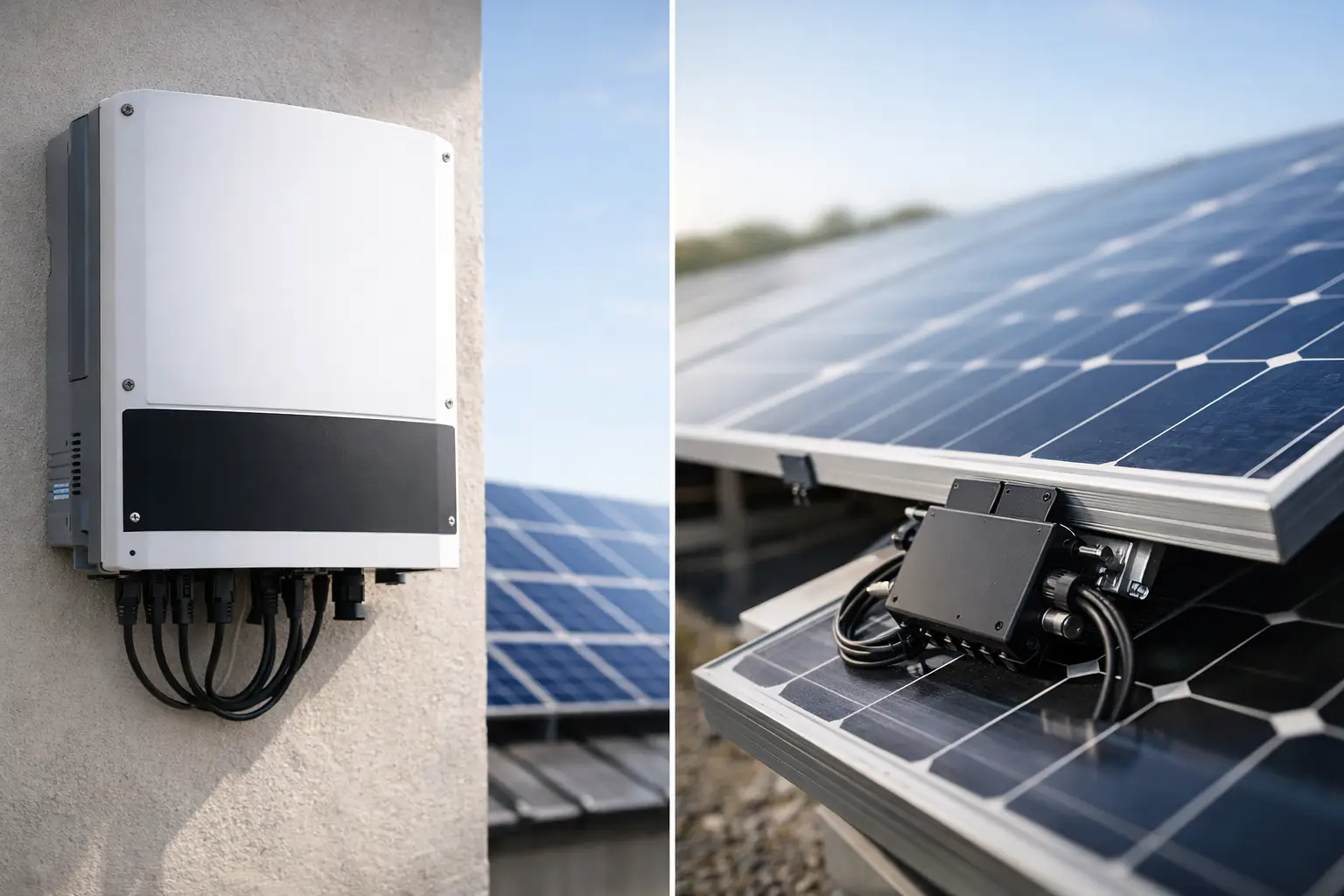
A lot of solar buyers get stuck on the same question just before they’re ready to move ahead – string inverter vs microinverter. It sounds technical, but the choice has a real impact on how your system performs, how it handles shade, and how much visibility you get over each panel. If you want a system that matches your roof, your usage, and your long-term plans, this is one decision worth getting right.
For most homes and businesses, there isn’t a universal winner. The better option depends on roof layout, panel orientation, shading, monitoring expectations, and whether you value simplicity or panel-level performance. The best solar system is not the one with the fanciest brochure. It is the one that fits the property and keeps delivering strong output year after year.
String inverter vs microinverter: what’s the difference?
A string inverter system connects multiple solar panels together in a series, or string, and sends the electricity to one central inverter. That inverter converts the DC power from the panels into usable AC power for your property. This has been the standard setup for years and remains a strong choice for many installations.
A microinverter system works differently. Instead of one central inverter handling a whole group of panels, each panel has its own small inverter attached to it. That means every panel converts power independently.
On paper, that may sound like a simple technical difference. In practice, it changes how the system behaves when conditions on the roof are less than perfect.
Why roof conditions matter more than brochure claims
If your roof has one large, open plane with minimal shade through the day, a string inverter can be an excellent fit. It is straightforward, proven, and efficient when panels are facing the same direction and operating in similar conditions.
If your roof is more complex, with multiple angles, partial shade from trees, neighbouring buildings or vents, microinverters can make a lot more sense. Because each panel works independently, one underperforming panel does not drag down the rest of the system in the same way.
That matters in real Australian conditions. Roofs are not always neat rectangles, and shade is not always constant. A bit of morning shade on one corner of the roof or different panel orientations across east and west sections can affect output. In those cases, panel-level optimisation becomes more valuable.
Performance in shade and mixed orientations
This is where the string inverter vs microinverter comparison usually gets more practical.
With a string inverter, panels in the same string tend to perform together. If one panel is significantly affected by shade or debris, the performance of that string can be reduced. Modern system design helps minimise this issue, but the basic limitation is still there.
With microinverters, each panel works on its own. If one panel is shaded, the others can continue producing at their normal level. That can be a major advantage on roofs with patchy shade or several panel directions.
For a homeowner with a clean, north-facing roof and no nearby obstructions, this may not be a deciding factor. For a business with rooftop equipment, parapets, or a more complicated layout, it often is.
Monitoring and visibility
Many buyers want more than lower power bills. They also want to see what the system is doing.
String inverter systems usually offer system-level monitoring. You can track overall solar generation and get a good view of daily and seasonal performance. For many people, that is enough.
Microinverters typically offer panel-level monitoring, which means you can see how each individual panel is performing. That gives more detail and can make fault detection easier. If one panel drops off, it is usually easier to spot.
This is especially useful for owners who like data, or for commercial sites where performance tracking matters more closely. It can also give peace of mind if your roof is exposed to conditions that vary across different sections.
Still, more data is not always better for every customer. Some people want a reliable system that works quietly in the background. If that is you, advanced monitoring may be a nice extra rather than a must-have.
Reliability and maintenance trade-offs
Reliability is often framed too simply. People hear that string inverters have one central point of conversion and assume that is a weakness. Others hear that microinverters spread the workload across many units and assume that is automatically better. The real answer is more balanced.
A string inverter has fewer inverter components on the roof, which can make the system simpler. If the inverter ever needs replacement, it is usually easier to access because it is installed in a more convenient location.
Microinverters remove the single central inverter point, but they place more electronics on the roof, behind the panels. High-quality products are built for this environment, but roof-mounted components are still exposed to heat and weather over time.
That does not mean microinverters are unreliable. It means the system design should be judged on brand quality, warranty support, installer experience, and suitability for the site – not just on theory.
String inverter vs microinverter for batteries and future upgrades
If battery storage is part of your long-term plan, inverter choice deserves a closer look. Some systems integrate with batteries more naturally than others, and compatibility can vary depending on the inverter brand and architecture.
This is one area where generic online advice often falls short. A battery-ready setup is not just about the inverter type. It is also about the broader system design, including how the solar, battery, switchboard and monitoring platform all work together.
If you are planning to add a battery later, mention that early when getting your solar system sized and specified. The right recommendation should account for future flexibility, not just today’s panel layout.
Which option suits homes?
For many households, a string inverter remains a smart choice. If the roof is simple, sun exposure is strong, and you want dependable performance from trusted hardware, it can deliver excellent results.
Microinverters often suit homes where roof sections face different directions, where there is some unavoidable shade, or where the owner wants more detailed monitoring. They can also appeal to buyers who prefer a panel-by-panel approach rather than relying on one central unit.
Neither option is automatically premium just because it sounds more advanced. The premium choice is the one that matches the site properly and is installed well.
Which option suits businesses and larger sites?
Commercial and industrial projects need a slightly different lens. Roof space can be more complex, with services, plant equipment and variable shading affecting panel placement. Monitoring requirements are often higher too, especially when system performance ties directly to operating costs.
On some small to medium commercial sites, microinverters can be a strong fit because they manage complexity well. On larger projects, string inverter systems are often preferred due to scalability, design flexibility and proven performance across bigger arrays.
That is why a serious solar retailer will assess the building, energy profile and operational goals before recommending a setup. A one-size-fits-all answer usually means someone is selling a product before solving the problem.
How to decide without overcomplicating it
The easiest way to approach this choice is to focus on your roof and your goals.
If your roof is straightforward, with minimal shade and consistent panel orientation, a string inverter is often the sensible choice. If your roof is complex, shade is part of the picture, or you want panel-level insight, microinverters may be the better fit.
Just as important, look at the quality of the design and installation. Even the best inverter technology can underperform if the system is poorly sized or badly installed. Strong solar outcomes come from the full package – quality panels, a suitable inverter setup, proper workmanship, and support that continues after install.
That is where working with an experienced provider matters. A consultative approach should make this decision easier, not harder. You should be shown what suits your property, what the trade-offs are, and what will serve you best over the long term.
There is no prize for choosing the most talked-about inverter type. The real win is a system that works hard on your roof, handles your conditions properly, and keeps your savings moving in the right direction for years to come.