
 1300 285 885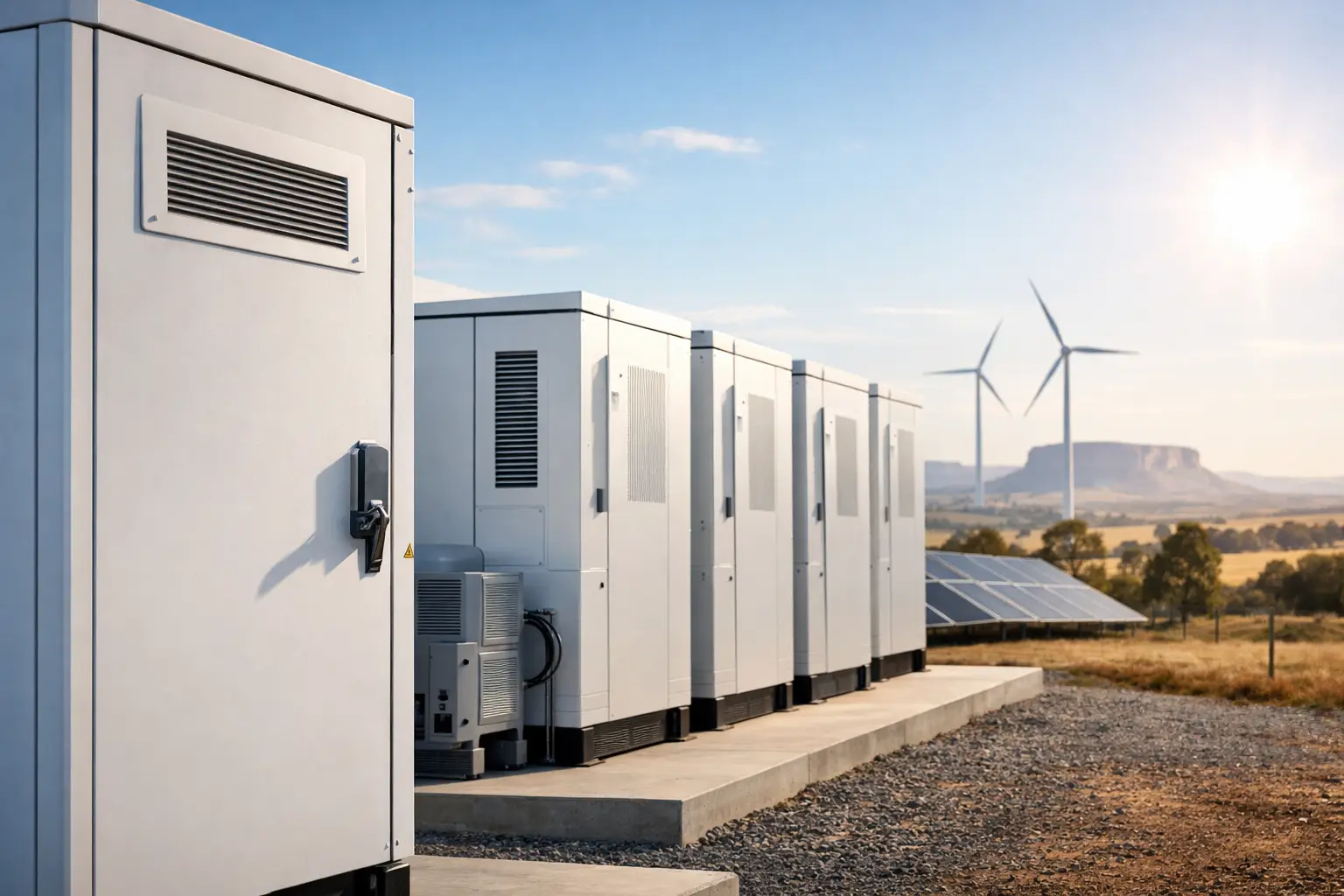
A business can generate plenty of solar power at midday and still buy costly electricity after the sun goes down. That gap is where battery storage earns its place. This commercial battery storage guide Australia explains how businesses can turn more of their on-site solar generation into useful energy, reduce reliance on the grid and gain greater control over volatile operating costs.
For a warehouse, retail site, office, farm, workshop or industrial facility, the right battery is not simply the largest unit available. It is a system designed around how your site uses energy, when it uses it and what you want solar to achieve over the years ahead.
What commercial battery storage does for a business
A commercial battery stores electricity for later use. In most cases, it charges from excess solar generation during the day, then discharges when your business needs power and solar production has reduced. This can increase solar self-consumption, particularly for sites that operate into the evening or have early-morning load.
Battery storage can also help manage demand. Many commercial electricity bills include charges linked to a site’s highest periods of grid use. Where the battery, inverter and energy management controls are correctly designed, stored energy may reduce short, high-demand events. The value of this approach depends on your tariff structure, load profile and local network rules, so it needs to be assessed rather than assumed.
For some operations, resilience matters as much as savings. A battery can support selected essential loads during an outage when paired with suitable backup hardware and switchboard design. That may include refrigeration, security, communications, critical production equipment or safety systems. Full-site backup is possible in some circumstances, but it is not automatically the right outcome. The priority is identifying what must keep running and designing the system accordingly.
Start with your energy profile, not a battery size
Commercial batteries are usually discussed in kilowatt-hours (kWh), which is the amount of energy they can store. Yet storage capacity is only one part of the decision. Power output, measured in kilowatts (kW), determines how much electricity the battery can deliver at a particular moment.
A site with a brief but heavy afternoon demand spike may need strong power output. A site that runs a steady evening load may benefit more from longer storage duration. Choosing capacity without examining interval data can leave a business with a battery that fills quickly but cannot support peak demand, or one that has capacity sitting unused most days.
A quality assessment should review at least 12 months of electricity data where available. It should account for seasonal changes, operating hours, shift patterns, existing solar output, planned equipment upgrades and future electrification. Adding EV chargers, replacing gas equipment or expanding production can all change the right battery design.
Questions your business should answer first
Before selecting a system, establish when electricity use is highest, how much solar is currently exported, whether the site faces demand charges and which loads are essential in a blackout. Also consider whether your premises are owned or leased, how long you expect to occupy the site and whether there is suitable space for equipment and safe access.
These answers shape the system far more effectively than selecting a battery based on a headline capacity figure.
Match the battery to your solar system
Battery storage performs best when it is planned alongside the solar system rather than added as an afterthought. Existing solar can often be integrated, but compatibility matters. Your current inverter type, solar array size, switchboard capacity, monitoring platform and connection agreement can all affect the recommended pathway.
There are generally two approaches. An AC-coupled battery works alongside an existing solar inverter and can be a practical retrofit option. A DC-coupled design shares equipment more closely with a compatible solar system and may be well suited to a new installation. Neither is universally better. The right choice depends on your existing equipment, desired functionality and site constraints.
For larger commercial facilities, a staged approach can make sense. Start with a solar and battery configuration that addresses today’s core load, while allowing room for expansion as energy use changes. A properly considered design protects flexibility without oversizing the first installation.
Understand the savings case before you proceed
The business case for commercial storage is built on the way energy moves through your site. Savings may come from using more solar on site, reducing grid purchases during higher-cost periods and lowering demand peaks where applicable. Exporting solar may still have value, but storing surplus generation can often provide a stronger operational benefit when the battery discharges at the right time.
However, batteries are not a set-and-forget answer to every electricity bill. If a business uses most of its energy in the middle of the day, has little solar surplus or operates under a tariff that provides limited opportunity for load shifting, the storage opportunity may be smaller. In those cases, solar optimisation, energy efficiency upgrades or operational changes may deserve attention first.
The best proposals are transparent about these trade-offs. They model expected system behaviour using real consumption data, explain assumptions and show how monitoring will help verify performance after installation. This gives decision-makers a clearer basis for approving a long-term energy asset.
Check approvals, safety and site readiness
Commercial battery installation involves more than placing equipment beside a switchboard. The design must meet applicable Australian Standards, manufacturer requirements, network connection rules and site-specific safety obligations. Equipment location is particularly important, with considerations including ventilation, clearances, fire safety, flood exposure, vehicle impact, weather protection and access for maintenance.
Your distributor may require an application or export arrangement before the system is connected. Requirements vary between networks and states, particularly for larger solar and battery systems. A capable installer should manage the technical documentation and coordinate the connection process, while keeping your business informed of the milestones.
For facilities with complex operations, early consultation with the building manager, landlord, electrical contractor and workplace safety team can prevent delays. It is also sensible to confirm that the switchboard, cabling and main electrical supply can support the proposed system. The battery may be only one part of the required electrical works.
Choose equipment for commercial duty
Commercial energy storage is a long-term investment, so product quality and service support should carry real weight. Look beyond capacity and consider warranty terms, usable energy, cycle expectations, power output, operating temperature range, monitoring capability and the manufacturer’s Australian support arrangements.
The inverter and control system deserve the same scrutiny as the battery modules. They determine how intelligently the system responds to solar generation, site demand and grid conditions. Strong monitoring gives your business visibility of solar production, battery state of charge, grid import and key savings opportunities. It also makes it easier to identify faults or changing energy patterns early.
Avoid treating every commercial site as a standard package. Packaged system sizes can be an excellent starting point, but a cold-storage facility, medical practice and fabrication workshop have very different risk profiles and energy behaviour. The final design should be tailored to the site.
Plan for operation after installation
A battery is most valuable when its operating settings match your priorities. Some businesses prioritise solar self-consumption. Others want demand management, backup capability or a balance of all three. Those settings should be agreed before commissioning and reviewed as the business changes.
Train relevant staff to use the monitoring platform and to understand what backup does and does not cover. If essential loads are nominated, make sure staff know which circuits remain powered during an outage. Regular review is worthwhile, especially after new machinery is installed, operating hours change or your electricity contract is renewed.
Solar Miner helps businesses take this process from energy review through to tailored solar, battery and EV charging installation. The goal is simple: a dependable system that fits the way your business actually operates, supported by trusted equipment and clear guidance at every stage.
A well-designed commercial battery does more than store electricity. It gives your business another practical way to use its solar energy on its own terms, with a system built for the demands of the site rather than a one-size-fits-all promise.