
 1300 285 885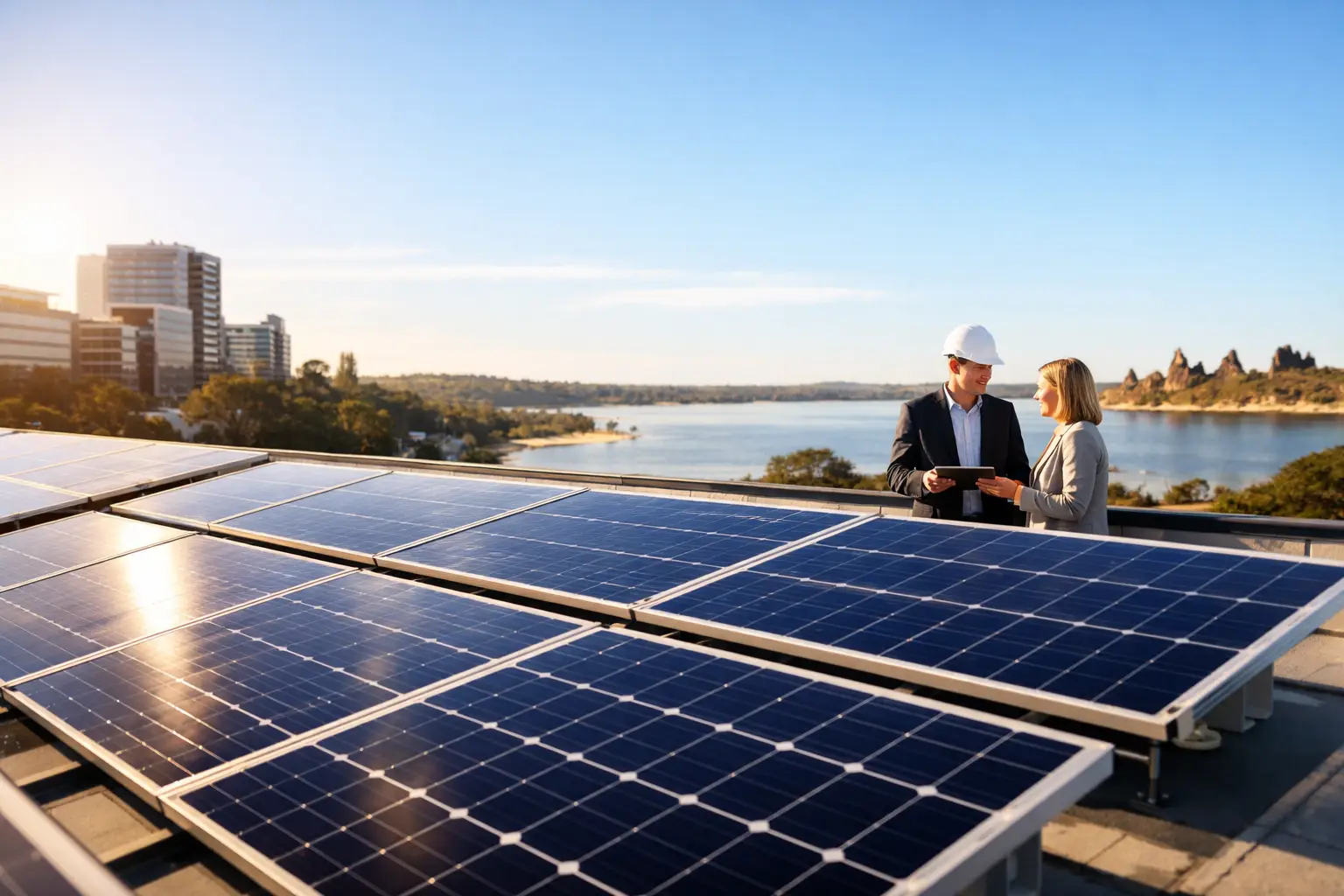
For many WA businesses, the biggest solar opportunity is sitting in plain sight: the power used while the sun is at its strongest. Western Australia business solar lets operators turn roof space, carports and unused land into a working asset that helps offset daytime electricity use.
That matters whether you run a warehouse in Perth, a regional workshop, a retail site, a medical practice or a production facility. Electricity usage is not the same from one business to the next, so the right solar system is not simply the largest one that fits on the roof. It is the one designed around how, when and where your business consumes energy.
Why WA businesses are well placed for solar
Western Australia has excellent solar conditions, but sunshine alone does not guarantee a strong return. The real value comes when solar generation matches your operating hours. Businesses that trade, manufacture, refrigerate stock, run machinery or operate offices through the middle of the day are often well positioned to use a high share of the energy their system produces.
Every kilowatt-hour used directly from your solar system is a kilowatt-hour your business does not need to buy from the grid at the usual retail rate. This is why self-consumption is a central part of commercial solar design. Exporting excess power can still contribute value, but a system that is sized purely for exports may not deliver the same result as one tailored to your daytime load.
For businesses facing variable usage, solar also adds a degree of certainty. It will not remove every electricity charge, especially overnight consumption, supply charges or demand-related costs where they apply. But it can reduce the grid energy component significantly when the system is properly matched to the site.
Western Australia business solar starts with your load profile
The first question is not, “How many panels can fit?” It is, “What is the business using power for during daylight hours?”
A good assessment looks at interval data or detailed electricity bills, opening hours, seasonal patterns and major equipment. A café may have a sharp morning load from coffee equipment, refrigeration and air conditioning. A warehouse may use steady daytime power for lighting, forklifts, IT equipment and ventilation. A manufacturer may have substantial machinery loads that make a larger system worthwhile.
Your roof is still important. Its size, orientation, shading, structural condition and access all influence the system design. So do switchboard capacity, site safety requirements and the local network connection process. A quality installer should assess the whole picture before recommending a system size.
Choose capacity around usage, not guesswork
Smaller commercial sites may suit systems similar in scale to larger residential installations, while established offices, retail premises and workshops may need a more substantial setup. Larger warehouses, agricultural operations and industrial sites can require systems at the upper end of the commercial range.
The best capacity depends on your daytime base load and how much electricity demand continues through the solar production window. If your site closes early, has low weekend activity or experiences major seasonal changes, this should be reflected in the design. Oversizing without considering consumption can leave more energy flowing back to the grid than your business planned for.
Future growth deserves a place in the conversation too. If you expect to add refrigeration, machinery, EV chargers, more staff or an extension, it may make sense to prepare the electrical infrastructure now. On the other hand, a staged installation can be the smarter choice when expansion plans are uncertain.
Make the most of the energy you generate
Solar works hardest when your business shifts flexible tasks into daylight hours. This does not mean changing every part of your operation. Often, small operational changes can improve the value you receive from your system.
Schedule discretionary equipment where practical, pre-cool spaces before the hottest part of the afternoon, run pool pumps or water pumps during the day, and charge electric vehicles when solar generation is available. Energy-efficient lighting, motors and air conditioning also matter. Efficiency lowers waste, while solar offsets the remaining demand.
Battery storage can be worth considering where a business has significant late-afternoon or evening consumption, wants greater control over exported energy or needs support during grid interruptions. It is not essential for every site. A business with strong daytime demand may see excellent results from solar panels alone, while a business that operates into the evening may benefit from storing some of its midday generation.
The right answer depends on your load profile, operational priorities and site requirements. Batteries should be considered as part of an energy plan, not added just because they are popular.
Rebates, approvals and the details that protect your project
For eligible commercial solar systems, Small-scale Technology Certificates, commonly called STCs, can help reduce the upfront cost of installation. Eligibility is based on factors including system size, approved equipment and installation requirements. The available incentive changes over time, so it should be checked as part of a current proposal rather than assumed.
Commercial projects can also involve network approvals, metering arrangements, export limits and electrical upgrades. Larger systems may have more detailed connection requirements. This is where an end-to-end provider adds real value: coordinating the design, documentation, approved products and installation process so the project is built for the site and connected correctly.
Do not treat these steps as paperwork that can be sorted out later. An export limit, a constrained switchboard or a difficult roof layout can change the best system design. Addressing these factors early helps avoid delays and keeps expectations realistic.
Quality components are a business decision
A commercial solar system is expected to perform for years in demanding conditions. Panels, inverters, mounting equipment and electrical protection should be selected for reliability, not simply initial output figures.
The inverter deserves particular attention because it converts panel generation into usable electricity for your premises. The right inverter setup depends on system size, roof layout, shading exposure and whether battery storage or future expansion is planned. Monitoring is equally valuable. It gives business owners visibility over generation, system health and performance trends without needing to climb onto the roof.
Workmanship matters just as much as equipment. A commercial installation needs considered cable routing, compliant isolation, secure mounting and a clean finish that respects how your site operates. For industrial and high-traffic locations, safety planning and minimal disruption can be as important as the energy model itself.
What to expect from a well-managed installation
A quality commercial solar project should feel organised from the first conversation. The process begins with an assessment of your electricity use and site, followed by a tailored recommendation that explains system capacity, expected generation and the assumptions behind potential savings.
Once the design is confirmed, the installer should manage approvals and schedule the work around your business where possible. Some sites can be installed with little interruption; others may need works planned around production schedules, customer access or safety controls. Clear communication makes a major difference here.
After commissioning, your team should know how to access monitoring, what normal generation looks like and who to contact if there is a concern. Solar is not a set-and-forget purchase in the sense that it should be ignored. Regular monitoring helps identify unusual performance early and gives you confidence that the system is doing its job.
Solar Miner helps businesses simplify this process with tailored commercial system recommendations, trusted technology and support from assessment through to installation. The focus should always be on a system that suits the premises, not a one-size-fits-all package.
A practical next step for your business
Start with your latest electricity bills and a clear view of how your business operates between 9 am and 4 pm. Note your high-use equipment, future plans and any parts of the roof or site that may affect installation. That information turns a generic solar quote into a considered business energy decision.
The strongest commercial solar projects are built around real consumption, quality equipment and practical installation planning. With the right design, your roof can do more than sit above the business – it can help support it every sunny working day.