
 1300 285 885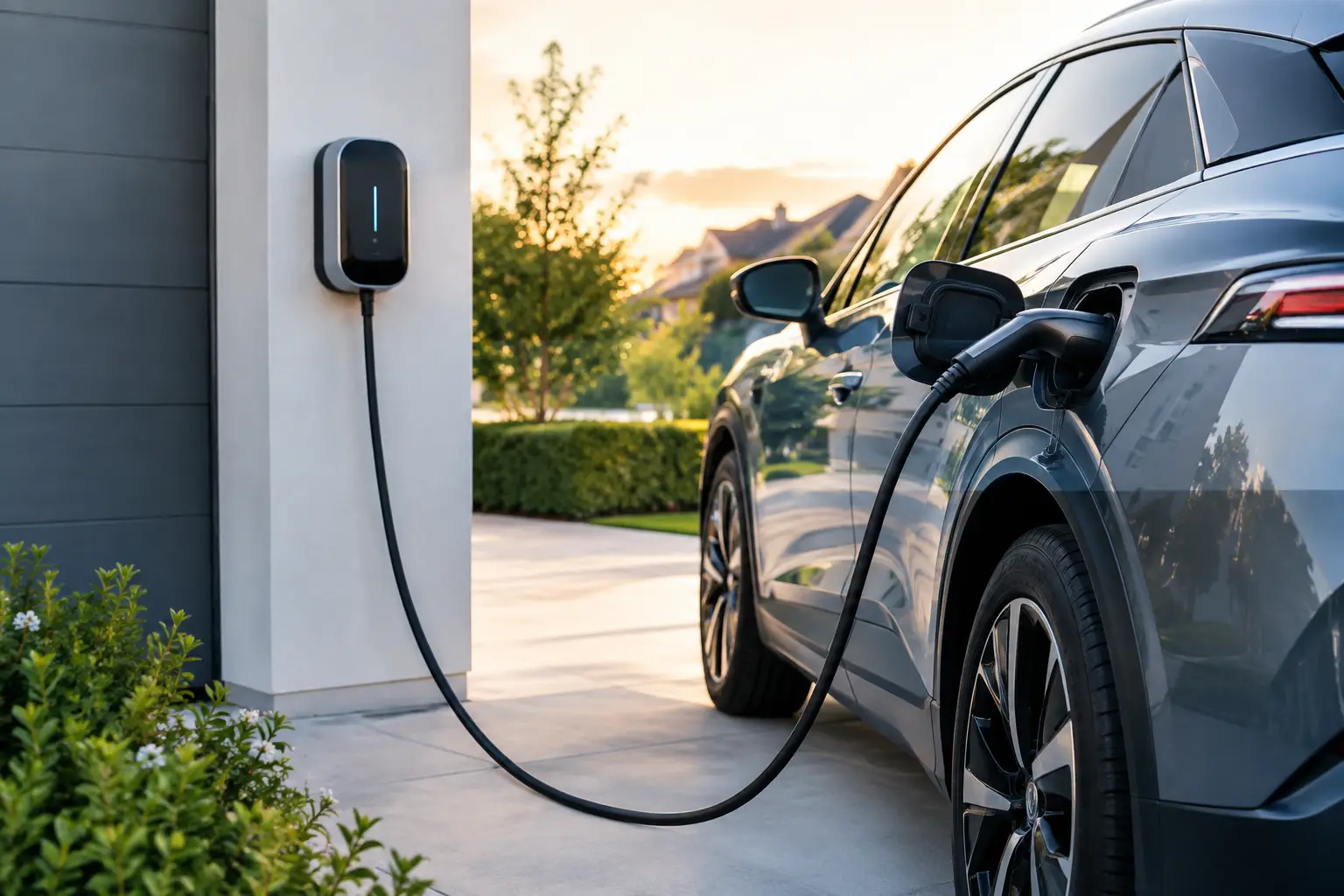
Your electric vehicle can do more than replace petrol stops. With the right EV charging setup at home, every parked hour becomes a chance to recharge on your terms, use more of your solar generation and reduce reliance on expensive grid electricity.
For most Australian drivers, the biggest decision is not whether to install a charger. It is choosing one that suits the vehicle, household energy use, switchboard capacity and future plans. A charger should make life easier from day one, while leaving room for a second EV, a home battery or a larger solar system later.
Why home EV charging makes sense
Public chargers have their place. They are useful on road trips, during long workdays or when you need a quick top-up away from home. But home charging is where most EV owners do the bulk of their charging. Your car is already parked overnight or during the day, so there is no need to make a special trip simply to refuel.
A dedicated wall charger is safer and more practical than relying on a standard power point for regular use. It is designed for sustained charging, provides faster replenishment and can include smart controls that help you manage when power flows to your vehicle.
For households with rooftop solar, the opportunity is even stronger. Instead of exporting surplus solar energy during the middle of the day, you may be able to direct more of it into your car. That turns sunshine on your roof into kilometres on the road.
Choosing the right EV charging speed
The ideal charger depends on your vehicle, daily driving distance and electrical supply. Faster is not automatically better. A charger needs to match what your vehicle can accept and what your property can safely support.
Single-phase charging for many homes
Many Australian homes have a single-phase electricity supply. A single-phase wall charger can comfortably handle the needs of drivers who charge overnight or have their car at home for several hours most days. For a typical commute, this is often more than enough time to recover daily driving energy.
The key question is how much range you need to add between trips. If the car is parked from dinner until breakfast, a sensible single-phase setup will usually provide a dependable routine without placing unnecessary demand on the household supply.
Three-phase charging for higher demand
Some homes, and many commercial properties, have three-phase power. This can support faster EV charging where the vehicle is compatible and the site has adequate capacity. It can be a strong option for households with multiple electric vehicles, long daily travel distances or a need to charge within a shorter window.
Three-phase charging is also relevant for businesses. Staff, customers and fleet vehicles may all need access to charging, and a properly planned system can allocate available power without disrupting the rest of the site.
A qualified installer should assess the switchboard, existing electrical loads and cable route before recommending charger capacity. Air conditioning, electric hot water, pool equipment, ovens and battery systems all draw power at different times. The right charger is one that works with those loads, not against them.
Smart EV charging puts you in control
A smart charger gives you more than an on-off connection. It allows you to schedule charging, monitor energy use and, in many cases, adjust charging speed to respond to household demand or solar output.
This matters because electricity use changes throughout the day. If everyone arrives home, switches on appliances and plugs in the car at once, household demand can rise quickly. Dynamic load management lets the charger reduce or pause its output when the home needs power elsewhere, then resume when capacity becomes available. It helps protect against overloading the electrical supply while keeping your vehicle ready when you need it.
Scheduling is equally useful. If your electricity plan has lower-cost periods, you can set the vehicle to charge during those windows. If your car is at home during daylight hours, solar-aware charging can prioritise surplus solar generation instead.
Not every household has the same routine. A family with a car at home all day may prioritise solar charging. A commuter who leaves before sunrise may prefer overnight charging. The best setup follows your lifestyle rather than forcing you to change it.
Pair EV charging with solar for stronger savings
Solar panels and electric vehicles are a natural match. Solar generation is highest during the middle of the day, while many vehicles sit idle at home, in a workplace car park or at a business premises. Charging from available solar can increase the amount of clean energy you use directly.
There is a practical trade-off. Your solar system may not always produce enough energy to run the home and charge an EV at full speed, particularly on cloudy days or when household demand is high. A smart charger can help by varying the charging rate to follow surplus solar, rather than automatically drawing additional power from the grid.
A battery can add another layer of flexibility, but it is not essential for solar EV charging. In some homes, charging directly from solar during daylight is the simplest approach. In others, a battery may be useful for evening household use while the EV charges during scheduled off-peak periods. The right arrangement depends on driving patterns, solar production and when energy is used around the home.
For businesses, solar-powered EV charging can support operational savings and demonstrate a visible commitment to cleaner transport. It can be particularly effective for sites where vehicles return during the day, such as service fleets, warehouses, offices and light industrial facilities.
What a professional installation should cover
An EV charger is a significant electrical addition to your property. It should be installed by a licensed electrician who understands EV charging requirements, relevant Australian standards and the way your wider energy system operates.
A proper assessment starts with the switchboard. The installer should check available capacity, circuit protection, earthing and whether upgrades are needed. They should also consider the distance between the switchboard and parking area, cable protection, weather exposure and the best location for everyday access.
For outdoor installations, equipment needs suitable weather protection and a location that avoids unnecessary strain on the cable. For garages, the charger should be positioned where it can reach the vehicle without creating a trip hazard across walkways. Small placement decisions make a real difference to whether the charger is easy to use every day.
If you already have solar, a battery or energy monitoring equipment, tell your installer early. Compatibility between systems is worth planning before installation, particularly if you want solar-aware charging or app-based monitoring.
EV charging for commercial and industrial sites
At a workplace or larger facility, EV charging needs a broader plan. The goal is not simply to install the maximum number of chargers. It is to deliver reliable access while managing demand across the entire site.
A small business may start with one or two chargers for staff or customer use. A larger operation may need staged infrastructure for fleet vehicles, visitor bays and future expansion. Load management becomes particularly valuable where multiple vehicles charge at once, because it shares available capacity intelligently instead of demanding a costly electrical upgrade before it is truly needed.
Access control can also matter. Businesses may want separate charging permissions for staff, customers and fleet drivers, along with clear visibility of usage. Good planning makes the system easier to manage as electric vehicle adoption grows.
Plan for the next vehicle, not just this one
EV ownership is changing household energy use quickly. Even if you have one vehicle now, consider what may happen over the next few years. Will another driver in the household switch to electric? Are you considering solar expansion or a battery? Could your current parking arrangement change?
Choosing a quality, connected charger with load management can help protect your options. It may be possible to add another charger later, integrate smarter controls or adapt charging schedules as your energy needs evolve. Planning ahead does not mean overbuilding. It means avoiding a setup that becomes limiting too soon.
Solar Miner can assess your solar, battery and EV charging requirements as one connected energy solution, so the equipment installed today supports the way you will use power tomorrow.
The best time to plan your charger is before it becomes an inconvenience. A tailored assessment gives you clarity on charger capacity, electrical requirements and how to make every home charging session work harder for your household or business.