
 1300 285 885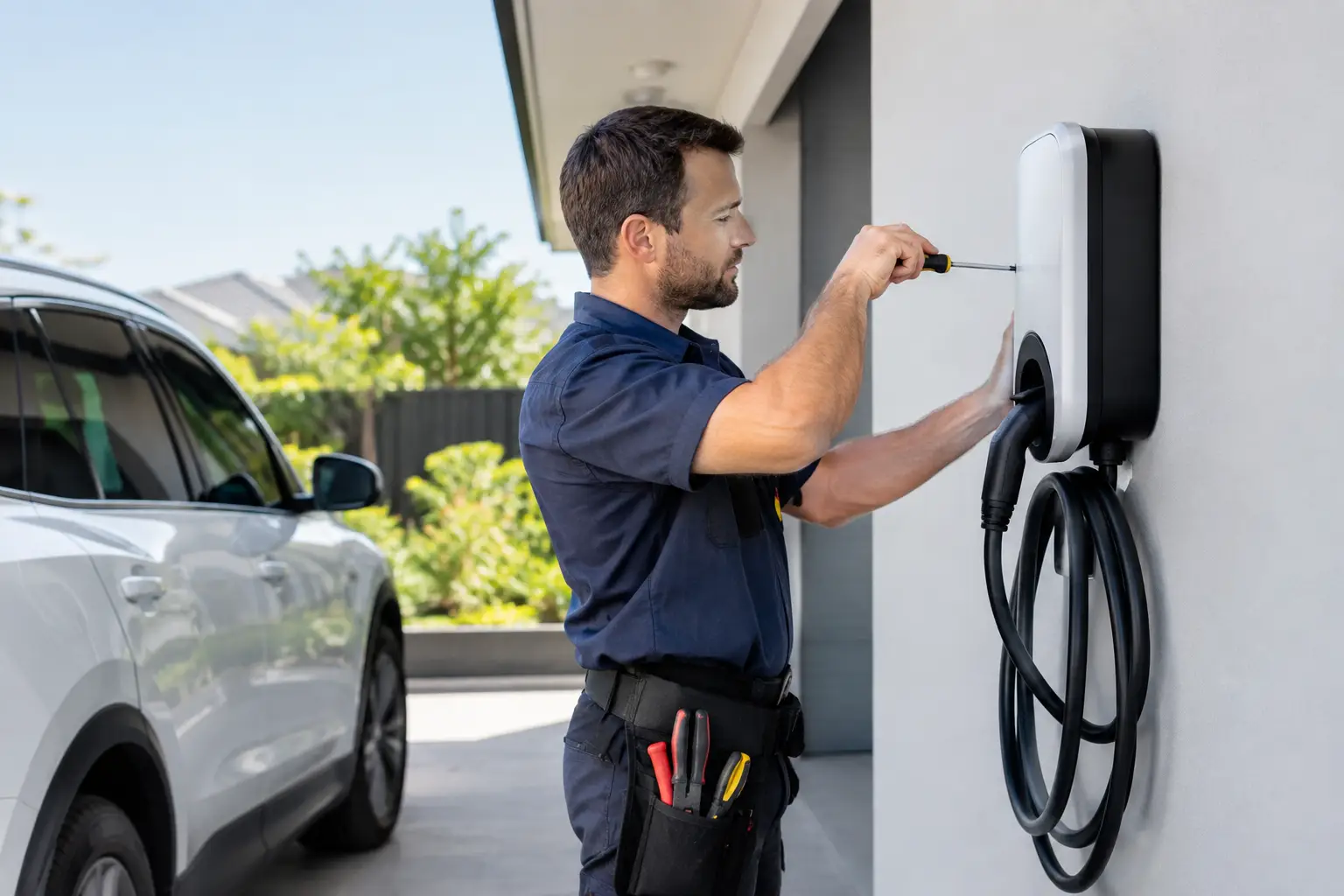
A home EV charger turns the time your car spends parked in the driveway or garage into useful charging time. This EV charger installation guide explains what needs to happen before installation day, from choosing the right charger to checking your switchboard capacity and arranging a compliant electrical connection.
For most Australian households, the best result is not simply buying the highest-rated charger. It is choosing a system that suits your vehicle, daily driving distance, solar setup and available electrical supply. Get those details right first and home charging becomes one of the easiest parts of owning an electric vehicle.
Start with your driving habits and vehicle
Before selecting a charger, consider how far you normally drive between charges. A household that covers short suburban trips can usually recharge comfortably overnight. A family with a longer commute, multiple EVs or frequent regional travel may benefit from a higher-capacity charging setup, provided the property’s electrical supply supports it.
Check your vehicle’s onboard charging capability as well. The charger on the wall supplies power, but the vehicle determines how much AC power it can accept. Installing a higher-capacity unit can provide flexibility for a future vehicle, but it will not necessarily make your current car charge faster.
Most homeowners choose a dedicated wall-mounted AC charger, often called a Level 2 charger. This is a more practical long-term option than relying on a standard power point and portable charging cable. It provides a dedicated circuit, more consistent charging and the safety controls required for regular EV use.
Choose the right EV charger installation setup
The right charger depends on where the vehicle is parked, how the home uses electricity and whether solar is already part of the picture. A qualified installer can recommend a suitable charger after reviewing these details, rather than making assumptions based on a single product specification.
Single-phase or three-phase charging
Many Australian homes have single-phase power. A single-phase charger can suit everyday overnight charging very well, particularly for one EV. Three-phase power can support faster charging and may be worthwhile for homes with higher energy demand, larger properties or more than one electric vehicle.
However, three-phase charging is only an option where three-phase supply is available or can be arranged. Your electrician will check the existing supply, main switchboard and local network requirements before confirming what is possible. The most powerful option is not always the smartest one – the right option is the one that safely matches the property and your actual charging routine.
Smart charging and solar integration
A smart EV charger gives you more control over when and how your vehicle charges. Depending on the model and your energy setup, it may allow scheduled charging, load management, app monitoring and solar-aware charging.
For homes with solar panels, charging during daylight can help use more of the energy generated on your roof. That can be especially useful when the car is home during the day. If the vehicle is usually away for work, scheduled overnight charging may still make more sense. Your charger settings should suit your real routine, not an idealised one.
Solar-aware charging can also be a strong fit for households planning a battery. The system design needs to consider total household demand, battery settings and the priority given to essential appliances. A properly designed setup helps prevent unnecessary strain on your electrical supply while giving you greater control over energy use.
Cable length and parking position
Think about where the charge port sits on your vehicle and where it will park. The cable should reach comfortably without stretching across a walkway, driveway or footpath. A charger mounted near the parking bay is usually the cleanest solution, but the final location must also allow safe access, weather protection and correct cable routing.
For an outdoor installation, select equipment rated for Australian conditions and have it installed where it is protected from avoidable impact, standing water and excessive heat. Your installer can advise on mounting height and practical placement around gates, garages and carports.
Check your switchboard before installation
Your EV charger needs its own dedicated electrical circuit. That is why an electrical assessment is a critical part of the process, not an optional extra. The electrician will inspect your switchboard, existing circuits, incoming supply and the likely combined load of your major appliances.
Homes with air conditioning, induction cooking, electric hot water, pool equipment, solar, batteries and an EV can have significant peak demand. This does not mean an EV charger cannot be installed. It means the installation must be designed properly.
In some cases, the switchboard may need upgrades to accommodate the new circuit and required safety devices. In others, dynamic load management may be recommended. This technology monitors household demand and adjusts charging output when needed, helping to reduce the chance of overloading the main supply.
A good installer will also check whether your solar inverter, battery system or backup circuits affect the charger’s installation location. EV charging is a high-load application, so it needs to be planned as part of the wider electrical system.
What happens during a compliant installation?
A professional EV charger installation generally begins with a site assessment. The installer confirms the charger location, measures cable routes, checks the switchboard and identifies any access issues. They should explain the proposed work in plain language before installation begins.
On installation day, the electrician mounts the charger, runs appropriately sized cabling, installs the dedicated circuit and required protection devices, then tests the completed system. They will confirm the charger communicates correctly with the vehicle and show you how to start, stop and schedule a charge.
In Australia, EV charger work must be completed by a suitably licensed electrician and comply with applicable electrical standards, state or territory rules, and manufacturer instructions. Do not treat a high-powered EV charger as a DIY project or ask an unlicensed person to modify your switchboard. The risks include electric shock, fire, equipment damage and insurance complications.
Depending on the installation and local requirements, documentation or network notification may also be needed. Keep all electrical compliance records, product warranties and installation paperwork together. They are useful for future servicing, property sales and warranty support.
Prepare your property before the installer arrives
A little preparation can make installation day faster and easier. Ensure the electrician can access the switchboard, garage, carport or parking area. Move stored items away from the proposed charger location and make sure pets are safely contained.
If the charger will be mounted in a strata complex, apartment building or shared car park, approval may be required before work starts. The pathway for cabling, metering arrangements and common property rules can all affect the design. Start the approval process early, because apartment charging projects often require more coordination than a detached home.
For businesses, the same principle applies at a larger scale. Staff and fleet charging may require load studies, multiple chargers, access control and staged expansion planning. Installing capacity for future chargers while electrical works are underway can be more practical than reopening walls or trenches later.
Avoid the common shortcuts
The biggest mistake is selecting a charger before checking the site. Product features matter, but compatibility with your supply, switchboard and vehicle comes first. A charger that looks ideal online may require changes to the electrical system that alter the best approach.
Another common issue is assuming solar automatically means free EV charging. Solar can reduce grid reliance, but output changes with weather, season, household consumption and the time the car is at home. Smart controls help you make better use of solar generation, but they do not remove the need for sensible charging settings.
Finally, do not overlook future needs. If you expect to add solar, a battery, a second EV or major electric appliances, mention it during the assessment. Planning ahead can help your installer recommend equipment and cable pathways that support the next stage of your energy upgrade.
A properly installed EV charger should feel simple once it is in place: park, plug in and let your car charge while you get on with life. For a setup that works with your home, solar and future energy goals, choose a qualified team that assesses the whole picture before the first cable is run.