
 1300 285 885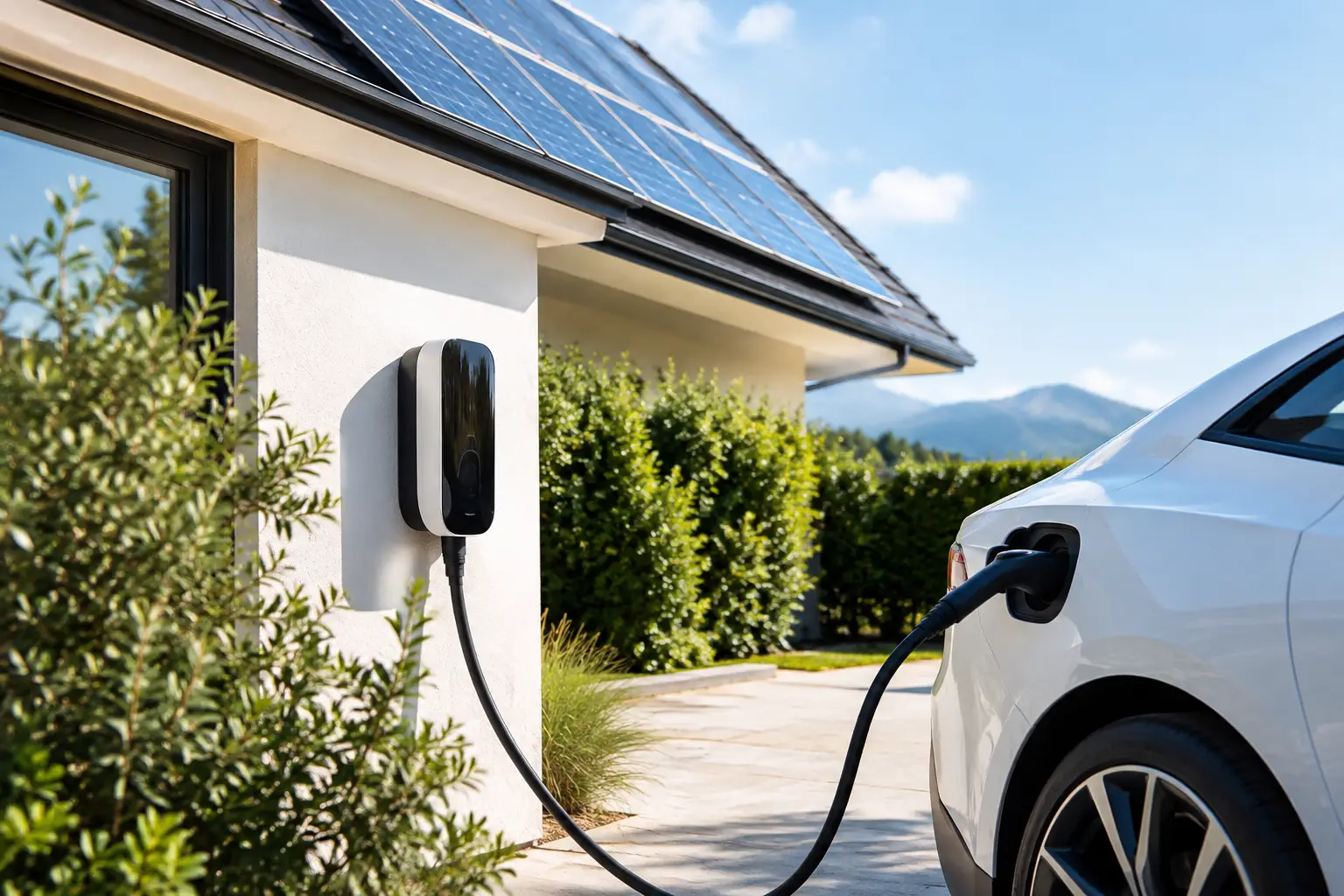
Your EV is parked for hours. Your solar panels are producing power through the middle of the day. Put those two facts together and the answer to can EV chargers use solar is a clear yes.
A solar-powered EV charger can turn your driveway, car park or worksite into a smarter energy setup. Rather than buying all your charging energy from the grid, you can use electricity generated on your own roof. The best result depends on when your vehicle is parked, how much solar your property produces and whether you add battery storage or smart charging controls.
Can EV chargers use solar power directly?
Yes. In most Australian homes and businesses, solar panels generate DC electricity, which is converted by a solar inverter into AC electricity for use around the property. Your EV charger then draws from that same on-site power supply.
There is no need for a separate set of panels dedicated solely to the charger. A correctly designed solar system can power your household appliances, export surplus energy to the grid and charge an EV as available solar generation allows.
The grid remains connected in a standard setup. If clouds pass over, the sun goes down or the vehicle needs more power than your solar system is producing, the charger can draw the shortfall from the grid. This keeps charging reliable while still helping you make better use of solar energy during the day.
For many households, the practical goal is not to charge exclusively from solar every single time. It is to maximise self-consumption: using more of the energy your panels produce instead of exporting it at a lower value and later purchasing electricity from the grid.
How solar EV charging works in practice
Picture a typical weekday. Your panels are producing strongly from late morning through to mid-afternoon. If your EV is at home, a smart charger can increase charging when there is surplus solar available and reduce it when household demand rises.
If you leave for work during the day, your charging pattern may not line up as neatly with solar generation. That does not rule out solar EV charging. You may charge on weekends, use a workplace charger, schedule charging around flexible work hours or store solar energy in a battery for later use.
For businesses, the opportunity can be even stronger. Offices, warehouses, retail sites and industrial facilities often have vehicles onsite during daylight hours. Solar generation can support fleet vehicles, staff charging or customer charging while reducing the site’s daytime grid demand.
Your charger does not need full sun to operate
An EV charger does not switch off just because solar output drops. It draws power from the combined energy available at your switchboard. That may include solar, battery and grid electricity.
Smart solar charging simply helps decide where that power comes from. When solar production is high, more charging can come from the roof. When production is low, charging can slow, pause or continue using grid power depending on the settings you choose.
Why a smart EV charger makes a difference
A basic charger can charge your vehicle at a fixed rate. That can be perfectly suitable, particularly if you need predictable overnight charging. But it may draw substantial power from the grid even when your solar system is generating a surplus at other times of day.
A smart EV charger gives you more control. It can communicate with your energy system and adjust charging to suit solar output, household demand and your chosen schedule. This is especially useful where the property has a large daytime solar surplus.
Useful features may include:
- Solar-surplus charging, which prioritises excess generation from your panels.
- Scheduled charging, allowing you to set charging windows around your routine.
- Adjustable charging rates, so the charger can respond to changing property demand.
- Load management, helping prevent the charger from overloading the site’s electrical supply.
- App monitoring, so you can see charging activity and energy use from your mobile.
The right features depend on your property, vehicle and existing electrical setup. A charger should make solar easier to use, not create another complicated system to manage.
Do you need a battery to charge an EV with solar?
No. Solar panels and a compatible EV charger are enough to use daytime solar for charging. A battery is optional, not a requirement.
Battery storage can give you greater flexibility because it holds excess solar for use after sunset or when generation falls. That can suit households where the EV comes home in the evening, as well as businesses with variable loads or a need for more control over energy use.
There is a trade-off. An EV battery is already a large battery on wheels, and charging it from a home battery involves storing and converting energy more than once. Depending on your driving habits, it may be more efficient to charge directly from solar while the sun is shining and reserve home battery capacity for evening household use or backup needs.
A tailored design looks at the whole picture: your daytime usage, solar generation, EV battery size, charging habits and whether energy independence is a priority. There is no one-size-fits-all answer.
How much solar do you need for EV charging?
The required system size depends on how far you drive and how much electricity the vehicle uses. A commuter travelling modest daily distances will need far less charging energy than a high-kilometre driver, a delivery fleet or a business operating multiple EVs.
Your existing electricity consumption matters too. If your solar system already supports air conditioning, hot water, appliances and business equipment, adding an EV can change the energy profile considerably. The charger may become one of the largest electrical loads on the property.
A solar assessment should consider your roof space, panel orientation, shading, current energy bills, vehicle use and daytime occupancy. It should also account for the charger’s power rating and your switchboard capacity. More charger power is not automatically better if the vehicle is parked for long periods or the electrical supply requires load management.
For example, a homeowner who works from home may benefit from charging slowly across the solar window. A family that arrives home with a low battery and needs the car ready early each morning may prioritise a faster charger and scheduled off-peak grid charging as a backup. Both can be sensible setups.
What happens at night and on cloudy days?
At night, solar panels do not generate electricity. Your EV can still charge from the grid or from a home battery if one is installed and configured for charging. On cloudy days, panels continue to produce electricity, but output is lower and less predictable.
This is why flexible charging matters. Set a solar-first mode when the vehicle has plenty of time to charge, then use a scheduled or faster mode when you need certainty. The aim is to capture as much self-generated energy as practical without compromising your mobility.
Australian electricity plans and export arrangements vary by retailer and state, so the best charging schedule can differ from one household or business to the next. A properly configured charger gives you options rather than forcing every charge into the same pattern.
Solar EV charging for homes, workplaces and fleets
At home, solar EV charging is often about reducing ongoing transport energy costs and using more of the solar power already generated on the roof. It can also make an EV feel more independent from fluctuating fuel and electricity costs.
At workplaces, charging can be a valuable staff benefit or a practical way to support company vehicles. Daytime parking aligns naturally with solar production, particularly for sites with broad roof areas and regular business-hour loads.
For commercial and industrial operations, planning is essential. Multiple chargers can create significant demand, so solar capacity, switchboard upgrades, load management and future fleet growth should be assessed together. Installing infrastructure that can expand later is often more practical than treating each new vehicle as a separate project.
Get the system design right from the start
Solar EV charging works best when the panels, inverter, charger and electrical infrastructure are considered as one energy system. Compatibility matters, as does installation quality. Your installer should assess the condition and capacity of the switchboard, available solar generation, cable runs, safety requirements and how the charger will be used day to day.
It is also worth thinking ahead. Even if you do not own an EV yet, allowing for charger capacity during a solar or battery installation can make a future upgrade simpler. Likewise, a business planning to electrify part of its fleet should avoid undersizing solar or electrical infrastructure based only on today’s demand.
Solar Miner helps Australian homeowners and businesses match trusted solar, battery and EV charging technology to the way they actually use energy. The strongest setup is the one that fits your roof, routine and future plans – so your parked EV can make better use of every sunny hour.