
 1300 285 885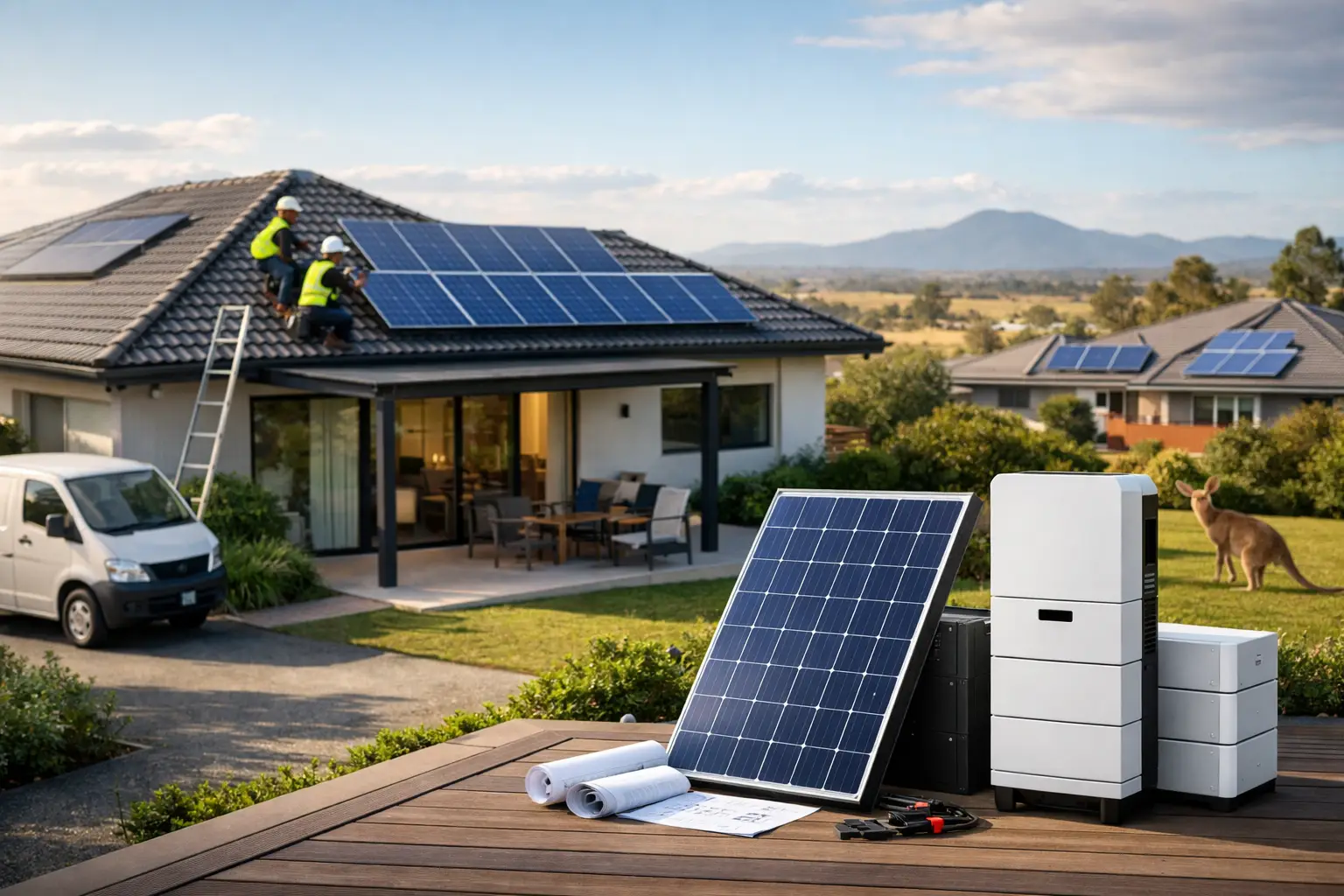
A solar package should not be a lucky dip. Your roof, daytime electricity use and future plans all affect what will deliver worthwhile savings. This guide to residential solar packages explained Australia breaks down what is usually included, how to compare system sizes and where homeowners need to look beyond the headline offer.
What a residential solar package actually includes
A residential package brings the major parts of a home solar system together: solar panels, an inverter, mounting equipment, electrical protection, monitoring and professional installation. Rather than asking you to source every component separately, it gives you a clear starting point based on the likely needs of your household.
The package size is usually expressed in kilowatts, or kW. This is the system’s potential generating capacity under standard test conditions. It is not a promise that your system will produce that amount every hour of every day. Weather, roof direction, shade, panel orientation and the time of year all influence real-world output.
A quality package also includes the less visible components that matter to system safety and performance. Mounting rails secure panels to the roof, isolators and protection equipment support safe operation, and a monitoring platform lets you see generation from your mobile or home dashboard. The right installation team will also manage the grid connection process and make sure the design meets relevant Australian standards.
Residential solar packages explained: choosing the right size
For many Australian households, a 6.6kW system is a practical entry point. It can suit medium-sized homes with regular daytime demand from appliances, refrigeration, cooling and home offices. But it is not automatically the right answer for every property.
A smaller home with low electricity use may be better served by a more modest system, particularly if most occupants are out during daylight hours. On the other hand, a larger household may need a 10kW or 13kW system where there is heavy air-conditioning use, electric hot water, a pool pump, several people working from home or plans to add an EV charger.
The goal is to match solar generation to the electricity your home can use while the sun is out. Solar power used in your home generally offsets electricity you would otherwise buy from the grid. Excess generation may be exported, but feed-in arrangements vary by retailer and state, so a package should not be selected on export assumptions alone.
When assessing size, an experienced solar retailer will look at your recent electricity bills, household occupancy, roof area and likely future demand. If you are replacing gas appliances with electric alternatives, buying an EV or considering a battery, say so early. Designing only for today can leave a good system undersized within a few years.
A simple way to think about system capacity
A 6.6kW package often suits a medium home. Systems around 10kW can be a stronger fit for larger families or all-electric homes with higher daytime consumption. Bigger systems can make sense where roof space, local network requirements and energy use support them.
More panels are not always better. A large system on a household with very low daytime use may send a significant share of energy back to the grid. That can still have value, but it may not deliver the same return as a right-sized system combined with smarter energy habits, such as running the dishwasher, pool pump or washing machine during daylight hours.
The parts that determine package quality
Two packages with the same kW rating can perform very differently over time. The panel count is only part of the picture.
Solar panels convert sunlight into electricity. Look for panels from established manufacturers with clear product warranties and performance warranties. High-efficiency panels can be useful where roof space is limited, but suitability depends on the full design, not one specification on a brochure.
The inverter is the system’s control point. It converts the direct current produced by panels into usable alternating current for your home. It also manages system performance, safety functions and monitoring. A quality inverter from a trusted brand can make a meaningful difference to reliability and visibility over the life of the system.
Roof layout matters just as much. North-facing panels are often productive, but east- and west-facing arrays can be a smart choice for households that use more energy in the morning and late afternoon. Splitting panels across roof faces may better match your consumption pattern, even if the peak output is slightly lower than a single north-facing array.
Shade deserves an honest conversation. Nearby trees, chimneys, roof vents and neighbouring buildings can affect output at certain times of day. Depending on the design, optimisers or microinverters may be worth considering for complex roof layouts. They are not essential for every home, so the decision should be based on actual shading and system design rather than a generic upgrade pitch.
Should your package include a solar battery?
A battery stores surplus solar energy for use after sunset or during periods when your panels are not producing. For households with strong evening use, it can increase solar self-consumption and reduce reliance on grid electricity. It can also be a valuable step towards greater energy independence.
However, a battery is not a default inclusion for every home. If your household already uses most of its solar production during the day, a solar-only package may be the right first move. You can then choose a battery-ready inverter or system design that leaves room for future storage.
Backup power is another area where details matter. Not every battery provides whole-home backup during an outage. Some support selected essential circuits only, while others require additional equipment and a specific switchboard configuration. If blackout protection is important, ask exactly what will remain powered and for how long under typical use.
A package with battery storage should be designed around your evening consumption, critical loads and desired level of backup. Buying more storage than you can regularly charge from your panels may not be the best outcome. Buying too little may leave you relying on the grid sooner than expected. The right capacity depends on your household’s routine.
Rebates and approvals are part of the process
Eligible solar systems may benefit from Small-scale Technology Certificates, commonly called STCs. These certificates can reduce the upfront cost of eligible small-scale solar installations, subject to the applicable rules and the system’s location, size and installation date.
State-based programs and battery incentives can also change over time. Availability, eligibility and requirements differ across Australia, so reliable guidance matters. A good provider explains what may apply to your installation and handles the paperwork that sits within their process, without making promises before your property and eligibility are confirmed.
Your local electricity distributor may also set connection and export requirements. This can affect inverter settings, export limits and the final system design. It is one reason an online package headline should always be followed by a proper site assessment.
What to check before accepting a solar package
A clear proposal should make it easy to understand what you are receiving and why it suits your home. Before proceeding, check these essentials:
- The proposed system size, panel quantity and estimated annual generation.
- The panel, inverter and battery brands and their warranty terms.
- The roof layout, including the direction of panels and any shading considerations.
- Whether monitoring, approvals, grid connection and installation are included.
- Whether the design allows for a future battery, EV charger or increased electricity use.
Also ask who will install the system and how support works after commissioning. Solar is a long-term household asset. You want clear documentation, reliable workmanship and a team that can answer questions after the panels are on the roof.
Make your solar package work harder
The best results do not end on installation day. Use monitoring to learn when your system produces most energy, then shift flexible loads into those daylight hours where practical. Timers can help with pool pumps and hot water, while smart EV charging can make better use of surplus solar generation.
Keep an eye on seasonal changes as well. Summer generation and household cooling demand may look very different from winter. Monitoring helps you understand these patterns and provides useful information if you later consider adding a battery or expanding your energy setup.
Solar Miner helps homeowners move from a broad package option to a system designed around their roof, usage and energy goals. The strongest solar decision is not simply choosing the biggest package on offer. It is choosing quality equipment, a sensible size and a design that keeps delivering as your home’s energy needs change.