
 1300 285 885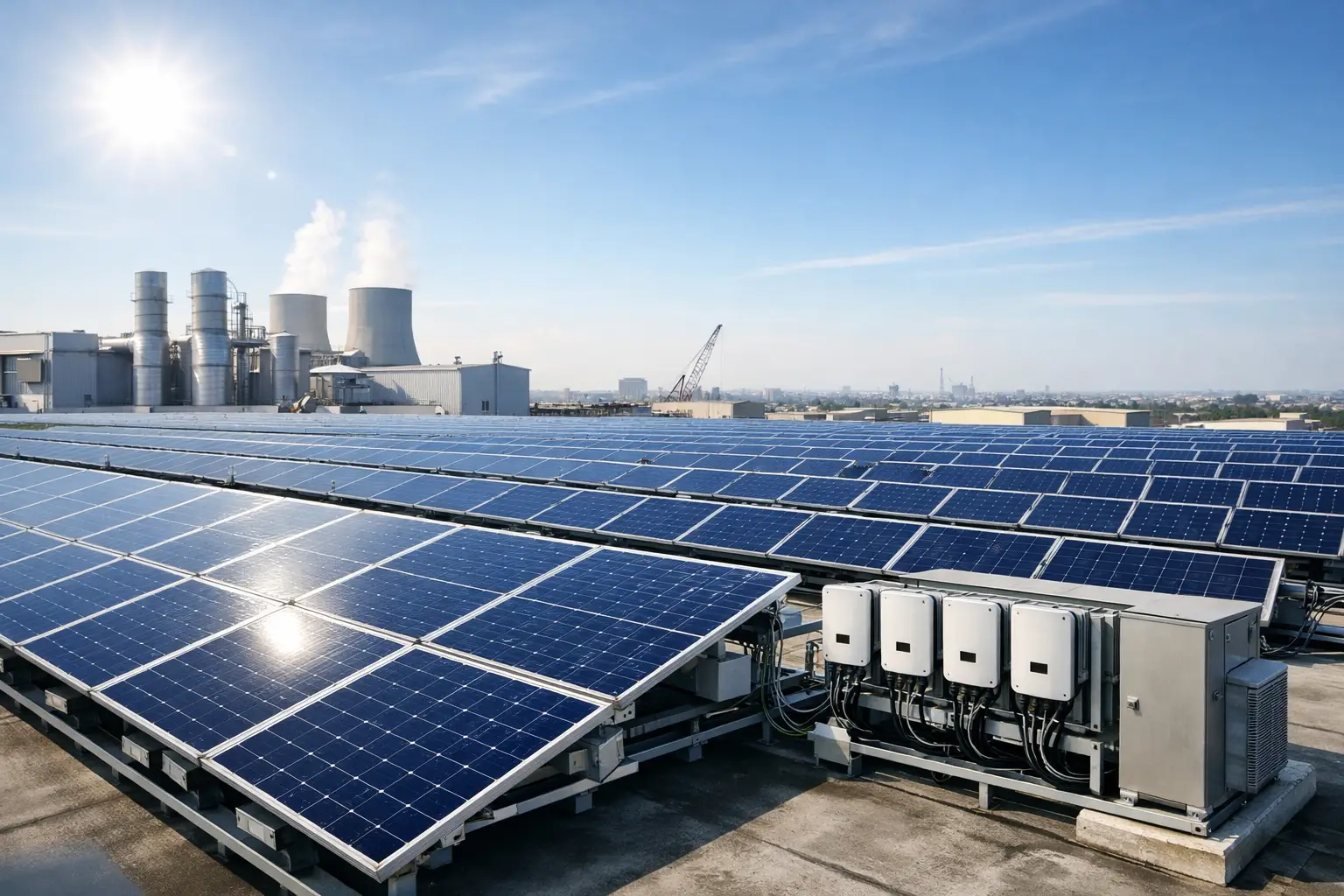
When your site is chewing through power from early morning to late afternoon, every tariff increase hits harder. A 100kW solar system for industry is built for that exact problem – reducing grid reliance during business hours, lowering operating costs, and giving large energy users more control over a major overhead.
For many industrial operators, 100kW sits in a smart middle ground. It is large enough to make a meaningful dent in electricity consumption, but still practical for factories, warehouses, workshops, food production sites, and other facilities with strong daytime demand. If your business has substantial roof space and consistent equipment loads, this system size is often where solar starts to feel less like a nice addition and more like a serious business asset.
Is a 100kW solar system for industry the right fit?
The best way to answer that is not by looking at the panel count first. Start with your load profile. If your site runs machinery, refrigeration, ventilation, pumps, compressed air, or process equipment through the day, a 100kW system can line up well with your usage. That matters because the strongest solar savings usually come from using your solar generation on site rather than sending excess power back to the grid.
This is where industrial buyers often get tripped up. Bigger is not always better. If your business shuts down for long stretches, runs mainly at night, or has highly irregular energy demand, the ideal system size may be different. On the other hand, if your operation is active through peak sunlight hours, 100kW can be a highly effective way to offset expensive daytime electricity.
Roof suitability also matters. A site may have enough total roof area, but not enough usable roof area. Shade, plant equipment, skylights, roof pitch, structural limitations and switchboard configuration can all affect what is possible. That is why proper site assessment matters more than rough online estimates.
What a 100kW system can do for an industrial site
The headline benefit is straightforward – lower electricity bills. But the value of a 100kW solar system for industry goes beyond bill reduction alone.
For many businesses, solar improves cost predictability. Energy is one of those expenses that can quietly eat into margins, especially in manufacturing, logistics, cold storage and processing environments. Offsetting a meaningful portion of daytime consumption can help smooth that pressure and make budgeting easier over the long term.
There is also a competitive advantage in reducing exposure to market volatility. Businesses that rely entirely on grid power are more vulnerable to changing tariffs and network charges. Solar does not remove every energy cost, but it can reduce dependence on them in a practical, measurable way.
Then there is the operational side. A well-designed industrial solar system works quietly in the background with very little day-to-day intervention. Once installed correctly with quality components, it becomes part of the site infrastructure – not a constant management task. That is a big reason many commercial and industrial customers look for end-to-end providers with proven products, clear system design and installation support from start to finish.
Why system design matters more than raw size
Not all 100kW systems perform the same. Two sites can install the same nominal capacity and get very different outcomes depending on panel layout, inverter selection, cable runs, shading exposure and how closely the design matches actual energy use.
A quality design starts with your load profile, not a sales script. If one section of your site uses the bulk of power in the morning and another peaks later in the day, panel orientation may need to be considered carefully. North-facing arrays often deliver strong overall output, but east-west layouts can sometimes better match business consumption across the working day. It depends on your roof and your operating pattern.
Inverter choice matters too. Industrial sites need reliable conversion performance, monitoring visibility and equipment that can handle the demands of a larger installation. The cheapest path upfront is rarely the best long-term choice for a business that depends on uptime.
That is why serious buyers tend to focus on value rather than just system capacity on paper. Premium panels, trusted inverter brands, proper installation standards and solid warranty support all matter more when your system is expected to perform for years in a commercial setting.
How much roof space and infrastructure do you need?
A 100kW system needs substantial installation area, but the exact footprint depends on the panel wattage and site layout. Higher-efficiency panels can reduce the area required, which is useful on sites where space is available but not unlimited.
The roof itself must also be suitable. Industrial roofs vary widely, and so do the engineering considerations. Metal roofs are often solar-friendly, but age, structure and penetrations still need checking. Some facilities may be better suited to a mix of rooftop and other installation zones, depending on access and operational constraints.
Electrical infrastructure can be just as important as the roof. Switchboards, metering arrangements and network connection requirements all need to be assessed properly. For industrial projects, this is not a box-ticking exercise. A system that looks straightforward on paper can become more complex if existing electrical infrastructure needs upgrades or the network approval process requires specific conditions.
Rebates, incentives and finance still matter
Industrial buyers are usually focused on return, and rightly so. Government incentives can improve project economics, but they should be treated as part of the equation, not the whole reason to proceed.
In Australia, eligible businesses may benefit from STCs and other applicable renewable energy incentives depending on the project structure and location. What matters most is getting clear advice on what applies to your site and having the paperwork handled properly. A reputable provider should help simplify that process, not leave you sorting through it alone.
Finance can also be a practical lever for businesses that want to preserve working capital. For some operators, the priority is not avoiding investment altogether but structuring it in a way that supports cash flow. That is where tailored finance options can make a strong solar project easier to move forward without slowing down broader business plans.
Should industry add battery storage as well?
Sometimes yes, sometimes not yet.
For many industrial sites, a 100kW solar system delivers strong value on its own, especially when the business consumes most of its electricity during daylight hours. In that case, battery storage may not be the first priority. If your site already uses the bulk of solar generation as it is produced, the business case for adding a battery can be less compelling.
But there are scenarios where storage deserves serious consideration. If your operation faces demand spikes, wants more control over evening usage, or is planning for resilience and future energy management, battery integration may make sense either now or later. The right answer depends on your load profile, your site goals and how far you want to push energy independence.
The good news is that smart system design can leave room for future expansion. Even if battery storage is not part of stage one, it helps to work with an installer who can design with that pathway in mind.
What to look for in an industrial solar partner
A 100kW project is not the place for vague proposals or generic system recommendations. Industrial buyers should expect a provider to ask detailed questions about operations, roof suitability, electrical infrastructure and energy usage before suggesting a final configuration.
You also want confidence in product quality. Trusted panels and inverters, strong warranties, clear performance expectations and professional installation standards are not optional extras. They are part of protecting your return.
Just as important is process. The strongest providers make the job easier by managing design, approvals, incentives, installation and commissioning in one streamlined service. That matters because industrial teams are busy. You should not have to chase five different parties just to get a solar project delivered properly.
This is where a package-driven but consultative approach stands out. A strong provider can give you a clear starting point based on system size, then tailor the final recommendation to your site, usage and long-term goals. That balance of simplicity and customisation is what moves projects from interest to action.
For businesses that want premium performance without unnecessary complexity, that is exactly where Solar Miner fits best.
The real question is not whether 100kW is big enough
The real question is whether your site is ready to turn daytime sunlight into a long-term operational advantage. A 100kW solar system for industry can make a serious impact, but only when the design, products and installation quality match the demands of the business using it.
If your facility has strong daytime consumption, usable roof space and a clear focus on reducing overheads, this system size is well worth a proper assessment. The right project will not just reduce bills – it will give your business more control, more certainty and a stronger footing for the years ahead.