
 1300 285 885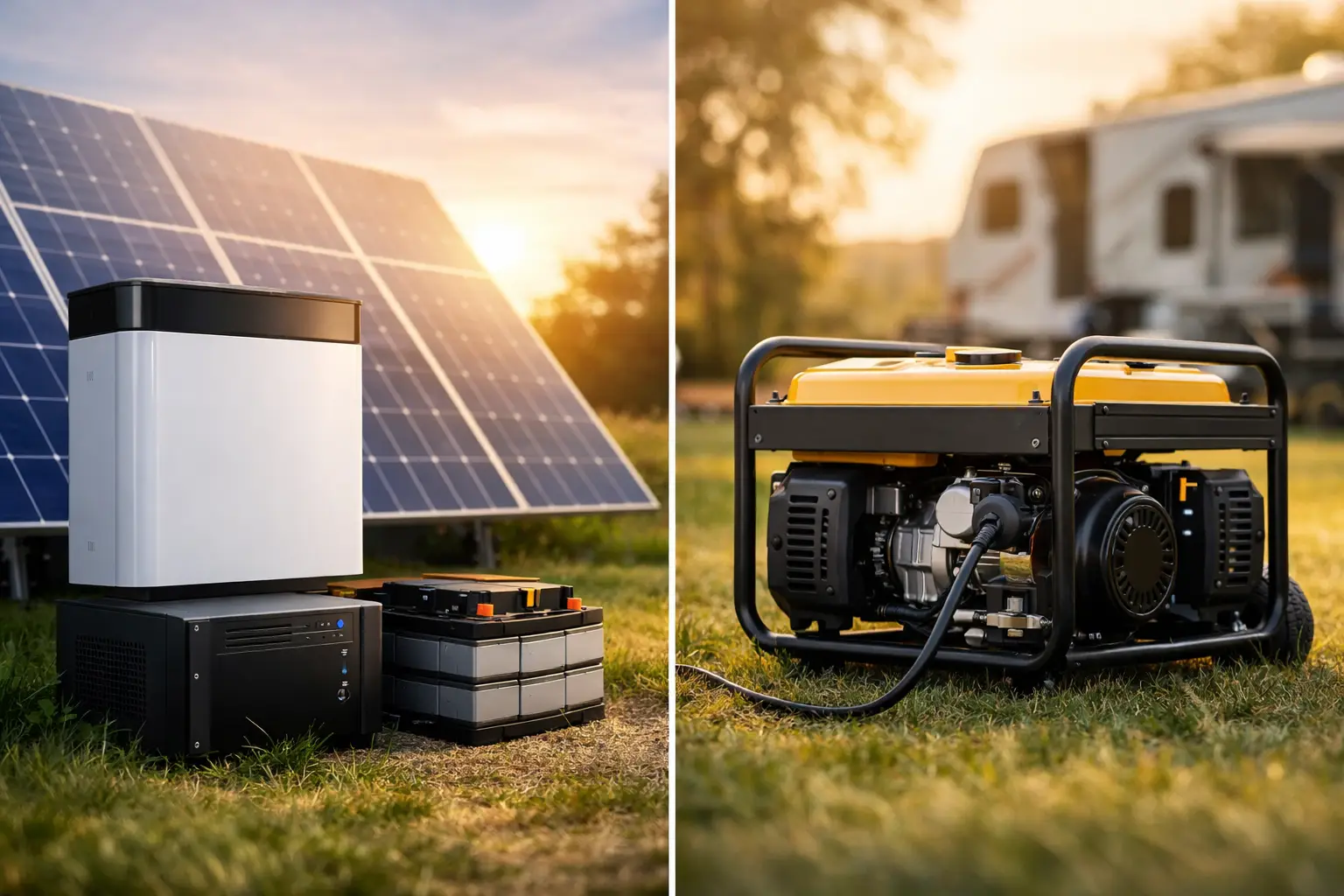
When the power goes out at 7 pm and the fridge, lights and Wi-Fi all stop at once, the question gets real fast: solar battery vs generator – which one actually keeps your home or business running without the hassle? For many Australians, this is no longer a niche comparison. It is a practical decision tied to rising energy costs, blackout protection and how much control you want over your power.
Solar battery vs generator: the core difference
A solar battery stores electricity for later use. It usually works with a solar system, holding excess daytime generation so you can use it at night or during an outage, depending on the battery setup and backup capability. A generator produces electricity on demand, usually by burning petrol, diesel or LPG.
That difference shapes everything else. A battery is quiet, automatic and designed to support daily energy use as well as backup. A generator is typically a standby tool – great when you need power now, but reliant on fuel, servicing and manual planning.
If your goal is lower ongoing grid reliance, a battery usually makes more sense. If your goal is occasional emergency backup for longer outages, a generator can still have a place. The right answer depends on how you use energy, how often outages affect you, and whether you want a backup system that works every day rather than only when things go wrong.
Where a solar battery makes more sense
For households and businesses already investing in solar, a battery is often the smarter long-term fit. Instead of sending excess solar back to the grid and buying power back later, you keep more of your own generation on site. That means better energy independence and more value from the system you already have.
The convenience is a big part of the appeal. A properly configured battery can switch over quickly during an outage, often with little intervention. There is no pulling a machine out of storage, checking fuel levels or dealing with noise outside the window while the rest of the street is dark.
Solar batteries also suit modern energy habits. If your evening usage is high – air conditioning, lighting, appliances, office loads or EV charging support – stored solar can carry more of that demand. For small businesses, that can mean fewer disruptions and better continuity. For homeowners, it means the system is helping every day, not just during blackouts.
There are limits, though. A battery has finite storage. If you want to run heavy loads for a long outage, capacity and backup circuit design matter. Not every battery setup will power an entire property endlessly, and that is where proper system sizing becomes critical.
When a generator still has the advantage
Generators are built for one job: produce power when needed. That can make them useful in specific situations, especially where outages last a long time or where loads are too large for a modest battery system.
On rural properties, worksites and some industrial settings, generators can still be a practical backup layer. If there is no reliable grid, or if machinery and critical equipment need sustained output for extended periods, a generator offers brute-force backup that does not depend on sunshine stored earlier in the day.
They can also be attractive for people who only want emergency power a few times a year and are less concerned with reducing daily electricity use. In that case, a generator may feel like a straightforward insurance policy.
But there is a trade-off. Generators are noisy, require fuel on hand and need regular maintenance to stay reliable. Ironically, the system you neglect most is often the one you need most during an outage. If it has not been tested, serviced or fuelled properly, that backup plan can fall over at the worst time.
Backup power is not just about outages
This is where many buyers get stuck. They compare a battery and generator purely as blackout tools, when the bigger question is how often the system delivers value.
A generator usually sits idle until there is a problem. A solar battery can support your property every day by storing solar energy and reducing reliance on peak grid usage. That changes the equation. One is mostly a reactive solution. The other can be both proactive and protective.
For homes with high evening consumption, batteries are especially appealing because that is often when grid electricity matters most. For commercial operators, using stored solar to smooth demand and improve energy resilience can make the system part of normal operations, not just an emergency add-on.
That does not mean batteries replace generators in every case. It means the comparison should include daily use, not only rare outages.
Noise, maintenance and ease of ownership
A generator asks more of you over time. It needs servicing, safe fuel storage, occasional testing and enough planning to be ready when required. Some owners are fine with that. Many are not.
A solar battery is simpler to live with. It is quiet, clean and integrated into your broader energy system. There is no exhaust, no refuelling and no racket during the evening. If backup comfort matters – especially in suburban homes, hospitality venues or offices – that difference is hard to ignore.
Ease of ownership matters because the best backup system is the one you will actually trust and use. A battery tends to fit into everyday life with less friction. That is one reason more Australians are moving toward batteries as part of a complete solar setup rather than relying on old-school generator backup alone.
Solar battery vs generator for different property types
For a standard home, a solar battery is often the better all-round choice if you want bill savings, quieter backup and more control over your energy use. It supports the shift to cleaner power while making your solar investment work harder.
For a small business, the answer depends on what must stay on during an outage. If the priority is lighting, internet, EFTPOS, refrigeration or selected equipment, a well-designed battery backup system may cover those essentials neatly. If the site has large motors, specialised equipment or very long outage risk, a generator may still be part of the conversation.
For commercial and industrial buyers, the decision is usually less about one replacing the other and more about system design. Some sites benefit from batteries for load management and solar optimisation, with generators reserved for deeper backup protection. That layered approach can make sense where uptime is critical.
This is why package-based solar and battery planning matters. There is no value in oversizing a backup system you will barely use, and no value in undersizing one that fails when it counts.
Reliability comes down to the right setup
A generator is not automatically reliable because it can make power. It is only reliable if it starts, has fuel, has been maintained and is connected correctly. A battery is not automatically reliable because it stores energy. It is only reliable if it has enough capacity, proper backup integration and the right loads assigned to it.
That is why the smarter comparison is not product versus product. It is system versus system.
A well-designed battery setup can be highly dependable for essential loads and everyday savings. A poorly planned one can disappoint. The same is true for generators. The quality of advice, installation and system matching matters just as much as the hardware.
For buyers who want confidence, that means looking beyond the sales pitch and focusing on how the solution fits the property, usage pattern and backup expectations.
So which should you choose?
If you want cleaner, quieter backup that also works for you every day, a solar battery is usually the stronger choice. It aligns with long-term energy savings, lower grid dependence and a more modern way to manage power at home or on site.
If you need long-duration emergency supply for heavy loads, or your property faces extended outages where sustained output matters more than day-to-day energy optimisation, a generator may still earn its place.
For many Australians, the real winner in the solar battery vs generator debate is the option that does more than simply wait for the next blackout. It is the one that supports your energy goals all year round, reduces friction, and is sized properly from the start. That is why tailored advice matters. The best backup system is not the loudest or the newest – it is the one built around how your property actually uses power.
If you are weighing up the next step, think beyond emergency backup and ask a better question: which solution gives you more control when the grid is working, and more confidence when it is not?