
 1300 285 885
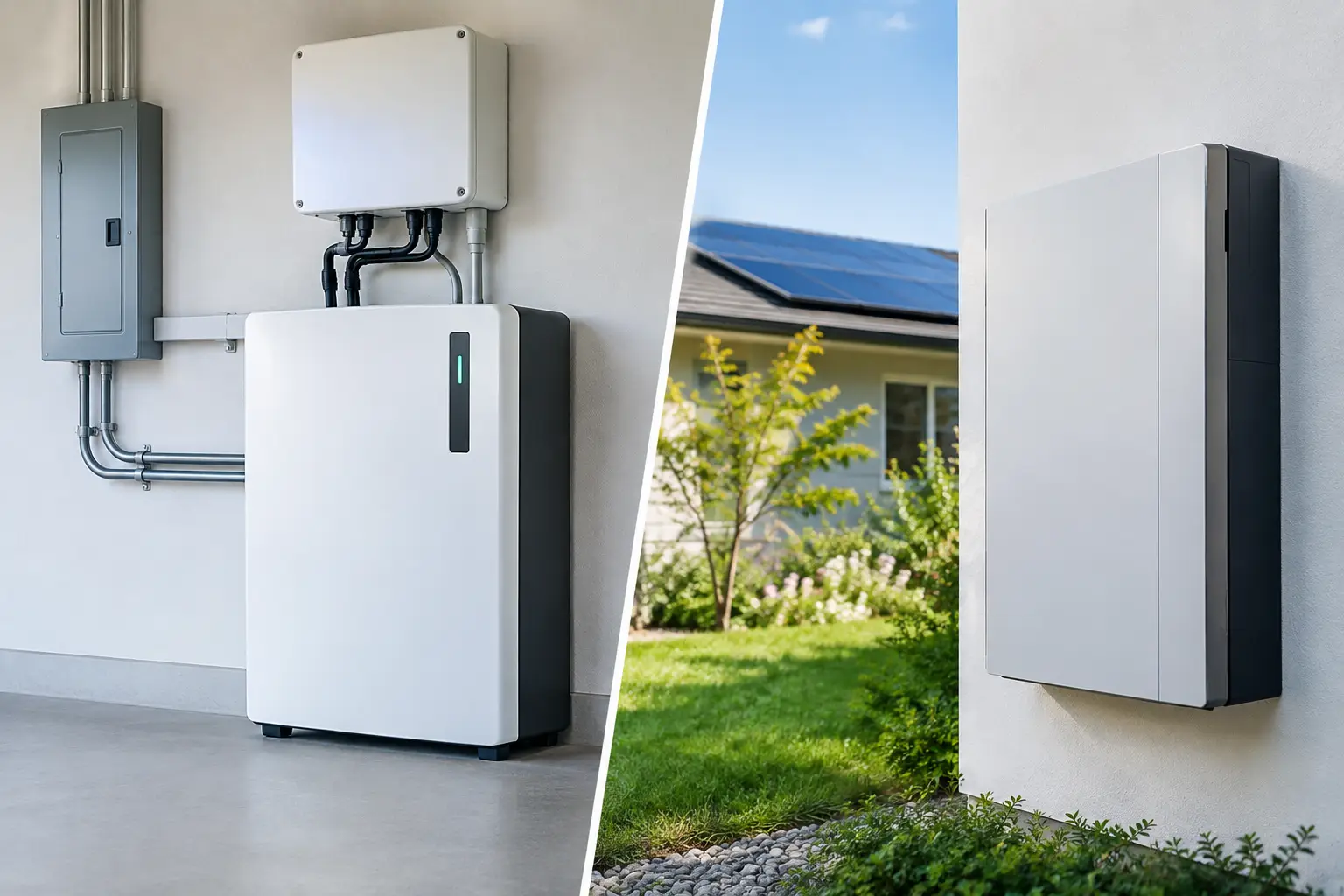
A battery should do more than store spare solar power. It should fit the way your home already makes, uses and may one day export energy. When comparing AC versus DC coupled batteries, the right answer usually comes down to one practical question: are you adding storage to an existing solar system, or building solar and battery together from the start?
Both options can reduce reliance on the grid, help you use more of the energy generated on your roof and provide backup capability when designed for it. But they connect differently, use different equipment and suit different properties. Understanding that difference before choosing a system can protect the performance of your investment for years to come.
What does battery coupling mean?
Solar panels produce direct current, known as DC electricity. Most homes and the electricity grid use alternating current, or AC electricity. An inverter converts solar DC power into usable AC power for appliances such as air conditioners, lights, pumps and EV chargers.
Battery coupling describes where the battery joins this process. A DC coupled battery connects on the DC side of the solar system, usually through a hybrid inverter. An AC coupled battery connects on the AC side, using its own battery inverter.
The terms sound technical, but the choice has real consequences for system design, energy losses, future upgrades, backup options and installation complexity.
AC versus DC coupled batteries: the core difference
With a DC coupled setup, solar electricity can flow from the panels directly into the battery as DC power. When your home needs that stored energy later, the hybrid inverter converts it to AC power for household use. Because the solar and battery components are designed as one integrated system, this arrangement is commonly selected for new solar and battery installations.
With an AC coupled setup, your existing solar inverter first changes panel output from DC to AC. The battery system then takes that AC electricity, converts it back to DC for storage, and converts it to AC again when supplying your home. It sounds like extra work because it is, but AC coupling has a major advantage: it can often be added to an existing solar system without replacing a working solar inverter.
Neither option is automatically better. A well-designed AC coupled battery can be the smartest solution for a home with quality existing solar. A DC coupled battery can be the more efficient, tidy choice when solar and storage are installed together.
When an AC coupled battery makes sense
AC coupled batteries are often the practical choice for households that already have rooftop solar and want to add storage. Rather than remove an inverter that is still performing well, the installer can add a compatible battery and battery inverter alongside it.
This can be particularly useful where your current solar system is relatively new, appropriately sized and covered by a worthwhile warranty. It allows you to keep the equipment you have while adding more control over when your solar energy is used.
An AC coupled design can also offer flexibility when expanding later. Depending on the technology selected and the site design, you may be able to add battery capacity without making major changes to the original solar array. That matters for households planning for a future EV, a growing family, electric heating or higher daytime energy use.
There are trade-offs. The extra conversion steps can create slightly higher energy losses than a comparable DC coupled setup. The actual result depends on the battery, inverter, system settings and how your household uses energy, so efficiency should be assessed as part of the complete proposal rather than as a single headline figure.
When a DC coupled battery is the stronger option
For a new solar and battery installation, DC coupling is often the cleanest approach. A hybrid inverter manages power from the solar panels, battery and grid in one coordinated system. This can reduce equipment on the wall, simplify the design and avoid unnecessary conversion when solar energy is being stored.
DC coupling can be especially effective for homes that want to capture as much daytime solar production as possible. It may also help when panel output temporarily exceeds the inverter’s AC rating. Rather than losing all potential extra generation, some hybrid systems can direct available DC power into the battery. This is commonly called DC oversizing or clipping recovery, although the benefit varies by equipment and site conditions.
The limitation is less about performance and more about timing. If you already own solar with a separate string inverter, moving to DC-coupled storage may mean replacing that inverter with a hybrid model. That can be sensible if the existing inverter is nearing the end of its useful life, undersized for your future plans or no longer suited to the system. If it is working perfectly, however, AC coupling may avoid unnecessary replacement.
Efficiency matters, but usable energy matters more
It is easy to focus only on conversion efficiency. DC coupled systems generally have fewer power conversions between the panels and the battery, which can give them an edge when charging directly from solar. But a battery that is technically more efficient is not automatically the best battery for your property.
The bigger question is how much solar surplus you regularly have, when your household consumes electricity and what you want the battery to achieve. A family that is out during the day may have plenty of excess solar to store for the evening. A home with high daytime air-conditioning demand may have less solar left over, even with a large system.
Look at usable battery capacity, continuous output, warranty terms, compatibility with your solar equipment and the system’s ability to manage high-demand appliances. A battery needs enough power, not just enough stored energy. For example, running lights and a fridge requires far less output than supporting an air conditioner, pool pump or multiple appliances at once.
Backup power is a separate design decision
Many homeowners assume every battery will power the whole house during a blackout. That is not always the case. Backup capability depends on the battery model, inverter, switchboard configuration, site wiring and the circuits selected for backup.
Some systems are designed to support essential loads only, such as refrigeration, lighting, internet, selected power points and a garage door. Others can be designed for broader home backup, subject to the available battery output and the electrical load at the time. Commercial sites may need a more detailed critical-load strategy to keep priority equipment operating.
For either AC or DC coupling, ask exactly what remains powered during an outage and for how long under realistic use. Also ask whether the solar panels can continue charging the battery while the grid is down. This is valuable during extended outages, but it requires compatible equipment and safe system design.
Choosing the right configuration for your property
A site assessment should start with your energy habits, not the battery label. Review your electricity bills, interval data where available, solar generation profile, roof capacity and likely future demand. In Australia, tariff structures can also influence battery value, particularly for homes facing higher evening electricity rates or lower solar export returns.
For a straightforward decision, consider these common scenarios:
- You are installing solar and a battery together: DC coupling is often a strong fit because it creates an integrated system from day one.
- You already have a healthy solar system: AC coupling is commonly the simpler path to add battery storage while retaining your current solar inverter.
- Your solar inverter is ageing or you want a major system upgrade: a DC coupled hybrid system may be worth considering as part of the replacement plan.
- Backup power is a priority: either option can work, but the final design must clearly define backed-up circuits, output limits and blackout operation.
For businesses, the decision can be more involved. Load profiles, demand charges, operating hours, refrigeration, machinery and fleet charging all affect the ideal configuration. The best result usually comes from matching solar generation and battery discharge to the periods that place the greatest strain on your electricity spend.
Make the battery part of a long-term energy plan
The most effective system is not simply the largest battery or the one with the best brochure specification. It is the system that fits your current consumption while leaving room for how you plan to live or operate in the years ahead.
Think about an EV charger, a switch from gas to electric appliances, a pool, home office use or expanded business equipment. These changes can shift your energy profile quickly. A quality solar and battery design should account for that direction of travel, along with trusted components, clear warranties and professional installation.
Solar Miner can assess your existing solar, energy use and future goals to recommend a solution that makes practical sense. Whether AC or DC coupling is right for you, the best next step is a tailored design that shows how your energy will move through the system – and how much more of it you can keep under your control.