
 1300 285 885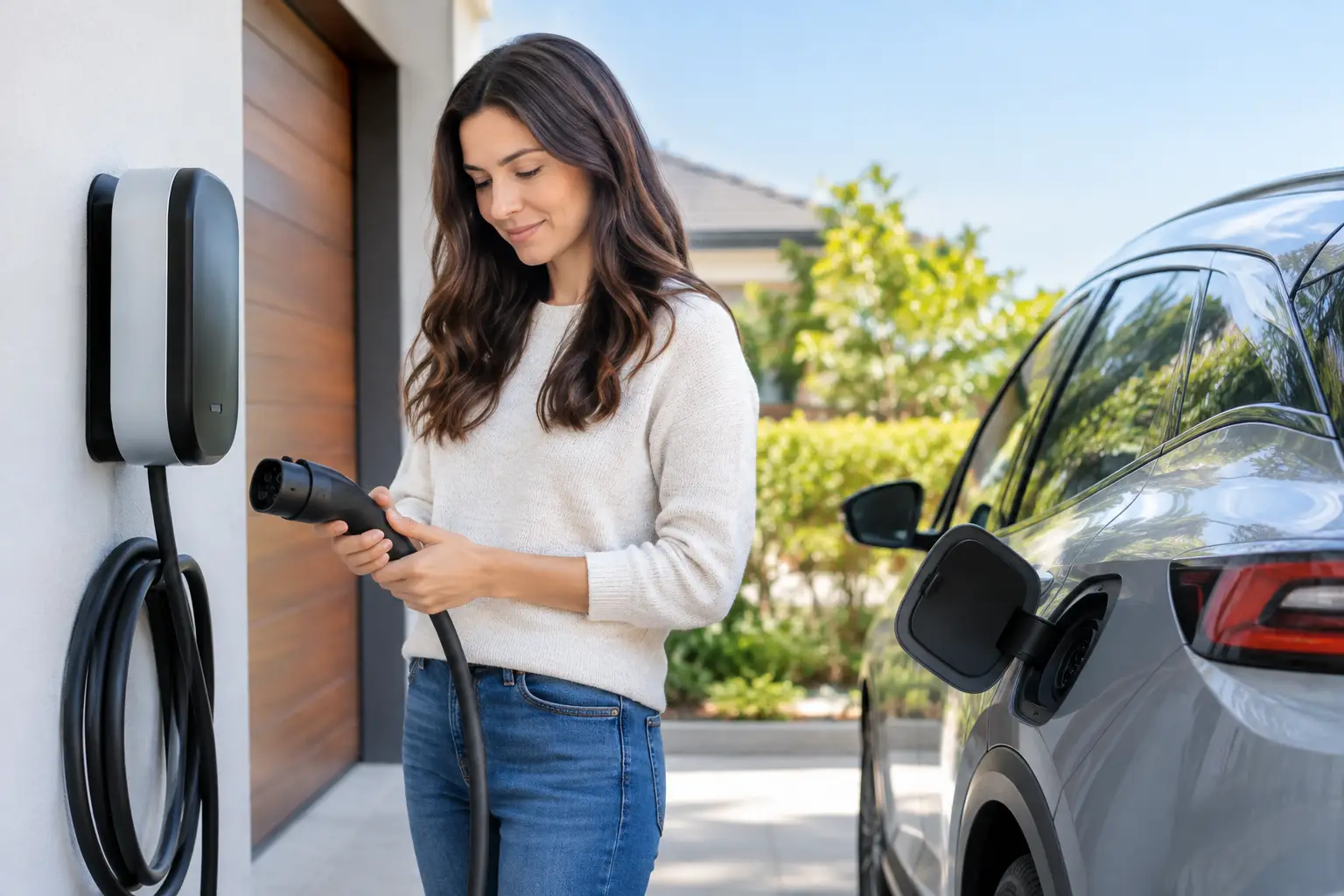
Pulling into the driveway and plugging in should be the easiest part of owning an electric vehicle. The right home charger makes that happen reliably, safely and in a way that works with your household energy use. This EV charger buyers guide cuts through the jargon so you can choose a setup that suits your car, switchboard, solar system and daily driving.
A home EV charger is not simply a power point on the wall. It is a long-term electrical upgrade that can help you charge more conveniently, use more of your own solar energy and reduce reliance on public charging. The best choice depends on a few practical details, not the flashiest feature list.
EV Charger Buyers Guide: Start With Your Driving Routine
Before comparing chargers, look at how far you drive on a normal week. A household that covers short school runs, commuting and errands has very different charging needs from a sales rep travelling long distances every day.
Most drivers do not need to refill the battery from empty overnight. If your vehicle is parked at home for several hours, a properly selected AC charger can comfortably restore the energy used during a typical day. That is why charging at home is often the most convenient foundation for EV ownership.
Battery size matters too. A larger battery takes longer to charge, but this does not automatically mean you need the highest-powered charger available. Your vehicle has its own onboard charging limit. If the car can only accept a certain AC rate, installing a more powerful unit will not make it charge faster.
The smart approach is to match the charger to your real driving pattern, the vehicle’s capability and the electrical supply at your property.
Understand Home Charging Speeds
Australian homes commonly use either single-phase or three-phase power. This is one of the biggest factors in charger selection.
A 7 kW single-phase charger is a popular choice for many homes. It offers a major step up from using a standard portable charging cable and is well suited to overnight charging. For plenty of EV owners, it provides the right balance of charging speed and everyday practicality.
Three-phase properties may be able to support 11 kW or 22 kW charging. These units can deliver more energy in less time, but only when the vehicle can accept that rate. Many EVs are limited to 7 kW or 11 kW AC charging, even when connected to a 22 kW charger. Check the vehicle specification before making a decision.
It also pays to understand the difference between AC and DC charging. Home chargers are generally AC units, with the car converting that electricity for its battery. DC fast chargers are the high-output units often found on major roads and public charging sites. They are designed for rapid charging stops, not typical household installations.
Why portable charging is not always the answer
Many EVs come with a portable charging cable that plugs into a standard socket. It can be useful as a backup option or for occasional charging away from home. However, it is slower and should not be treated as a permanent substitute for a dedicated charging circuit.
A hardwired wall charger gives you a purpose-built, safer and more convenient solution for regular use. Your installer can assess cable runs, circuit protection, switchboard capacity and the best position for the unit.
Choose a Charger That Fits Your Car
For most newer EVs in Australia, Type 2 is the standard AC connection. Still, confirm the connector and charging capability for your exact vehicle model, especially if you are buying a charger before the car arrives.
You will also need to choose between a tethered charger and a socketed charger. A tethered charger has a charging cable permanently attached. It is quick to use because the cable is always there, making it a strong option for households that charge the same vehicle in the same parking spot.
A socketed charger has no fixed cable, so you use your own Type 2 cable. This can offer more flexibility if your household has multiple EVs or you want to replace the cable separately in future. The trade-off is one extra item to store, unpack and pack away.
Cable length deserves more attention than it usually gets. Measure the distance from the proposed charger location to the vehicle’s charging port, then consider how cars are parked. A cable should reach without being stretched across a walkway, driveway or garden path.
Smart Features That Earn Their Place
Not every smart function is essential, but the right features can make your charger far more useful over its working life. App monitoring lets you check charging status, schedule charging and view energy use from your mobile. This is handy for busy households and small businesses managing vehicle use.
Scheduled charging can help align charging with your preferred times. More importantly for solar households, solar-aware charging can direct surplus solar generation into your EV rather than exporting it to the grid. This can increase the value you get from the solar energy produced on your roof.
There is a practical catch: solar output changes with cloud cover, seasons and household demand. A charger that can adjust its output dynamically is often more useful than one that simply switches on when solar is available. It can respond as your dishwasher, air conditioner or battery changes the energy flowing through the home.
Dynamic load balancing is another feature worth considering. It monitors total electricity demand and can reduce EV charging when the home is using more power elsewhere. This helps prevent the charger from overloading your available supply and may avoid unnecessary disruption when several appliances are running.
For commercial sites, access control, user reporting and multiple-charger management can also be valuable. The right system helps businesses keep charging organised as fleets and staff EVs become more common.
Make Your EV Charger Solar-Ready
An EV can become one of the largest electrical loads at a property. For homes with solar, that creates a clear opportunity: charge the car while the roof is generating power.
The best outcome depends on when your vehicle is home. If it is parked in the driveway during the day, solar charging can be a natural fit. If it is usually away for work and returns after sunset, overnight charging may make more sense. Some households use a combination of scheduled overnight charging and daytime top-ups on weekends.
A battery can add flexibility by storing solar energy for later, but it is not required to make solar EV charging worthwhile. The most suitable setup depends on your energy habits, solar generation, household demand and the capacity of your electrical system.
At Solar Miner, a tailored assessment considers the whole energy picture rather than treating the charger as a standalone purchase. That matters when you want solar, battery storage and EV charging to work together properly.
Installation Quality Is Non-Negotiable
A quality charger is only as good as its installation. Always use a qualified electrician experienced in EV charging installations. They should inspect your switchboard, confirm available capacity, assess the cable route and install the correct dedicated circuit and safety protection.
The charger location should be practical, protected and easy to reach. A garage wall is often ideal, but carports, external walls and commercial parking areas can work well when the unit has an appropriate weather rating. Consider sun exposure, rain, vehicle clearance and whether the cable could create a trip hazard.
If your switchboard needs attention, it is better to identify that early. An honest site assessment avoids surprises and helps ensure the final installation meets applicable Australian electrical requirements.
Ask your installer what is included in the installation scope, how the charger will be commissioned and who to contact if you need support later. A clear handover should show you how to start charging, use the app, schedule sessions and respond to any alerts.
Think Beyond the Car You Own Today
EV ownership changes quickly. You may replace your current vehicle, add a second EV or install solar and battery storage later. Choosing a charger with sensible expansion options can help protect your investment.
That does not mean every home needs the highest-capacity unit or every possible feature. It means choosing proven technology that suits your current needs without closing off practical options for the future. Compatibility, smart load management and a professional installation are usually more valuable than chasing specifications you may never use.
A good EV charger should fade into the background: your car is ready when you need it, your home remains safe and your solar energy works harder where it can. Start with your driving habits and property capability, then let a qualified assessment turn that information into a charging solution you can rely on every day.