
 1300 285 885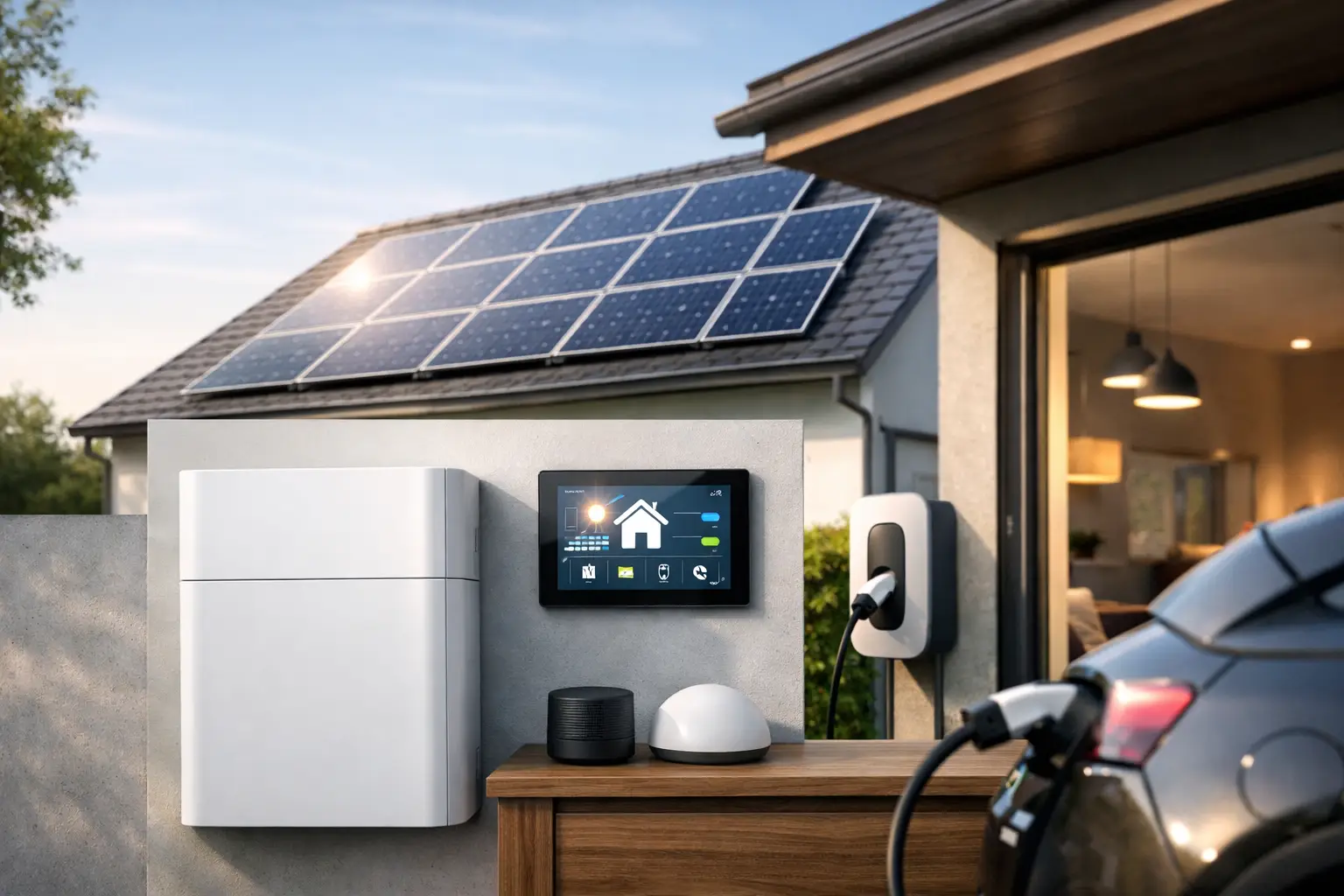
Your solar panels can produce plenty of power at midday, but most households need the most energy in the morning and evening. That mismatch is where a smart home solar battery bundle earns its place. It stores surplus solar energy for later, helps reduce reliance on expensive grid electricity and gives your household more control over when and how it uses power.
For Australian households facing rising energy bills, a battery is no longer just an add-on for solar. When it is correctly matched to your panels, energy use and future plans, it can turn a good solar system into a far more capable home energy solution.
What comes with a smart home solar battery bundle?
A smart home solar battery bundle generally combines solar panels, an inverter, battery storage and the monitoring technology needed to manage them as one system. Depending on the property and the chosen setup, it may also include backup capability, a switchboard upgrade and provisions for an EV charger.
The key word is smart. A quality system does more than store electricity. It monitors solar production, household consumption and battery levels in real time. It can prioritise using solar in the home first, charge the battery with surplus generation and draw from stored energy when solar production drops away.
Some systems can also be configured to respond to electricity plans, using stored energy during higher-demand periods where this suits the household’s tariff. The right settings depend on your retailer, your energy habits and whether your aim is maximum self-sufficiency, essential backup power or a balance of both.
A bundle removes the guesswork of selecting components separately. The panels, inverter and battery should be compatible, correctly sized and installed by qualified professionals. It also gives you one clear pathway from system design through to installation and handover.
Why battery storage changes the value of solar
Without a battery, unused solar generation is usually exported to the grid. Exporting power can still be useful, but many homes receive much less for exported electricity than they pay to buy it back later in the evening.
Battery storage lets you keep more of your solar energy on site. Instead of exporting all your midday surplus, your household can use it to run lighting, cooking appliances, entertainment, heating or cooling and other evening loads. This is known as increasing solar self-consumption, and it is one of the clearest reasons homeowners consider batteries.
The benefit depends on your routine. A household that is empty all day, uses air conditioning after work and has high evening usage may see strong value from stored solar. A home where people work remotely and use most electricity while panels are generating may need a different battery strategy, or may find solar panels alone meet much of the need.
That is why battery decisions should start with actual energy data, not a generic recommendation. Your electricity bills are useful, but interval data gives an even better picture of when your home consumes power.
Choosing the right system size for your home
The best battery is not automatically the biggest available. An oversized battery may sit partly unused through lower-production periods, while a battery that is too small may fill early and leave valuable solar energy going back to the grid.
Start with three questions: how much solar does your roof generate, how much electricity do you use after sunset, and what do you want the battery to achieve? A household that wants to cover evening use has different requirements from one that wants essential circuits operating during an outage.
Your solar array matters just as much as the battery. A larger household with multiple occupants, pool equipment, ducted air conditioning or an electric vehicle may need a solar system with enough generation to charge a battery while still covering daytime consumption. For many medium homes, a 6.6kW solar system is a practical starting point, but the right capacity always depends on roof space, usage and future demand.
It is also worth planning ahead. If you expect to add an EV, replace gas appliances with electric alternatives or expand the household, your energy needs may increase. Choosing a scalable battery platform or allowing capacity in the system design can prevent a costly rethink later.
Battery capacity and power are different
Battery capacity is measured in kilowatt-hours and tells you how much energy the battery can store. Battery power is measured in kilowatts and tells you how much electricity it can supply at one time.
Both matter. A battery may have enough stored energy to cover an evening’s use, but if its power output is too low, it may struggle to support several high-demand appliances running together. Air conditioning, ovens, kettles and electric hot water systems can create sharp spikes in demand.
A professional assessment considers these peaks as well as total daily use. This is especially important for households moving towards all-electric living.
Backup power: know what your battery can really do
Many homeowners assume that a battery will keep the whole house running during a blackout. That is not always the case. Some systems provide no backup by default, some support selected essential circuits and others can be designed for broader whole-home backup.
Essential backup commonly covers practical loads such as lights, a fridge, internet equipment and selected power points. It can be a smart choice for households that mainly want confidence during outages without designing for every appliance to operate as normal.
Whole-home backup can offer more flexibility, but it needs careful system design. High-load appliances may need to be managed during an outage, particularly if there is limited battery charge or poor weather reducing solar generation. A battery is a major step towards energy independence, but it is not an unlimited power source.
Ask early in the process what is included in the backup design, which circuits will be supported and what happens if an outage occurs overnight. Clear answers prevent disappointment later.
Make the smart features work for you
The app is not just a dashboard. It is where a smart home solar battery bundle becomes a practical part of daily energy management. Good monitoring shows solar generation, household use, battery charging and grid imports or exports in a clear format.
This visibility can change habits quickly. You may choose to run the dishwasher, washing machine or pool pump during solar-producing hours. If you have an EV charger, daytime charging may let you use more of your own generation rather than importing energy later.
Automation can help, but it should remain simple. The aim is not to make your household work around the system. The aim is to set up the system so it works around your household. A well-designed solution should reduce effort, not create another complicated routine to manage.
What to check before you commit
A quality installation begins with the site. Roof orientation, shading, switchboard condition, available wall space, ventilation and cable pathways all influence what can be installed and how the system will perform.
Before proceeding, make sure your provider explains the proposed solar capacity, usable battery storage, inverter output, backup arrangement and monitoring platform in plain language. You should also understand the product warranties, workmanship coverage and who will support the system after installation.
Government incentives and eligibility can affect the final design and timing, so it pays to work with an installer that can explain the current requirements for your state. Requirements can change, and the right advice is more valuable than broad promises.
At Solar Miner, the focus is on matching trusted solar and battery technology to the way your property actually uses energy. That means looking beyond a standard package and building a solution that supports your household now while allowing room for what comes next.
Is a battery bundle right for every household?
Not necessarily. If your home uses most of its electricity in daylight hours, has low evening demand or has limited solar generation, a battery may not be the first upgrade to prioritise. Improving the solar system design, shifting appliance use to daytime or reducing unnecessary consumption can make a meaningful difference first.
But for households with strong solar production, regular evening use, blackout concerns or plans for an EV and more electric appliances, a battery bundle can be a practical long-term move. It gives you more control over energy produced on your own roof and less exposure to changing grid costs.
The strongest starting point is a tailored assessment of your bills, roof, usage pattern and future plans. Once those details are clear, the right system is easier to identify – and your solar can keep working long after the sun goes down.