
 1300 285 885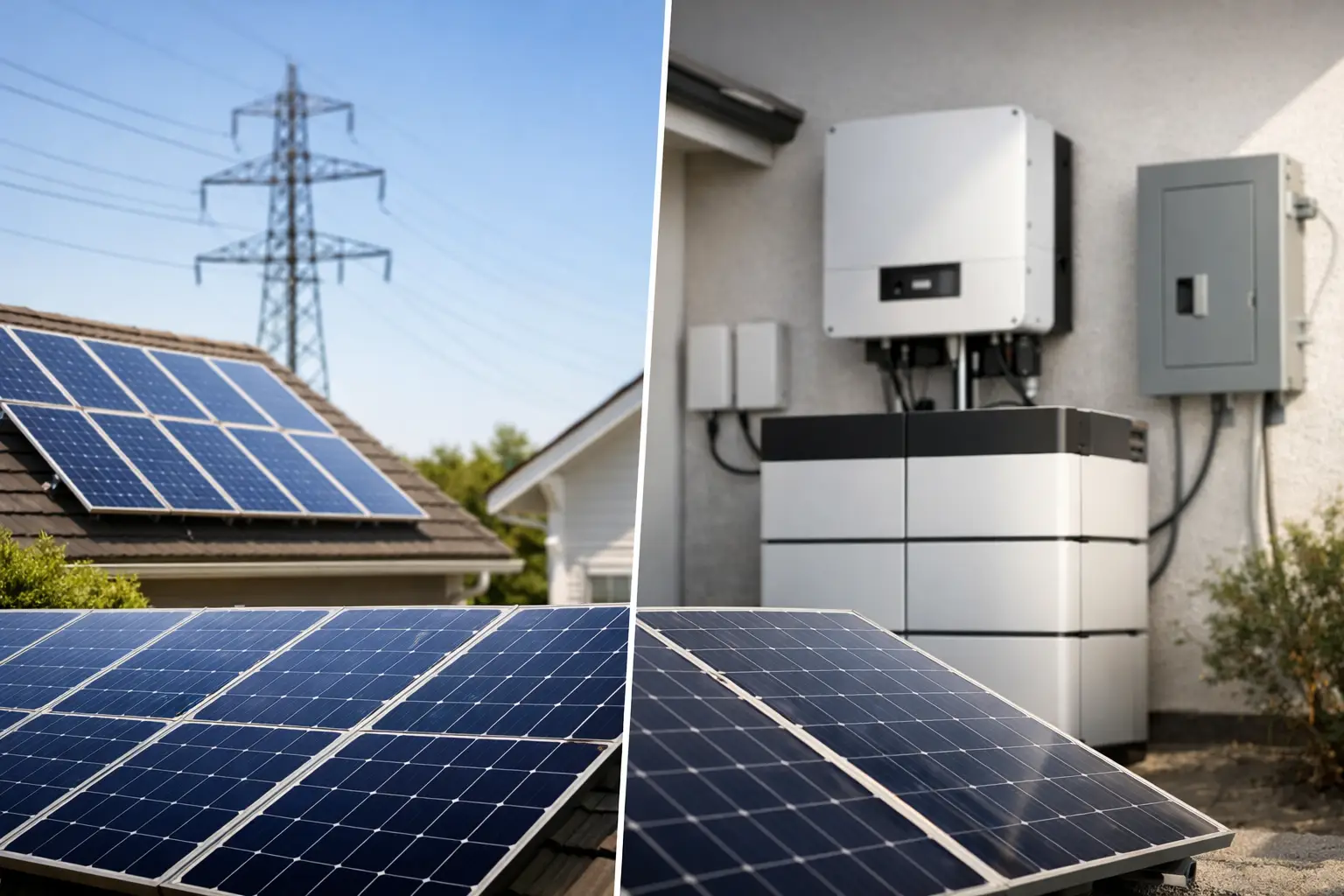
When people compare grid tied vs hybrid solar, they are usually asking a very practical question: do I want the lowest-cost path to solar savings now, or do I want more control over how and when I use my power? That choice matters more than the technical labels. It affects your savings, your backup capability, and how future-ready your system will be.
For most households and businesses, both options can cut reliance on the grid and reduce electricity bills. The difference is in how the system handles solar generation, battery storage, and grid outages. If you are choosing between the two, the smartest move is not chasing features for the sake of it. It is matching the system to your energy habits, property type, and long-term goals.
Grid tied vs hybrid solar: the core difference
A grid-tied solar system is connected to the electricity grid and usually runs without a battery. Your solar panels generate power during the day, your property uses that power first, and any surplus can be exported to the grid. When solar production drops, such as at night or during poor weather, you draw electricity from the grid as usual.
A hybrid solar system also connects to the grid, but it is designed to work with a battery. That means excess solar can be stored for later use instead of being exported straight away. In the right setup, a hybrid system can also provide backup power for selected circuits or, in some designs, a larger portion of the property during an outage.
That is the big split. Grid-tied is simpler. Hybrid gives you more flexibility.
Why grid-tied solar still suits many properties
There is a reason grid-tied solar remains a popular choice. It delivers straightforward savings with less system complexity. If your main goal is to cut daytime electricity costs and make use of available solar rebates, a quality grid-tied setup can be a strong fit.
This option often works well for households that use a fair amount of power during the day. Think home offices, families with staggered routines, or businesses operating through daylight hours. In these cases, more of the solar energy is used on-site as it is produced, which improves the financial return.
Grid-tied systems are also easier for many first-time buyers to understand. Panels, inverter, grid connection, done. That simplicity matters when you want a proven, reliable system without adding battery decisions into the mix from day one.
There is a trade-off, though. Standard grid-tied solar usually shuts down during a blackout for safety reasons. So even if the sun is shining, your solar system generally will not keep your lights on unless battery and backup functionality are built into the design.
Where hybrid solar makes more sense
Hybrid solar is built for people who want more than daytime savings. It suits properties where evening power use is high, where blackout protection matters, or where owners want to add battery storage as part of a broader energy plan.
This can be especially relevant if your household is busiest after sunset. Air conditioning, cooking, laundry, EV charging, entertainment, and general home use often spike in the late afternoon and evening. A battery lets you store excess daytime solar and use it when grid electricity would otherwise be needed most.
For businesses, hybrid can also make sense where continuity matters. A café, office, workshop, medical practice, or retail site may not be able to afford repeated interruptions. Backup capability is not automatic in every hybrid design, but the right system can provide a more resilient energy setup.
Hybrid is also appealing for buyers who want staged energy independence. You may not be aiming to go fully off-grid, but you do want more control over your power and less exposure to future tariff changes. In that case, hybrid is often the more strategic platform.
Battery storage changes the equation
The battery is what turns the comparison from simple solar generation into energy management. Without a battery, solar power has a narrow window of use: generate it, use it, or export it. With a battery, that window widens.
This does not mean every property needs one. If you are out all day and your energy use is low at night, a battery may not add much practical value right away. But if your usage pattern is heavier in the evening, battery storage can help shift your solar consumption into the hours when you need it most.
It also changes how people think about energy security. Plenty of customers are not just chasing lower bills. They want confidence. They want to know the fridge stays on, the internet keeps working, or critical business equipment stays protected during outages. That peace of mind is a real benefit, but only if the battery and inverter are set up for backup from the start.
Grid tied vs hybrid solar for homes
For homeowners, the right answer usually comes down to lifestyle. A medium family home with strong daytime occupancy may do very well with a grid-tied system. If solar power is being used while it is generated, the system works hard for you without needing battery storage.
On the other hand, families who leave the house empty during the day and return to heavy energy use at night often get more value from hybrid. The same applies to households planning for an EV, electric hot water, or future electrification upgrades. A hybrid-ready setup can support those changes more effectively.
It is also worth thinking beyond today. Some homeowners want to start with a reliable solar package and keep the pathway open for battery storage later. That can be a sensible middle ground, provided the inverter and system design are chosen carefully.
Grid tied vs hybrid solar for businesses
For commercial sites, usage profile is everything. A business that operates mostly during daylight hours can often benefit strongly from a grid-tied system because solar generation lines up with trading hours. Offices, warehouses, and many industrial facilities fall into this category.
Hybrid becomes more compelling where after-hours loads are meaningful or where outage protection matters. Hospitality venues, some medical or service-based businesses, and sites with refrigeration or critical equipment may value stored solar and backup support.
The decision should not be made on technology hype. It should be based on operating hours, load patterns, and how costly downtime would be. A good solar recommendation always starts there.
What people often get wrong
One common mistake is assuming hybrid automatically means full blackout protection. It does not. Backup depends on the inverter, battery capacity, switchboard design, and which circuits are prioritised. If backup is important, it needs to be clearly planned, not assumed.
Another mistake is buying a battery before understanding actual energy use. Batteries can be excellent, but they are not magic. The best-performing systems are the ones sized to suit the property, not the ones with the longest feature list.
There is also the question of future expansion. Some buyers install a basic grid-tied system and later discover that adding battery storage is not as straightforward as they expected. That is why upfront planning matters. Even if you are not installing a battery today, it can still make sense to choose equipment with a future upgrade path.
How to choose the right system
Start with your real goal, not the brochure version. If your priority is straightforward savings and your daytime usage is solid, grid-tied solar may be the right fit. If you want backup support, more evening self-consumption, or a stronger long-term energy strategy, hybrid is often the better choice.
Then look at your load profile. When do you actually use electricity? What appliances drive consumption? Are you planning to add an EV charger, upgrade air conditioning, or electrify more of the property? Those answers shape the system far more than buzzwords do.
Finally, work with an installer that can assess the full picture – roof space, energy habits, battery readiness, rebate eligibility, and product quality. That is where the difference shows between a rushed sale and a tailored recommendation.
At Solar Miner, that is exactly how we approach it: clear advice, trusted technology, and systems matched to the way Australians actually use power.
If you are stuck between grid-tied and hybrid, do not chase the most complicated system. Choose the one that will keep delivering value long after installation day.