
 1300 285 885
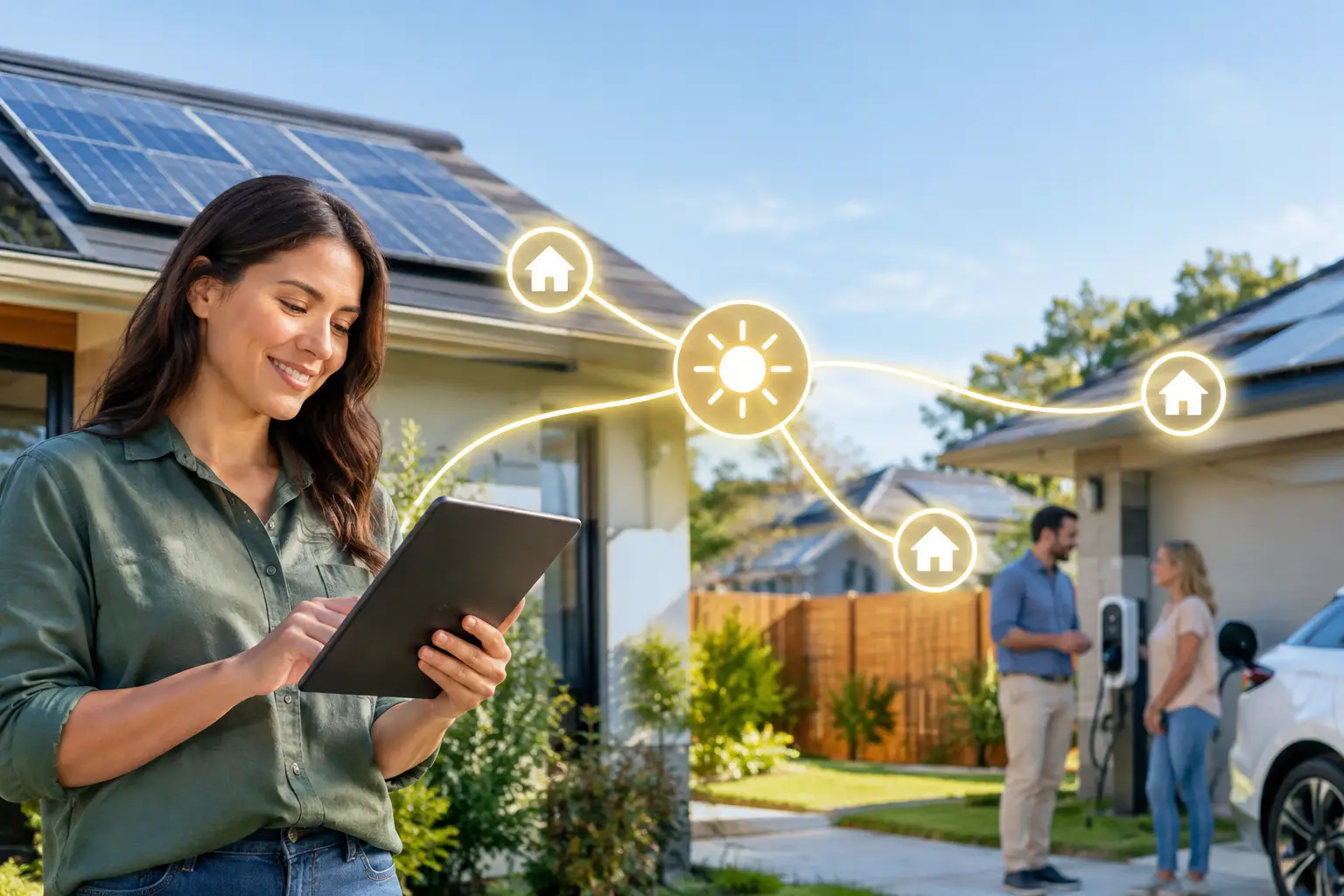
A solar sharer sounds simple: your roof makes more electricity than you need, so you pass the excess to someone else. For Australian households and businesses, the reality depends on where the power is used, how the property is metered and the rules that apply to your electricity network and retailer.
The good news is that there are practical ways to get more value from surplus solar. Some work within one property today. Others can work across multiple sites, apartments or family homes, but usually need the right metering arrangement, energy plan or approved program. The best option starts with understanding the difference between using solar on site and sending it through the grid.
What does solar sharer mean?
A solar sharer is a person, household or business that shares the benefit of solar generation with others. That may mean using one solar system to supply several tenants in the same building, directing stored energy to a connected dwelling, or participating in an energy-sharing arrangement managed through a retailer or community energy project.
It does not usually mean running a cable across the fence to power a neighbour’s home. Electricity connections, safety requirements and network rules make that far more complicated than it sounds. Once electricity crosses a property boundary or enters the public grid, it must be measured, managed and supplied under the relevant rules.
For most solar owners, the most immediate form of sharing is with their own property. A system can power the home during the day, support a home office, run pool equipment, charge an EV or reduce daytime business consumption. Every kilowatt-hour used as it is generated is solar you have shared with your own electricity needs before buying energy from the grid.
How solar sharing works in practice
Sharing solar within one property
This is the most straightforward arrangement. Solar panels generate DC electricity, an inverter converts it to usable AC power, and the property uses that power first. Any shortfall comes from the grid. Any surplus is either exported or sent to a battery, if one is installed and configured to charge.
For a family home, shifting flexible loads into daylight hours can make a noticeable difference. Set the dishwasher, washing machine or pool pump to run when the system is producing. If you have an electric vehicle at home during the day, scheduled charging can turn spare generation into kilometres rather than exports.
Businesses often have an even stronger solar-sharing opportunity because staff, equipment, refrigeration and air conditioning may operate during peak sunshine. A correctly sized commercial system can put more generation directly into productive use, provided the load profile supports it.
Sharing solar across tenants or dwellings
Apartment buildings, retirement communities, shopping centres and industrial sites can sometimes use solar across multiple occupants. The arrangement often relies on an embedded network, private metering, a common-area solar system or another approved energy arrangement.
This is not a standard outcome for every strata building. The wiring, meter configuration, ownership structure and retailer agreements all matter. A system on common property may readily offset lifts, lighting, pumps and shared facilities, while allocating its value directly to individual apartments can require additional design and administration.
For commercial landlords, solar can also support common services or be structured to benefit tenants where agreements and metering allow. It needs to be planned before installation, not treated as an afterthought once panels are already on the roof.
Sharing solar with another address
Supplying surplus electricity from your home to a relative’s home across town is generally not as simple as choosing who receives your exported power. The grid combines electricity from many generators, and each connection is separately metered and billed.
Some retailers, virtual power plant programs and community energy models may offer ways to share credits, participate in coordinated battery programs or support local renewable energy outcomes. Availability varies by state, network area and electricity retailer. Terms can also change, so check exactly how energy, credits, participation requirements and exit conditions are handled before signing up.
A solar sharer arrangement can be appealing, but it should not be the only reason to install a system. Your solar design should first work for your own consumption, roof space and long-term energy goals.
Why a battery can change the equation
A battery does not automatically let you send power to another home. What it does do is give you more control over when you use your own solar. Instead of exporting excess electricity in the middle of the day, you may store it for the evening when household demand rises.
That can be particularly valuable for homes where everyone is out during daylight hours, then returns to cooking, cooling or heating, charging devices and watching television after sunset. For businesses, batteries may help manage late-day consumption or support critical loads, depending on the system design.
Battery suitability depends on your generation, usage pattern, export conditions and objectives. A large battery attached to a small solar system with limited surplus may not deliver the outcome you expect. Equally, a high-use household with good daytime solar generation may benefit from storage, especially if energy independence and backup capability are priorities.
Backup power also requires careful planning. Not every battery provides backup during an outage, and not every system can run every circuit in the building. Discuss essential loads, switchboard requirements and expected backup operation with your installer before making a decision.
What to check before choosing a solar sharing option
Start with interval usage data, not guesswork. Your electricity bill may show a broad picture, but interval data reveals when you use power across the day. It helps identify whether you are exporting heavily at midday, importing heavily at night or consuming most of your generation as it is produced.
Next, consider the physical setup. Are all users behind the same meter? Is the property a strata complex, a tenancy arrangement or a separate address? Is there enough roof area, and does the switchboard have capacity for the proposed system? These questions determine whether conventional self-consumption, battery storage or a more specialised sharing model is realistic.
You should also confirm local network requirements, retailer conditions and applicable incentives. Rules differ across Australia, particularly for export limits, metering and larger systems. A reputable installer can explain the installation side, while your retailer or network can clarify how any proposed sharing program operates.
Finally, look beyond solar sharing alone. Panel quality, inverter performance, warranties, roof orientation, shading and system sizing still shape the result. A poorly matched system will not become a strong investment simply because it has a sharing feature attached to it.
Choosing the right system for your goal
For many medium-sized homes, a well-designed solar system paired with smarter daytime use is the most effective starting point. Larger households, electric vehicle owners and homes with significant evening demand may want to assess a battery alongside their solar design.
For a business, the priority is usually matching generation to operating hours. A café with daytime trade, a warehouse with consistent equipment loads and an office with air conditioning demand may each need a different system size and configuration. Industrial sites should assess load profiles, export capacity and future expansion from the outset.
If your goal is to support tenants, several dwellings or multiple operations, seek advice early. Solar Miner can help assess the right solar, battery and EV charging pathway for your property, but specialist metering or embedded-network advice may also be needed for complex arrangements.
The strongest solar outcome is rarely about chasing one feature. It comes from a system designed around how your property actually uses energy, with quality equipment and a clear plan for the power you generate. Start with your own load, ask the right questions about metering, and let the sharing opportunity follow the setup that genuinely fits.