 1300 285 885
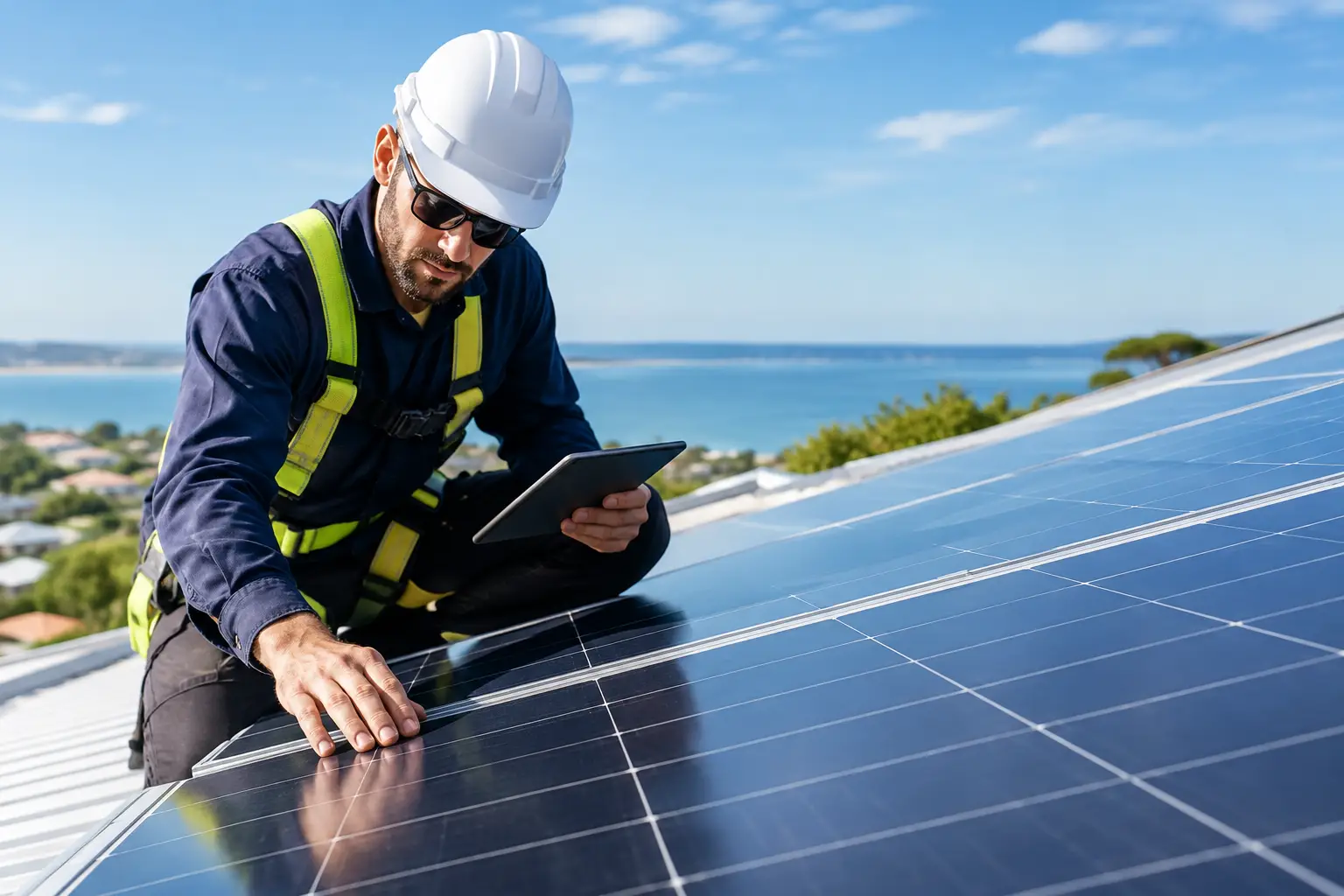
A solar system should quietly turn sunshine into lower power bills. When output drops without warning, though, it can be hard to tell whether the cause is dust, shade, an inverter alert or a genuine electrical fault. This solar panel maintenance checklist helps Australian home and business owners protect performance without taking unnecessary risks on the roof.
Solar panels have no moving parts, so maintenance is usually straightforward. That does not mean it is optional. A quick visual check, sensible cleaning and prompt attention to warning signs can prevent small issues from affecting your generation for months.
Solar panel maintenance checklist: start with safe checks
Most of the useful checks can be done from the ground or through your monitoring app. Do not climb onto a roof, remove electrical covers or touch wiring unless you are qualified to do so. Roof access brings fall risks, and solar equipment can remain live during daylight hours.
Start by looking at your system on a clear day. From a safe position, check whether panels appear clean and intact, with no visible cracking, chips, discolouration or loose mounting components. Look for nearby tree growth, new structures or antennae casting shade that was not there when the system was installed.
Then open your inverter or solar monitoring app. Compare today’s generation with similar sunny days, allowing for normal seasonal changes. Summer production will generally be higher than winter production, while heavy cloud, smoke haze and rain can all reduce output. A sudden or persistent drop in generation deserves investigation.
For a practical routine, work through these checks every few months and after severe weather:
- Check the monitoring app or inverter screen for fault codes, alerts or unusual production drops.
- Look for dirt build-up, leaves, bird droppings or branches shading the panels.
- Inspect visible panels from ground level for obvious damage or movement.
- Confirm the inverter has no warning lights, strange noises or overheating messages.
- Check accessible isolators and electrical enclosures for signs of water entry, damage or pests, without opening them.
- Keep a simple record of inspections, cleaning and any alerts reported to your installer.
This record is useful when diagnosing a fault and can support warranty discussions if a component issue develops.
Clean panels when conditions call for it
Rain will wash away light dust, but it may not remove sticky grime, bird droppings, salt residue or pollution. Panels in dusty regional areas, near busy roads, under trees or close to the coast may need more attention than systems in cleaner locations. There is no single cleaning timetable that suits every property.
Before organising a clean, check your output data. If generation is tracking normally, a lightly dusty surface may not justify roof work. If grime is clearly visible and production has fallen compared with comparable periods, cleaning can be worthwhile.
For safely accessible ground-mounted panels, use clean water and a soft brush or sponge. Clean early in the morning or later in the afternoon when panels are cool. Avoid abrasive pads, harsh chemicals, high-pressure cleaners and very cold water on hot glass. These can damage surfaces, seals or frames.
For rooftop systems, professional cleaning is often the sensible choice, particularly on steep, high or slippery roofs. A qualified technician has the right safety equipment and can spot mounting or cable concerns while they are there. Never stand on solar panels, even if they look strong enough to take your weight.
Watch the inverter, because it tells the real story
Your inverter converts the DC electricity produced by panels into usable AC electricity. It is also one of the best places to identify a developing problem. A green or normal-operation indicator generally means the system is producing, but the exact display and light sequence vary by brand.
Check the inverter monthly. Listen for unusual buzzing, repeated clicking or fan noise that continues outside normal operating periods. Look for error codes, a red warning light, water damage, corrosion or excessive heat around the unit. Keep vents clear and do not store boxes, garden tools or other items against it.
Brief interruptions can occur after a grid event or during very hot weather, when inverters may reduce output to protect themselves. That is different from frequent faults or a system that remains offline. If an alert does not clear after following the manufacturer’s basic reset instructions, contact your installer or a qualified solar electrician. Do not repeatedly reset equipment in an attempt to force it back online.
Keep shade, pests and weather damage under control
Shade has a bigger impact than many owners expect. Even partial shading from a branch, leaf litter or a new neighbouring structure can reduce production, depending on the panel layout and inverter design. Trim vegetation before it reaches the array, using a professional arborist where branches are close to cables or the roofline.
Birds can create more than a cleaning problem. Nesting beneath panels may lead to debris build-up, damaged wiring and unwanted noise. If you notice persistent bird activity, ask a solar professional about suitable panel mesh or other approved pest protection. Avoid blocking drainage paths or using makeshift materials that could affect ventilation.
After hail, high winds, major storms or a fallen branch, inspect the system from the ground. Check for broken glass, displaced panels, exposed cables or roof damage around mounting points. If anything looks unsafe, keep clear and arrange an inspection. Your system may still appear to be generating, but physical damage should always be assessed properly.
Do not ignore electrical warning signs
Solar equipment should not smell burnt, spark, trip circuit breakers repeatedly or show melting, scorch marks or water inside electrical components. If you see any of these signs, treat them as urgent. Follow the shutdown procedure supplied with your system only if it is safe to do so, then contact a licensed electrician or your installer.
The same applies if panels are visibly cracked after a storm, cables are hanging loose, or an inverter has been exposed to flooding. Do not touch damaged equipment or attempt a DIY repair. Australian solar systems must be inspected and repaired by appropriately licensed professionals to protect your household, staff and property.
Schedule professional servicing at the right time
A professional inspection gives you more than a clean set of panels. A qualified technician can assess electrical connections, mounting hardware, earthing, isolators, inverter performance and system data in ways that are not safe or practical for an owner to do.
For many residential systems, a professional health check every two to five years is a sensible starting point. The right interval depends on the site. Consider more frequent checks for commercial systems, coastal properties, dusty locations, systems with recurring alerts, or arrays exposed to heavy bird activity and severe weather.
Businesses should take a more structured approach. A drop in solar output can affect operating costs across warehouses, offices, retail sites and industrial facilities. Assign a staff member to review production data, retain maintenance records and escalate faults quickly. Larger systems may benefit from formal monitoring and planned preventative maintenance rather than waiting for a visible issue.
Protect warranties and long-term output
Keep copies of your installation documents, product warranties, commissioning records and monitoring login details in one place. If your property changes hands, pass these records on to the new owner. They make it easier to understand system capacity, component models and any service history.
Do not allow unqualified trades to alter solar wiring, move panels or add equipment around the array. Roof repairs, renovations, air-conditioning work and new satellite equipment can all affect a solar system. Let the relevant trades know panels and cabling are present, and arrange a solar professional if equipment needs to be removed or reinstalled.
A well-designed system from a trusted installer should be easy to live with. Solar Miner helps customers select quality solar solutions that suit their property and energy needs, with professional installation and support when service is required.
Your best maintenance habit is simple: check generation regularly, act on alerts early and leave roof and electrical work to qualified professionals. That small amount of attention keeps your solar system doing what it was installed to do – delivering dependable clean energy year after year.