
 1300 285 885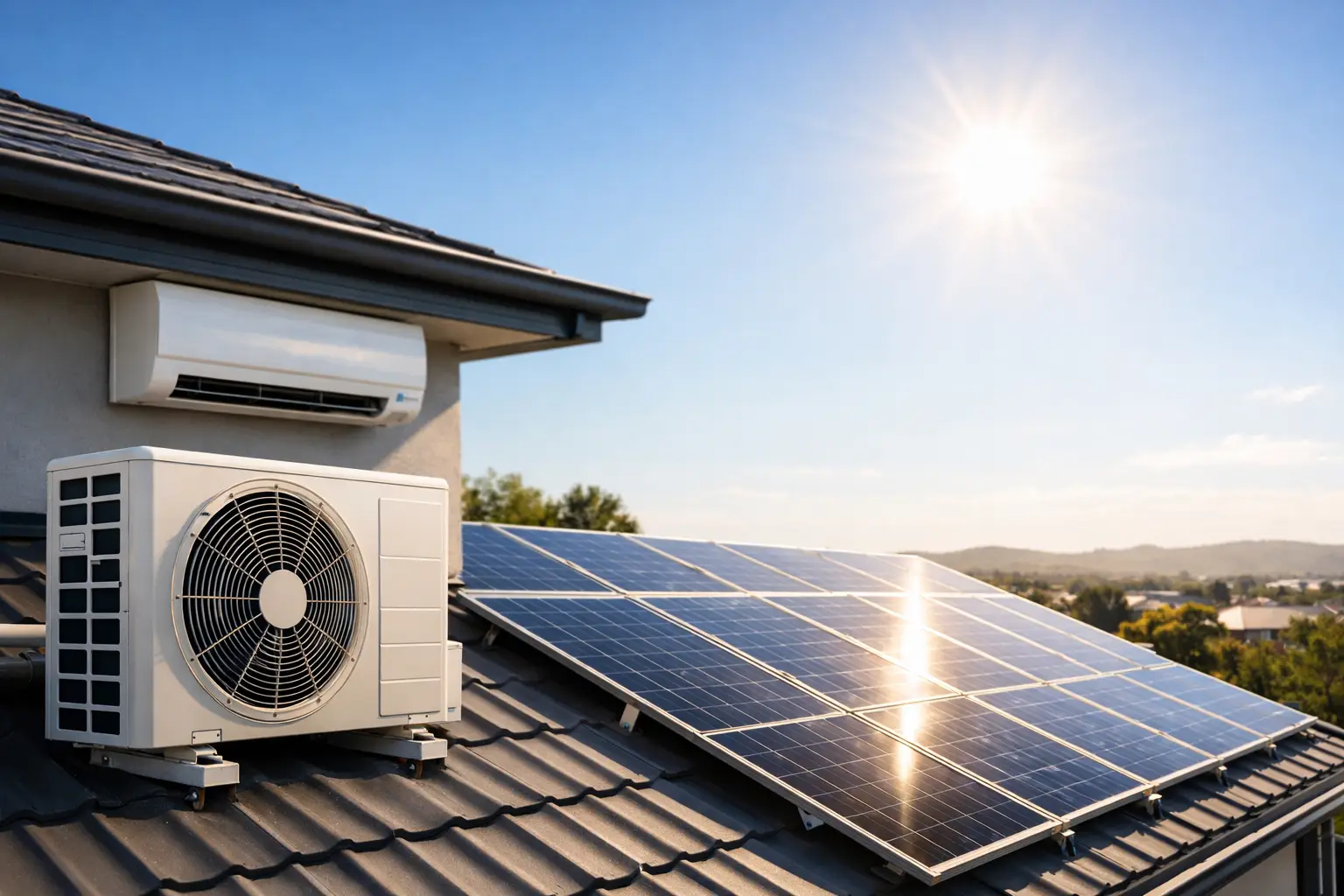
A hot January afternoon is exactly when your air conditioner works hardest – and when a well-designed solar system can produce some of its strongest output. So, can solar power air conditioning? Absolutely. For many Australian homes and businesses, solar can offset a substantial share of daytime cooling use, turning harsh summer sunshine into lower electricity bills.
The result depends on more than putting panels on the roof. Your air conditioner’s size, when you run it, your roof’s solar potential, household energy use and whether you add a battery all shape the outcome. The right system is not simply the biggest one available. It is the one designed around how your property actually uses power.
How solar power runs air conditioning
Solar panels generate direct current electricity when sunlight hits them. Your solar inverter converts that electricity into the alternating current used by appliances, including split systems, ducted air conditioning and commercial cooling equipment.
When your system is producing power during the day, your air conditioner can use that solar energy first. If the air conditioner needs more electricity than the panels are currently generating, the extra demand is supplied by the grid. If solar production is higher than your property’s demand, the surplus can be sent to the grid or stored in a compatible battery.
This is why solar and cooling are such a practical match in Australia. Air conditioning demand often rises as the sun gets stronger, particularly from late morning through the afternoon. Instead of buying all of that high-demand electricity from the grid, your system can use energy generated on your own roof.
Can solar power air conditioning all day?
It can power air conditioning during daylight hours, but not always on solar alone. Clouds, shade, panel orientation, appliance settings and the number of rooms being cooled all affect how much grid electricity is still required.
A smaller solar system may comfortably support one efficient split system while the household runs normally. Running several split systems at once, or a large ducted unit across the whole home, creates a much higher load. The same principle applies to businesses: a café, workshop or office with daytime cooling may be an excellent fit for solar, but the system must be sized for its operating hours and equipment.
Night-time is the key limitation. Once the sun goes down, panels stop producing. Without a battery, your air conditioner will draw electricity from the grid overnight. With a battery, stored solar energy can help cover evening cooling, although battery capacity and your air conditioner’s consumption determine how long it can run.
For many property owners, the goal is not to operate air conditioning completely off-grid. It is to reduce the most expensive and frequent grid usage while maintaining reliable comfort whenever it is needed.
The air conditioner itself makes a difference
Modern reverse-cycle air conditioners are generally far more efficient than older systems. Inverter-driven units adjust their output to maintain a set temperature rather than continually switching at full power. That makes them especially suited to solar, because their electricity draw can reduce once the room reaches a comfortable temperature.
A few operating choices can also make a visible difference to solar self-consumption:
- Pre-cool your home or workplace during strong solar production, before the late-afternoon heat arrives.
- Set a realistic temperature. A modest setting is easier on the system than trying to make a room feel like winter on a 40-degree day.
- Keep filters clean and close blinds, curtains or external shading on sun-facing windows.
- Use zones where possible, so you cool occupied rooms rather than the entire property.
These are not minor details. Reducing heat entering the building means your solar production goes further, and your air conditioner does not have to work as hard to keep up.
Sizing solar for cooling loads
Solar system sizing should begin with your electricity use, not a one-size-fits-all package. A medium household with one or two split systems will have very different needs from a large home with ducted cooling, a pool pump, EV charging and a family at home during the day.
Start by looking at past electricity bills and consider when your usage occurs. Then account for planned changes. If you are replacing an ageing air conditioner, installing ducted cooling, extending the home or purchasing an electric vehicle, those future loads should be included from the beginning.
Roof layout also matters. North-facing panels traditionally provide strong overall generation, while east- and west-facing panels can extend production into the morning and afternoon. For homes where cooling ramps up later in the day, a west-facing component can be particularly useful. There is no universal layout that suits every roof, which is why a tailored assessment is worth more than a generic recommendation.
For commercial and industrial sites, load profiling is even more important. Businesses that operate through daylight hours can often use solar generation directly for air conditioning, refrigeration, machinery and lighting. A system should be designed around real interval data, operating schedules and seasonal demand, not assumptions.
Is a solar battery worth adding for air conditioning?
A battery can increase the amount of solar energy you use yourself by storing excess daytime generation for the evening. That can be valuable for households that rely on air conditioning after work, or businesses with cooling loads that continue beyond solar hours.
But batteries are not essential for solar to make a meaningful difference. Panels alone can reduce daytime electricity purchases from day one, especially where people are home during the day or cooling is used in offices, shops and worksites.
The best approach depends on your priorities. If your main goal is reducing daytime cooling bills, a correctly sized solar system may be the first priority. If evening comfort, blackout resilience and greater energy independence matter too, a battery may be a strong addition. It is also sensible to consider a battery-ready setup if you plan to add storage later.
What happens during extreme heat or blackouts?
During very hot weather, air conditioning demand can exceed your solar generation, particularly in the late afternoon or when several appliances are running. Your grid connection fills the gap, so you can continue cooling your property without relying on the weather being perfect.
Standard grid-connected solar systems generally switch off during a blackout for safety. That means panels alone do not keep an air conditioner running when the grid is down. A battery system with appropriate backup capability can supply selected circuits during an outage, but air conditioning is a substantial load. Whether it can be included depends on the battery, inverter, backup design and the other appliances you need to run.
This is a conversation to have before installation, not after. If backup power is a priority, your system should be designed with realistic expectations about which loads matter most.
Make your cooling strategy work harder
Solar works best when it is part of a broader energy plan. Improve insulation, seal draughts, use ceiling fans to circulate cooled air and maintain your air conditioner regularly. These measures reduce the amount of electricity required before solar generation even enters the equation.
Government incentives such as Small-scale Technology Certificates may also help eligible properties reduce the upfront barrier to installing solar. Requirements and availability can change, so working with an experienced installer helps ensure the system and paperwork are handled correctly.
Solar Miner helps Australian households and businesses match trusted solar, inverter and battery technology to their energy goals. Whether you need a practical system for a family home or a larger solution for a high-use commercial site, the right design starts with how and when you use power.
Comfort should not have to mean surrendering to higher summer bills. A properly sized solar system gives your air conditioning a cleaner, smarter source of daytime energy – and gives you more control every time the temperature climbs.