
 1300 285 885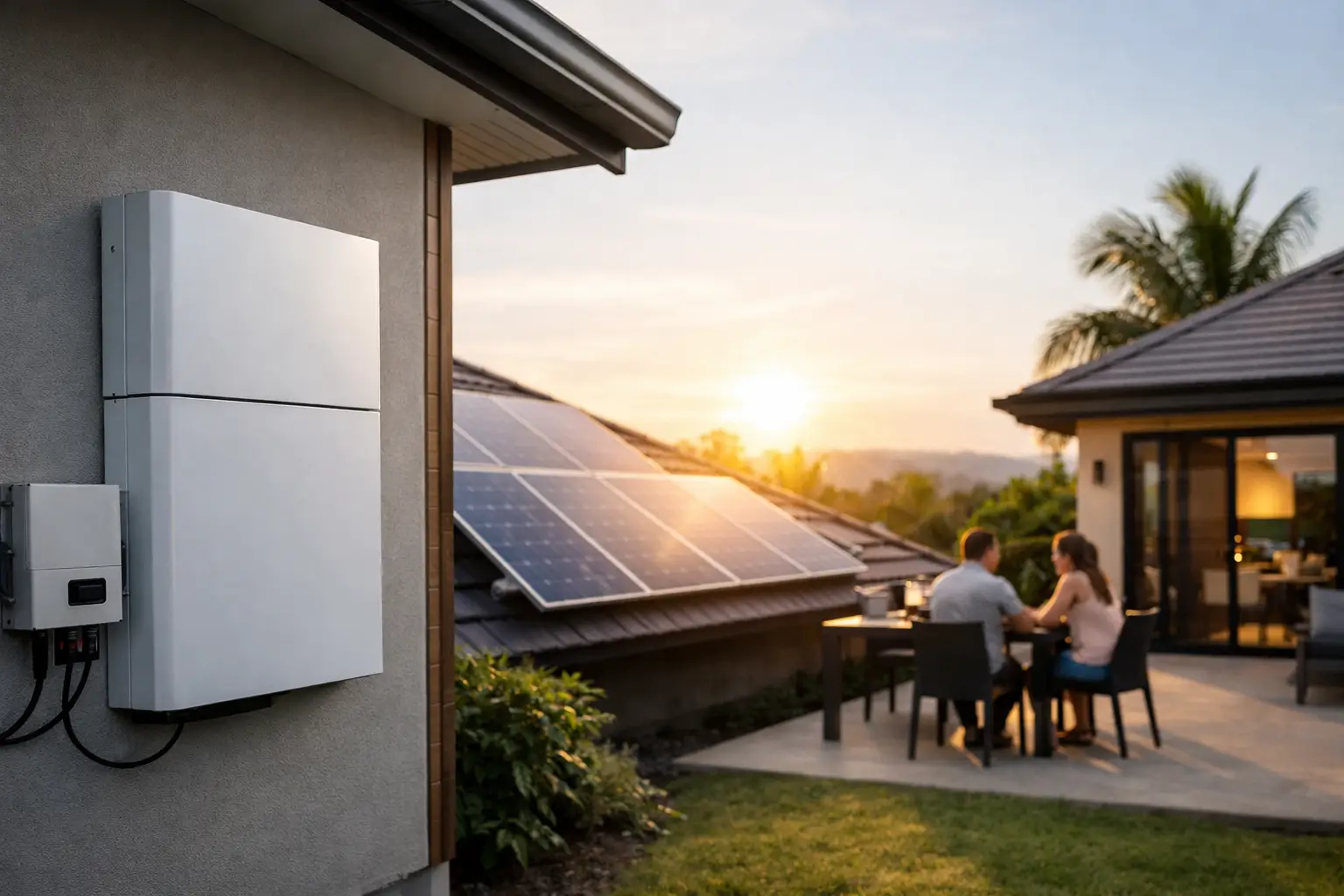
A blackout is when a battery proves its value. The fridge stays cold, the lights remain on and your essential appliances keep working while the street is dark. But a home battery backup review should look beyond the promise of backup power. The right system needs to match your household’s electricity habits, solar output, blackout expectations and future plans.
For Australian households, batteries are no longer just an add-on to solar. They can help you store more of the energy your panels produce during the day, reduce reliance on costly grid power after sunset and provide greater confidence when outages occur. The best choice is rarely the largest battery on paper. It is the one designed around how your home actually uses energy.
What a Home Battery Backup Review Should Measure
A useful battery review starts with three separate questions: how much energy can the battery store, how much power can it deliver at once, and what does it support during an outage? These figures are related, but they are not interchangeable.
Battery capacity is measured in kilowatt-hours, or kWh. It tells you how much electricity the battery can store for use later. A household with modest evening use may get strong results from a smaller capacity, while a large family home with air conditioning, a pool pump or an EV may need more stored energy to make a noticeable difference.
Power output is measured in kilowatts, or kW. This determines how many appliances the battery can run at the same time. A battery may have enough stored energy to last through the night, but lower output can limit what happens when several high-demand appliances switch on together.
Backup capability is the third test. Some battery systems support selected essential circuits only, such as lighting, refrigeration, internet, selected power points and a garage door. Others can be configured for broader household backup. Neither approach is automatically better. Essential-load backup can be highly practical and protects the appliances that matter most, while whole-home backup suits households that want fewer compromises during an outage.
Capacity Matters, But So Does Your Daily Load
It is easy to focus on the biggest kWh number. In practice, your energy profile should lead the decision. Start by looking at how much power your home imports after solar production drops away. For many households, the critical period is late afternoon through to morning, when cooking, heating or cooling, entertainment and charging all compete for electricity.
A battery that regularly fills from solar and discharges in the evening can provide stronger value than an oversized system that remains partly unused for much of the year. On the other hand, undersizing can leave you importing electricity every night and may limit how long your backup lasts during an outage.
Seasonal changes also matter. Solar generation is generally lower in winter, while electricity demand can rise due to heating and shorter daylight hours. In summer, air conditioning can place heavy demand on a battery after sunset. A quality system design considers annual use, not just one favourable month of solar production.
Do not confuse usable capacity with headline capacity
Not all of a battery’s stated capacity is necessarily available for everyday use. Manufacturers set operating limits to protect battery health and support a long service life. When comparing systems, ask about usable capacity rather than relying only on the headline figure.
Also consider whether the battery can be expanded later. Modular systems can suit households planning to add an EV, replace gas appliances, install a pool or increase their solar capacity. Expansion is valuable only if it is supported by the battery, inverter and installation design from the beginning.
Backup Power During a Blackout
A solar system without a suitably configured battery generally shuts down during a grid outage for safety reasons. This surprises many homeowners. Solar panels may be sitting in full sunshine, but they cannot necessarily power the home unless the battery and inverter system are designed to operate in backup mode.
During a battery review, ask exactly what will continue running when the grid goes down. The answer should be specific. Will it cover the fridge, lights and NBN equipment? Can it support a microwave or kettle? What about ducted air conditioning, an induction cooktop, a bore pump or a pool system?
High-demand appliances can quickly exceed a battery’s available output, particularly when they start up. A clear backup plan avoids disappointment. For many homes, keeping essential circuits running is the smart balance between comfort, reliability and battery life. Households in outage-prone areas may place more value on longer backup duration, while others may prioritise daily self-consumption and lower grid use.
Three-phase homes need additional attention. Some systems can back up only one phase unless designed otherwise, which may affect which appliances remain available. A site assessment should confirm your switchboard arrangement and identify any loads that need special planning.
Battery Chemistry, Warranty and Long-Term Confidence
Most modern residential batteries use lithium-based chemistry, with lithium iron phosphate commonly chosen for its thermal stability and long cycle life. Chemistry alone should not decide the purchase, but it forms part of the overall quality picture alongside battery management, inverter compatibility, installation standards and warranty support.
A battery warranty should be read for more than its headline number of years. Look at the warranted usable energy throughput, the guaranteed retained capacity at the end of the warranty period, and any conditions around installation, monitoring and operating environment. A strong warranty is reassuring, but local support and a professional installation partner matter just as much if service is ever required.
The location of the battery also deserves careful thought. It needs a compliant position with suitable ventilation, protection from direct weather where required and practical access for service. Your installer should assess the site rather than treating the battery as a boxed product that can go anywhere.
How Your Solar Inverter Changes the Options
Whether you already have solar affects the battery path available to you. A new solar and battery installation can be designed as one integrated system. For an existing solar household, an AC-coupled battery may work alongside the current inverter, while a hybrid inverter replacement can offer another approach.
There is no universal winner. Retaining a relatively new, high-performing inverter can make sense in some homes. In other cases, a combined solar and battery design may offer cleaner control, simpler monitoring and better preparation for future expansion. The key is compatibility, not assumptions.
Monitoring is worth reviewing as well. A clear app should show solar generation, battery charge, household consumption and grid imports or exports in plain language. It helps you see whether the battery is doing what it was installed to do and spot changes in energy use over time.
Do You Need a Battery Now?
A battery is a strong fit when you have surplus solar energy during the day, substantial evening electricity use or a clear need for backup power. It can also make sense if you are planning an EV charger, electric heating or other upgrades that will increase household demand.
It may be worth waiting if your current solar system is undersized, your roof has capacity for more panels, or your household energy use is likely to change soon. More solar generation can be the first priority, because a battery needs energy to store. The best outcome comes from reviewing the entire system, including solar, inverter, switchboard, usage patterns and future appliances.
A virtual power plant can be another consideration. These programs may allow a battery to support the wider grid at certain times, but participation conditions and control arrangements vary. Make sure you understand how it could affect your stored backup energy before signing up.
Choosing the Right Battery for Your Property
The strongest home battery backup review is not a contest between brand names. It is a practical assessment of what will happen at your property every day and during the blackout you hope never arrives. Ask for a recommendation that explains the proposed capacity, output, backup circuits, compatibility and expansion options in terms you can understand.
Solar Miner helps Australian households build solar and battery systems around real energy needs, not one-size-fits-all packages. With the right design, your battery can do more than store sunshine – it can give your home greater control when energy costs rise and the grid lets you down.