
 1300 285 885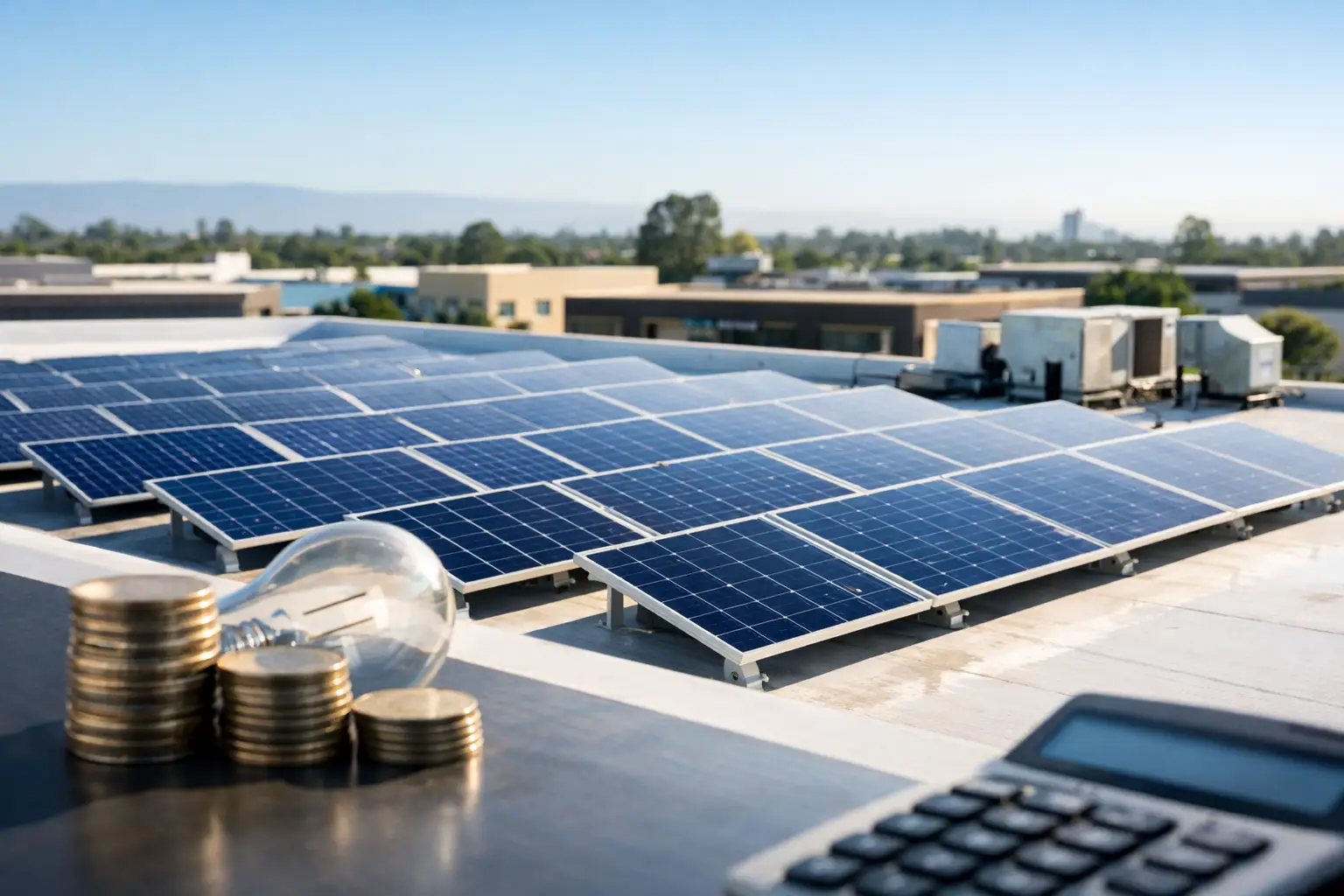
When your power bill keeps climbing but your operating hours, equipment and staffing have not changed much, the problem is usually not usage alone – it is the cost of grid electricity. That is why commercial solar has shifted from a nice-to-have upgrade to a serious business decision for warehouses, offices, retail sites, farms and industrial facilities.
For many businesses, the strongest case for solar is simple. You already have a large roof, significant daytime energy use and a clear need to control overheads. Commercial systems turn that unused roof space into an asset that helps offset daily electricity demand, improve long-term cost certainty and support sustainability goals without changing how your business runs.
Why commercial solar makes sense for Australian businesses
Australian businesses are operating in an environment where electricity costs can put real pressure on margins. For a small operator, that might mean tighter monthly cash flow. For a larger site, it can mean a major recurring expense that affects competitiveness. Commercial solar gives businesses more control over one of the few overheads that can be actively reduced.
The logic is strongest when a site uses a good amount of power during daylight hours. Offices running air conditioning, retail stores with refrigeration and lighting, workshops using machinery, and factories operating through the day can all benefit from producing power on-site when it is needed most. Instead of buying all of that energy from the grid, the business uses the electricity generated by its own system first.
There is also a practical property angle. Commercial rooftops are often better suited to larger solar arrays than residential homes. Flat roofs, broad shed roofs and industrial buildings can support substantial generation capacity, making solar a more meaningful offset against site demand.
What commercial solar can do beyond lowering bills
Lower power bills get attention first, and rightly so. But that is only part of the value.
A well-designed commercial solar system can improve budgeting confidence because it reduces exposure to future electricity price rises. It can also support tender requirements, ESG commitments and customer expectations around sustainability. For some businesses, that matters just as much as direct savings.
There is also reputational value in acting early rather than late. More customers, tenants and business partners now expect companies to show practical steps on energy and emissions. Solar is visible, credible and easy to understand. It is not a vague pledge. It is a working asset on your building.
For sites planning future upgrades, solar can also pair well with battery storage or EV charging later on. That does not mean every business should install everything at once. It means the right system can be designed with expansion in mind, so you are not boxed in by short-term thinking.
The businesses that benefit most from commercial solar
Commercial solar is not one-size-fits-all. The best outcomes usually come from matching system size to load profile, roof layout and business goals.
Small businesses often benefit when they have steady daytime usage and want relief from rising overheads without overcomplicating the decision. Cafes, medical clinics, local offices and neighbourhood retailers often fall into this category. The goal is straightforward – offset enough daytime consumption to make a real difference.
Medium commercial operators usually have more moving parts. Multiple work zones, longer operating hours, larger HVAC loads or refrigeration can justify a bigger system and a more detailed assessment. In these cases, correct sizing matters. Go too small and you leave savings on the table. Go too large without the right usage profile and the return may be weaker than expected.
Industrial sites can see major upside, but they also need careful planning. Three-phase power, high-load equipment, shift patterns, export limitations and roof engineering all play a bigger role. For these sites, system design is not just about panel count. It is about integrating solar into the way the facility actually uses energy.
How to know if your site is a strong fit
The first question is not how many panels fit on the roof. It is how and when your business uses electricity.
If most of your energy consumption happens during business hours, solar is usually worth serious attention. If your usage peaks at night, the picture changes and battery storage may become more relevant. Roof condition also matters. There is little value in installing a system on a roof that may need major work soon after.
Metering setup, available switchboard capacity, shading, local network rules and future site plans also need review. A business expecting to expand operations, add refrigeration, install EV chargers or increase equipment loads should factor that in now. The best system is not always the biggest one. It is the one that fits current demand while allowing room for sensible growth.
Choosing the right commercial solar system size
System sizing is where many businesses either make a smart investment or create frustration for themselves later.
A smaller system may suit a site that wants to offset core daytime loads without changing its infrastructure too much. A medium-sized system may be ideal for a business with stronger daily demand and enough roof area to support broader savings. Larger commercial and industrial sites may require a system designed around complex usage data, roof zones, inverter configuration and staged rollout.
This is why package-based options can be useful as a starting point, but they should still be tailored. A standard system size can guide the conversation, yet every site has its own load profile, operating schedule and physical constraints. The right provider should explain what suits your property and why, not just push the largest system available.
What to look for in a commercial solar provider
Commercial solar is a long-term asset, so provider quality matters as much as equipment quality.
Start with experience in commercial and industrial installs, not just home systems. There is a real difference between fitting panels on a house and delivering a larger project across a busy business site. You want a provider that can assess load patterns, roof suitability, inverter selection, staging and compliance without making the process hard to follow.
You should also look for trusted solar panels, inverters and batteries backed by solid manufacturer support. Cheap gear can look tempting upfront, but the long-term value of a system depends on performance, reliability and warranty strength. Downtime, underperformance and poor after-sales support can wipe out the benefit of going cheaper.
The process should also feel clear from the start. Good providers explain system recommendations in plain language, outline what approvals or incentives may apply, and manage installation with minimal disruption to the business. That matters because most operators do not have time to chase installers, decode technical jargon or coordinate multiple parties.
Incentives, finance and the value of acting sooner
For eligible businesses, government incentives can improve the business case for commercial solar. Depending on system size and project details, schemes such as STCs may help reduce upfront barriers. Finance can also play a role for businesses that want to preserve working capital while still moving ahead with an energy upgrade.
Timing matters here. Waiting can feel safer, but delaying a strong solar project often means spending more on grid electricity in the meantime. Businesses that act earlier typically start capturing savings, building resilience and improving energy control sooner.
That does not mean rushing into the wrong system. It means getting a proper assessment now, while your roof space, usage pattern and available incentives still work in your favour.
Commercial solar works best when it is tailored
The biggest mistake in this space is treating every business site the same. A retail strip tenancy, a logistics warehouse and a food production facility may all want lower power bills, but the right solar solution for each one will be different.
That is where an end-to-end approach matters. From system design to product selection, installation and support, the process should be built around the property and the way the business operates. That is how commercial solar moves from being a generic product to a practical asset that supports the bottom line.
For businesses ready to take control of energy costs, the opportunity is already sitting overhead. The smart move is not just putting panels on the roof – it is making sure the system is designed to work as hard as your business does.